




For decades, scientists have dreamed of bringing a piece of Mars to Earth. Now, as NASA re-evaluates the immense cost and complexity of its Sample Return mission, discussions are intensifying on how to achieve one of humanity's greatest quests.
The Grandest Heist in Solar System History
The Mars
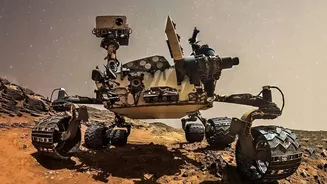
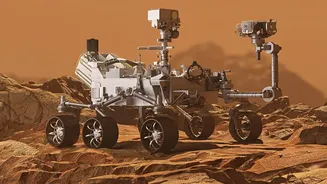
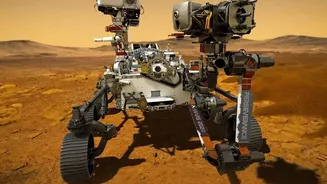
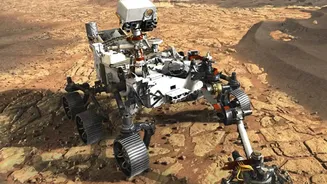
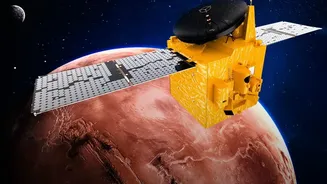
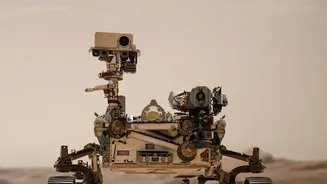
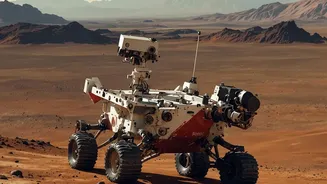
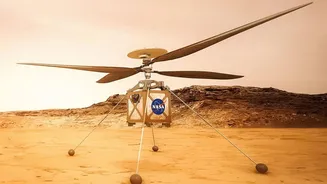
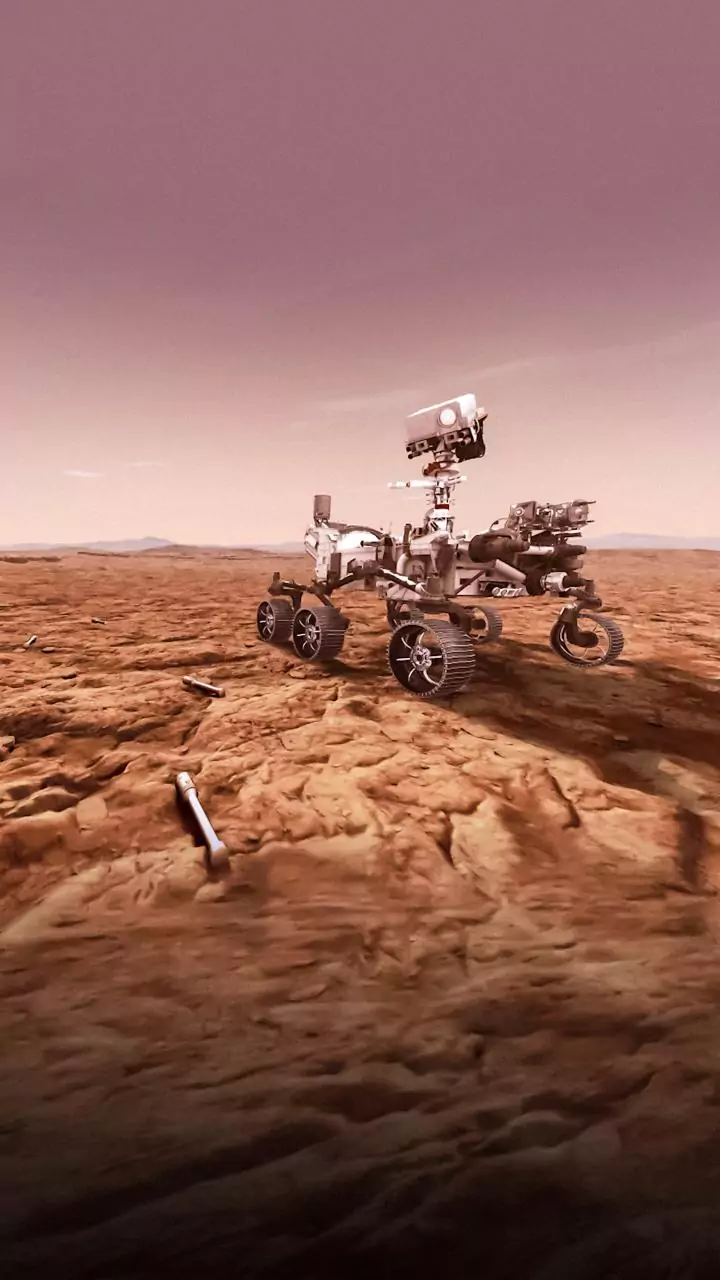
Sample Return (MSR) mission is arguably the most ambitious robotic campaign ever conceived. For years, as part of a joint effort with the European Space Agency (ESA), the plan has involved a multi-stage, interplanetary relay race. First, NASA's Perseverance rover, which has been exploring Mars's Jezero Crater since 2021, collects and caches tubes of promising rock and soil. The next stage involves sending a Sample Retrieval Lander to the surface. This lander would deploy a smaller rover to fetch the sample tubes, load them into a container aboard a small rocket called the Mars Ascent Vehicle (MAV), and then launch that rocket into orbit around Mars — a first in history. Finally, an Earth Return Orbiter, built by ESA, would capture the orbiting container and fly it all the way back to Earth. This intricate plan promises to bring pristine Martian material into labs for study with equipment far too advanced to ever send to Mars.
A Mission at a Crossroads
The recent 'advances in discussions' stem from a critical reality check. An Independent Review Board (IRB) report raised major concerns about the mission's architecture, concluding its initial budget and schedule were unrealistic. With cost estimates ballooning to as much as $11 billion and the return date slipping to 2040, NASA deemed the original plan too expensive and too slow. In response, the agency has initiated a new effort called the Perseverance Sample Retrieval Architecture (PSRA). Announced in November 2026, this initiative effectively sends planners back to the drawing board to develop a more feasible, 'lean' architecture. A dedicated strategy team will kick off its work in January 2027, tasked with delivering impartial recommendations for a mission that can deliver the precious samples without derailing NASA's entire planetary science budget.
The Unprecedented Engineering Hurdles
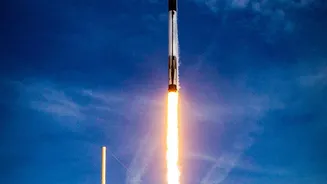
Bringing Mars rocks to Earth is fraught with challenges that sound like science fiction. The mission requires multiple spacecraft to work in perfect harmony across millions of kilometres. The first-ever launch of a rocket from the surface of another planet is a major unknown. The MAV must successfully lift off, reach Mars orbit, and release its precious cargo. Then, the Earth Return Orbiter must autonomously rendezvous with and capture the basketball-sized sample container in orbit, a feat of robotic precision never before attempted at Mars. Each step is a mission in itself, with countless points of potential failure. The complexity of this celestial chain is what has driven costs and schedules to their breaking point, forcing the current re-evaluation.
Protecting Two Planets
Beyond the engineering, the mission carries a profound biological responsibility known as planetary protection. The first concern is ensuring that no unsterilized Martian material contaminates Earth. While the chance of a living Martian microbe existing is incredibly small, the risk cannot be ignored. The samples will be sealed in a robust biocontainment system and returned to a specialized handling facility on Earth. Conversely, scientists must also ensure that the samples themselves are not contaminated by Earthly biology or materials, which would compromise their scientific integrity. This dual requirement adds layers of complexity, impacting the design of everything from the sample tubes on Perseverance to the containment vessel that will ultimately re-enter Earth's atmosphere.
The Prize: Answering 'Are We Alone?'
So why undertake such a costly and difficult mission? Because the scientific payoff would be revolutionary. Analysing these samples on Earth could finally answer some of humanity's oldest questions. Scientists will search for definitive signs of ancient microbial life in rocks from Jezero Crater, which is believed to be an ancient lakebed that may have been habitable billions of years ago. The samples will provide a detailed history of Mars's climate, geology, and evolution, helping us understand why a once-wet planet became a cold desert. This knowledge is not only critical for understanding our place in the cosmos but is also essential for planning the eventual human exploration of Mars, providing vital information on everything from soil toxicity to potential resources. Furthermore, with China's own Tianwen-3 sample return mission aiming for a 2031 return, there is a palpable sense of a new space race, pushing NASA to find a workable path forward.