


Kerala’s Pazham Pori
In the lush green landscapes of Kerala, the arrival of rain is often celebrated with a plate of sweet Pazham Pori. These are simple yet beloved fritters made from ripe plantains (nendran pazham), which are sliced, dipped in a simple batter of flour and turmeric,
and deep-fried to a golden perfection. The result is a snack that is crispy on the outside with a soft, sweet, and slightly tangy interior. Paired with a hot cup of tea or 'chaya', it’s a classic combination enjoyed in roadside tea stalls ('thattukadas') and homes alike, offering a burst of sunshine on a gloomy, rainy day.
Maharashtra’s Kanda Bhaji
For many in Maharashtra, the monsoon is incomplete without the irresistible crunch of Kanda Bhaji. Unlike other onion pakoras, this variety uses thinly sliced onions tossed with gram flour, spices, and carom seeds, with the onion's own moisture creating the batter. This results in jagged, incredibly crispy fritters that are more onion than batter. Served piping hot, often with a dry garlic chutney and fried green chillies, these onion fritters are the quintessential street-side snack to be enjoyed while watching the downpour, especially in cities like Mumbai and Pune.
Bengal’s Beguni
When it rains in West Bengal, kitchens and street-side stalls turn to 'telebhaja'—literally, 'fried in oil'. Among the most cherished of these is Beguni. These are thin slices of eggplant dipped in a spiced gram flour batter and fried until they are crisp and golden. The beauty of Beguni lies in its simplicity; the soft, almost creamy texture of the cooked eggplant contrasts wonderfully with its crunchy coating. It is a perfect companion to a comforting bowl of Khichuri (a rice and lentil dish) or simply enjoyed with a sprinkle of black salt alongside puffed rice ('muri').
The Pan-Indian Bhutta
Perhaps the most universal symbol of the Indian monsoon is Bhutta, or roasted corn on the cob. The smoky aroma of corn being roasted over hot coals by a street vendor is a fragrance that defines rainy days across the country. Once tender and slightly charred, the vendor rubs it with a slice of lemon dipped in a mix of salt, red chilli powder, and sometimes chaat masala. This simple act transforms the corn into a multi-sensory experience—a burst of smoky, sweet, tangy, and spicy flavours that captures the elemental joy of the season.
Hyderabad’s Mirchi Bajji
In Hyderabad, the rainy weather calls for something with a bit of a kick, and Mirchi Bajji delivers just that. These are large, less spicy varieties of green chillies that are slit, sometimes deseeded and stuffed with a tangy mixture of tamarind or spices, then dipped in gram flour batter and deep-fried. The result is a hot, spicy, and tangy snack that provides an instant warming effect, making it a perfect antidote to the damp chill. Often served with a side of chopped onions and a squeeze of lemon, it is a fiery and beloved street food indulgence.
Bihar’s Litti Chokha
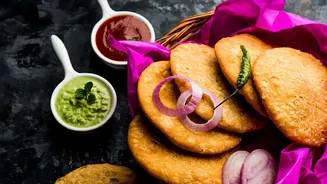
Moving from snacks to a more substantial comfort meal, Litti Chokha is Bihar's signature dish and a monsoon favourite. Litti are rustic whole wheat balls stuffed with a savoury filling of sattu (roasted gram flour), herbs, and spices. Traditionally roasted over a fire, which gives them a smoky flavour, they are then generously dipped in ghee. The Litti is served with Chokha, a hearty mash of roasted eggplant, potatoes, and tomatoes mixed with onions, garlic, and a pungent drizzle of mustard oil. This earthy, wholesome meal is deeply satisfying and perfect for a cool, rainy day.
Himalayan Thukpa
In the cooler Himalayan regions like Sikkim, Ladakh, and Arunachal Pradesh, monsoon comfort comes in the form of a steaming, hearty bowl of Thukpa. This Tibetan-influenced noodle soup is the ideal antidote to the damp, chilly weather of the mountains. A flavourful and aromatic broth, typically enriched with ginger, garlic, and spices, is filled with hand-pulled noodles, seasonal vegetables, and often chicken or other meat. It’s a complete and nourishing meal-in-a-bowl that provides immense warmth and comfort, making it a staple for navigating the mountain monsoons.