





The Annual Pothole Plague
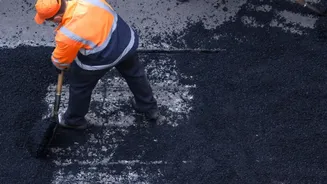
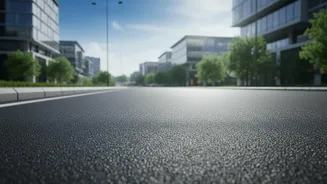
For millions of commuters across India, the monsoon season brings with it the certainty of navigating a treacherous obstacle course of potholes. These craters, which blossom on city roads and highways after heavy rains, are more than just an inconvenience.
They cause vehicle damage, lead to traffic snarls, and are a significant factor in road accidents. Each year, municipal corporations spend crores on temporary fixes that often wash away in the next downpour, creating a frustrating and costly cycle of repair and decay. This chronic infrastructure challenge has left citizens and engineers alike searching for a more durable and long-lasting solution.
A Living Solution: How Bio-Concrete Works
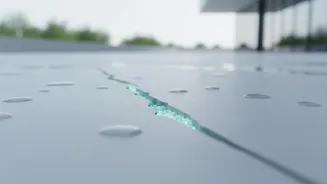
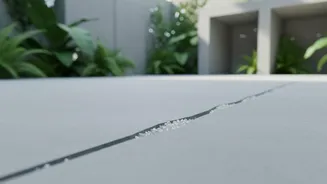
Enter self-healing concrete, also known as bio-concrete. The concept, which sounds like something from science fiction, is surprisingly simple and inspired by nature. The technology involves embedding specific, harmless bacteria, such as species from the Bacillus family, into the concrete mixture along with a food source. These bacterial spores remain dormant, like tiny seeds, protected within small capsules. They can lie inactive for years, even decades, within the dry concrete. The magic happens when a crack forms. As rainwater seeps into the fissure, it reaches the capsules, breaking them open and awakening the bacteria.
The Science of Self-Repair
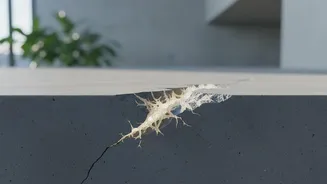
Once activated by water, the bacteria begin to feed on their nutrient pack, typically a calcium-based material like calcium lactate. This metabolic process causes the bacteria to produce limestone, or calcium carbonate. This newly formed limestone steadily grows and hardens, filling the crack from within. Essentially, the road autonomously performs its own repair, sealing the fissure before it can widen and turn into a dangerous pothole. This process not only closes the crack but also prevents water and other corrosive agents from seeping deeper into the structure and damaging the steel reinforcement within, thereby enhancing the overall durability and lifespan of the road.
Research and Development in India
While much of the pioneering work on bio-concrete began in Europe, researchers in India are actively exploring this technology. Projects at institutions like the CSIR-North East Institute of Science and Technology (CSIR-NEIST) are focused on developing microbial concrete using locally available resources. Studies across various Indian institutes have shown promising results, indicating that adding bacteria like Bacillus subtilis can significantly increase the concrete's strength and reduce water permeability. For instance, some research shows an increase in compressive strength by over 18% after 28 days. These efforts are aimed at creating a version of self-healing concrete that is both effective and economically viable for widespread use in the country.
Hurdles on the Road Ahead
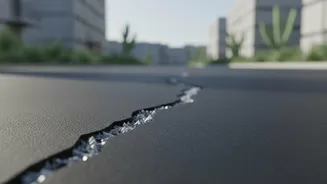
Despite its immense potential, bacteria-infused cement isn't ready to pave every Indian road just yet. The biggest challenge is cost. Current formulations of bio-concrete can be significantly more expensive than traditional concrete, which could be a major barrier for large-scale infrastructure projects. Researchers are actively working to bring this cost down by finding cheaper nutrient sources for the bacteria. Another limitation is the size of the cracks it can heal; current versions are most effective on micro-cracks, typically up to about one millimetre wide. While stopping small cracks from becoming big ones is the primary goal, this technology won't fix a large, existing pothole. Finally, ensuring the bacteria can survive the harsh conditions of an Indian summer and the intense monsoon for decades is a key area of ongoing research.