





A Galaxy of Opportunity
For decades, India's journey to the stars was piloted almost exclusively by the Indian Space Research Organisation (ISRO). But since the government opened the sector to private participation in 2020, the landscape has changed dramatically. The establishment
of the Indian National Space Promotion and Authorisation Centre (IN-SPACe) as a single-window agency created a clear pathway for private firms. It now facilitates access to ISRO’s world-class facilities, transfers technology, and authorises private space activities. This policy shift has ignited a startup boom, with over 450 companies now operating in India's space ecosystem, up from just a handful six years ago. These companies are not just supplying components; they are building and launching their own rockets, designing complex satellite constellations, and creating valuable data-driven services.
The Rocket Builders
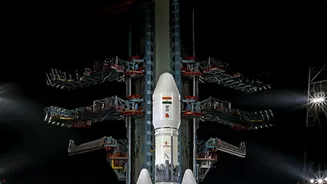
A crucial pillar of any space economy is the ability to launch satellites affordably and reliably. Hyderabad-based Skyroot Aerospace made history in July 2026 by successfully launching its Vikram-1 rocket, becoming the first private Indian company to reach orbit. This landmark achievement, dubbed Mission 'Aagaman' (arrival), has sent a powerful signal of confidence across the entire sector. Another key player, Agnikul Cosmos, incubated at IIT Madras, has also achieved significant milestones. In May 2024, it successfully launched 'Agnibaan SOrTeD', a suborbital technology demonstrator powered by the world’s first single-piece 3D-printed engine and launched from India's first private launchpad. The company is now planning an ambitious mission to demonstrate reusable rocket technology by recovering a booster stage from the sea. These innovations are geared towards drastically cutting the cost of space access.
Eyes in the Sky
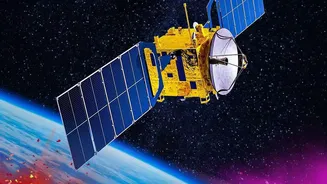
While launch grabs headlines, much of the commercial action is in orbit. Pixxel is a frontrunner, building a constellation of hyperspectral imaging satellites. These advanced satellites can see the Earth in hundreds of spectral bands, providing incredibly detailed data that is invisible to the human eye. This data has powerful applications in agriculture, environmental monitoring, and mining. Meanwhile, Hyderabad-based Dhruva Space offers end-to-end solutions, from building satellite platforms to launch integration and ground station services. The company has successfully deployed several satellites, including missions for academic institutions and international clients, validating its full-stack capabilities.
Beyond Hardware: The Data Revolution
The long-term value of this new ecosystem lies not just in the rockets and satellites themselves, but in the services they enable. Companies like SatSure use satellite data to provide 'decision intelligence' for sectors like banking, agriculture, and infrastructure. Others, like Digantara, are focused on space situational awareness—tracking objects in orbit to prevent collisions and ensure the safety of space assets. This downstream market, which turns raw satellite imagery and signals into actionable insights, is where many see the largest economic potential. It's a gold rush for data that can help solve problems on Earth, from improving crop yields and managing natural disasters to monitoring climate change.
The Road Ahead
The path forward is not without challenges. These startups operate in a capital-intensive, high-risk industry that demands immense technical expertise and patience. However, the momentum is undeniable. Indian space startups have raised hundreds of millions in funding in recent years, with investor confidence growing after each successful mission. The government is further fuelling this growth with a dedicated venture capital fund and liberalised FDI policies. Projections estimate India's space economy could grow from around $8.4 billion today to $44 billion by 2033, significantly increasing its share of the global market.