





The Vanishing Night Sky
For most of India’s 500 million urban residents, the Milky Way is now invisible. Cities like Delhi, Mumbai, and Bengaluru are bathed in a perpetual twilight caused by light pollution, with night-time brightness levels up to 50 times higher than natural.
This constant glare from streetlights, advertising billboards, and high-rises has erased all but the brightest stars and planets from view, creating a disconnect from a sight that has inspired humanity for millennia. This isn't just an aesthetic loss; it's a cultural and ecological one, affecting everything from human sleep cycles to the navigation of migratory birds. For a generation raised in these brightly lit environments, the experience of a truly dark, star-filled sky is almost mythical.
A Planetarium in Your Pocket
Paradoxically, the solution to this urban problem has come from technology. Stargazing apps like SkyView, Star Tracker, and Stellarium are turning smartphones into powerful, portable planetariums. Using a phone's GPS and compass, these apps employ augmented reality (AR) to overlay information on the live view from your camera. Point your phone at a faint speck of light, and the app can identify it as Jupiter, the North Star, or a distant galaxy. They can show you the 88 constellations, track the International Space Station in real-time, and even simulate celestial events like meteor showers. For many young urbanites, these apps are the first entry point into amateur astronomy, making an otherwise invisible universe suddenly accessible.
A Search for Mindfulness and Awe
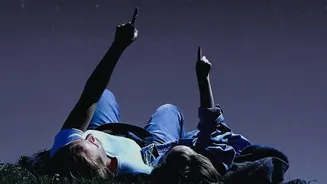
The turn to stargazing is more than just a technological novelty; it's a response to the pressures of modern urban life. In a world of constant notifications and professional anxiety, looking up at the sky offers a moment of profound calm and perspective. Studies suggest that experiencing awe, like that felt when contemplating the vastness of the cosmos, can reduce stress and promote positive social behaviours. For many young people, it's a form of mindful meditation. It’s an intentional break from the doomscrolling and digital fatigue, a chance to disconnect from earthly worries by connecting with something infinitely larger. This search for mental and emotional restoration is a key driver behind the trend.
From Digital Stars to Real-World Bonds
While the experience often starts with an individual and their phone, it rarely ends there. These apps are fostering a new sense of community. Online forums and social media groups buzz with tips on the best viewing spots on the outskirts of cities and astrophotography techniques. This digital chatter is translating into real-world connections, with a rise in 'star parties' and night treks organised by astronomy clubs in and around cities like Pune and Mumbai. The shared experience of witnessing a meteor shower or identifying a new constellation builds powerful bonds, turning a hobby into a social event. These apps act as a catalyst, sparking a curiosity that leads people to seek out shared experiences under the night sky.
A New Generation of Explorers
Ultimately, the rise of urban stargazing speaks to a timeless human curiosity. India's recent successes in space, from Chandrayaan missions to Aditya-L1, have ignited a national interest in astronomy. Stargazing apps have democratised this curiosity, removing the need for expensive telescopes or specialised knowledge. They empower young people to become explorers from their own rooftops, blending ancient mythology with modern science. The app might point out the Saptarishi (Ursa Major) while also providing data on the light-years separating each star. This fusion of accessibility, mindfulness, community, and national pride is why more young Indians are finding solace and wonder by looking up.