







What Exactly is Changing with UPI Fees?
Starting October 15, 2026, a new framework introduces a Merchant Discount Rate (MDR) on certain UPI transactions. This is not a fee for customers. It's a charge that some merchants will pay for processing specific digital payments. Specifically, a 0.4%
MDR will apply to many Person-to-Merchant (P2M) transactions valued over ₹2,000. For very large payments, this fee is capped at ₹300 per transaction. It’s important to note that this does not affect Person-to-Person (P2P) transfers, like sending money to friends or family, which remain completely free.
The Core Exemption: Small Merchants Are Protected
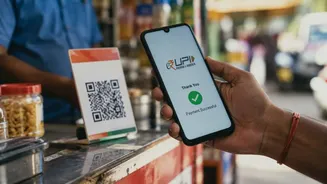
The most crucial part of the new rules is the exemption for small and micro-businesses. Merchants who receive up to ₹1 lakh per month via UPI QR code payments are classified under a special Person-to-Person-Merchant (P2PM) category and are completely exempt from this new MDR. This means your local vegetable vendor, chaiwala, or neighbourhood kirana store can continue accepting UPI payments without any new costs, even for individual transactions over ₹2,000. The exemption is designed to protect the vast majority of small traders who form the backbone of India's retail economy.
How the Small Merchant Exemption Works
The classification is handled by the merchant's bank or payment service provider, who monitors monthly collections. To ensure stability, a merchant isn't immediately reclassified after one good month. They must exceed the ₹1 lakh collection threshold for three consecutive months before transitioning from the exempt P2PM category to the standard P2M category. This provides a buffer for businesses with seasonal or fluctuating income. Furthermore, GST registration is not a requirement to qualify for this zero-MDR benefit, lowering the barrier for informal businesses to use digital payments.
Who Pays the Fee and Why?
The MDR is paid by the merchant, not the customer. The government has been clear that this cost should not be passed on to consumers. The fee itself is distributed among the various players that make a digital transaction possible, including the customer's bank, the merchant's bank (the acquirer), and the payment app provider. The introduction of the MDR is intended to create a sustainable revenue model for the digital payments ecosystem. For years, companies have borne the cost of facilitating free UPI transactions, and this new fee structure aims to ensure they can continue to invest in the system's security, innovation, and infrastructure.
What This Means For Customers and Other Merchants
For customers, the UPI experience remains largely unchanged. Your daily payments for groceries, transport, and other small-ticket items below ₹2,000 are not affected. And for larger payments, the fee is the merchant's responsibility. For larger businesses that do not fall under the small merchant exemption, the 0.4% MDR on transactions over ₹2,000 is still significantly lower than the typical charges for credit card payments, which can range from 1.5% to 2.5%. Certain essential sectors like railways, fuel, and insurance will also have a lower, flat fee structure instead of a percentage-based charge.