




The Ocean's Silent Crisis
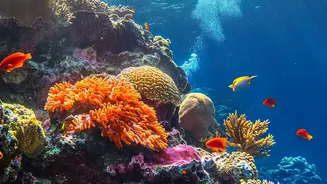
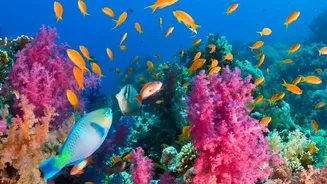
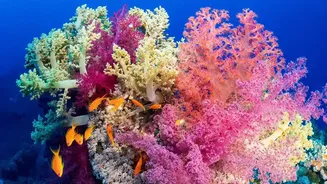
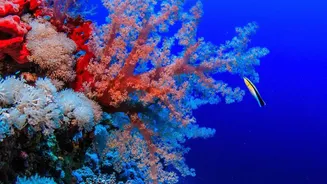
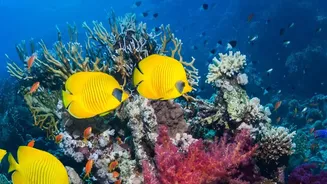
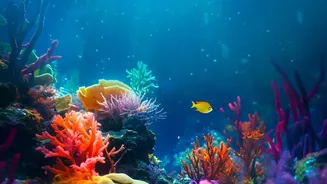
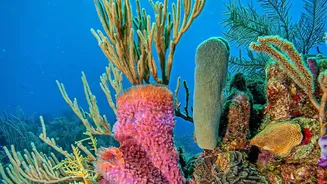
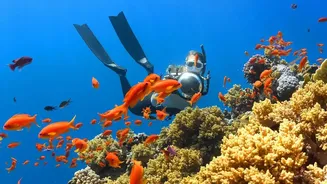
Often called the "rainforests of the sea," coral reefs are among the most biodiverse ecosystems on Earth. Despite covering less than one percent of the ocean floor, they support roughly 25% of all marine life. However, these vibrant underwater cities
are facing a severe threat: climate change. Rising sea temperatures cause corals to become stressed and expel the symbiotic algae living in their tissues, a phenomenon known as coral bleaching. Without these algae, which provide most of their food and their brilliant colours, the corals turn ghostly white and become vulnerable to starvation and disease. This doesn't just impact the corals; it triggers a chain reaction that can devastate the entire reef ecosystem.
A Glimmer of Hope: Super Corals
Amid the crisis, scientists have found a reason for optimism in what are often called "super corals." These are not a single species but rather various corals that have demonstrated a natural ability to withstand higher water temperatures. Some of these thermally resilient corals host algae that can handle the heat, while others seem capable of swapping their heat-stressed algae for tougher strains. This resilience may be genetic, with some corals having naturally evolved in warmer or more variable environments, giving them an inherent advantage. Identifying and understanding these heat-tolerant corals has become a crucial frontier in marine biology, as they hold a potential key to the survival of reefs worldwide.
The Foundation of Marine Life
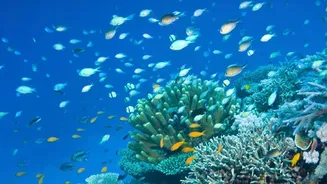
The importance of resilient corals extends far beyond their own survival; they are the bedrock of the ocean's food web. Reefs act as critical nurseries, providing shelter for juvenile fish and invertebrates, protecting them from predators as they grow. The complex structures are also feeding grounds for thousands of species, from herbivorous fish that graze on algae to larger predators like sharks and groupers. When a reef bleaches and dies, this intricate habitat disappears. Fish populations decline, not just those that eat coral, but all species that rely on the reef for shelter and food. This collapse has dire consequences for the estimated one billion people worldwide who rely on reef fish for food and income. In India, reef-associated fisheries contribute significantly to the economy and provide livelihoods for millions.
Nature's Coastal Defenders
Beyond their biological significance, coral reefs serve as a crucial line of defence for coastal communities. Healthy reefs act as natural, submerged breakwaters, absorbing and dissipating up to 97% of incoming wave energy. This powerful buffering effect protects coastlines from erosion, flooding, and the destructive force of storms and cyclones. For a country like India, with its vast 7,500-kilometre coastline, this natural protection is invaluable. The loss of coral reefs would leave coastal towns and cities more vulnerable to storm surges and erosion, potentially requiring massive investments in expensive artificial barriers like seawalls. Protecting and restoring reefs is therefore a matter of both ecological and economic security.
The Race to Save Our Reefs
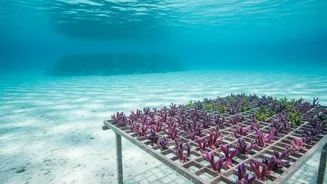
Harnessing the power of thermally resilient corals is now a global priority. Scientists are engaged in a race against time, employing innovative strategies to bolster reef survival. These efforts include identifying and selectively breeding heat-tolerant corals to create more robust populations. In India, restoration projects are underway in key regions like the Gulf of Mannar, Gulf of Kutch, and the Andaman and Nicobar Islands. Techniques range from transplanting coral fragments onto artificial structures to using 'bio-rock' technology that accelerates coral growth with low-voltage electricity. These initiatives, often involving local communities, aim to not only restore degraded areas but also to seed them with corals that have a better chance of surviving in a warmer future.