








Moving Beyond the Fare War
In a competitive market like India, airlines are constantly vying for your attention with seat sales and aggressive pricing. While bagging a cheap ticket feels like a victory, the true cost of travel isn't always reflected on your booking confirmation.
A significant delay can mean a missed business meeting, a ruined family connection, or simply hours of frustration at a crowded airport. The cheapest flight is not always the best value. This is where On-Time Performance, or OTP, becomes a savvy traveller's best friend. It’s a powerful data point that helps you assess an airline's reliability, offering a more complete picture of what you’re paying for.
What Exactly is On-Time Performance (OTP)?
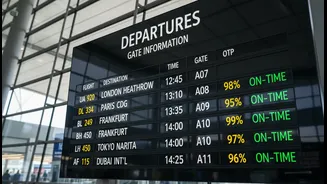
On-Time Performance is the industry standard for measuring punctuality. India's aviation regulator, the Directorate General of Civil Aviation (DGCA), defines a flight as 'on-time' if it departs or arrives within 15 minutes of its scheduled time. The DGCA tracks this data for all major domestic airlines operating out of India's busiest airports and publishes monthly reports. This isn't a marketing gimmick; it's official, audited data that shows what percentage of an airline's flights actually run on schedule. Factors like weather, air traffic congestion, and an airline's own operational efficiency can all impact its OTP.
Where to Find Airline Punctuality Data
Accessing this valuable information is easier than you might think. The DGCA makes its monthly OTP reports public on its website. These reports provide a clear ranking of airlines based on their performance at major metro airports like Delhi, Mumbai, Bengaluru, and Hyderabad. While you might have to do a little digging on the official site, the insights are worth the effort. The latest data available from the DGCA is typically for the preceding month; for instance, July will have the data for May. Some international aviation analytics firms, like Cirium, also release global and regional rankings that occasionally feature Indian carriers, giving a broader perspective on their performance.
How to Decode the Numbers
When you look at a DGCA report, you'll see a list of airlines with a corresponding percentage. For instance, according to recent DGCA data for May 2026, IndiGo led the charts with an OTP of 82.8%, followed by Akasa Air at 78.3% and the Air India Group at 74.5%. A higher percentage is obviously better. An airline with an 85% OTP is significantly more reliable than one hovering around 70%. It is also important to note that performance can vary. Some airlines are consistently punctual, while others can be more volatile. For example, Air India has shown marked improvement, recently ranking fourth globally for punctuality in June 2026 according to one analytics firm. Keep an eye on trends over a few months rather than just a single month's data for a more balanced view.
Putting It All into Practice When Booking
The next time you’re booking a flight, add a new step to your process. Once you’ve shortlisted a few options based on price and timing, take five minutes to check the latest DGCA OTP report. Let’s say you have two choices for a Delhi-Mumbai flight: Flight A costs ₹4,500 on an airline with a 72% OTP, while Flight B costs ₹5,000 on an airline with an 85% OTP. The ₹500 difference now looks like an investment in peace of mind. You’re paying a little extra to significantly lower your chances of a delay. For a holiday, this means starting your trip smoothly. For business, it could be the difference between making or missing a critical appointment. By weighing both fare and reliability, you are moving from being just a passenger to being an informed traveller.