




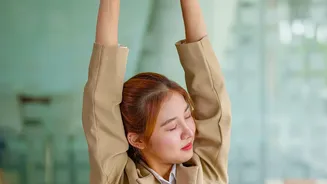

1. Gentle Neck Tilts (Side-to-Side)
This simple stretch targets the muscles along the sides of your neck. Sit up straight with your feet flat on the floor and your shoulders relaxed. Slowly and gently tilt your head, bringing your right ear toward your right shoulder. You should feel a light
stretch on the left side of your neck. Hold for 15 to 20 seconds without bouncing or forcing the movement. Return your head to the center and repeat on the left side. Performing this a few times on each side can help release accumulated tension.
2. Slow Neck Rotations
Improving your neck's range of motion is crucial for preventing stiffness. While seated upright, keep your shoulders still and slowly turn your head to the right, as if looking over your shoulder. Go as far as is comfortable without feeling pain. Hold this position for about 10 seconds, then slowly return to the starting position. Repeat on the left side. This movement helps to loosen the vertebrae and the muscles that support your head.
3. The Chin Tuck
Often called 'tech neck', the habit of jutting our head forward to look at screens strains the back of the neck. The chin tuck counteracts this. Sit tall and look straight ahead. Gently pull your head and chin straight back, creating a 'double chin'. You should feel a stretch at the base of your skull and the back of your neck. Hold for 5 seconds and then relax. Repeat this movement 10 times to help strengthen the muscles that support proper head posture.
4. Shoulder Shrugs and Rolls
Tension often climbs from the neck into the shoulders. Releasing the shoulders can, in turn, relieve the neck. Sit or stand with your back straight. Inhale and slowly lift your shoulders up toward your ears. Hold for a few seconds, feeling the tension. As you exhale, let your shoulders drop completely. Next, roll your shoulders backward in a slow, circular motion for 10 repetitions, then forward for 10 repetitions. This helps to release tension in the upper trapezius muscles.
5. Upper Trapezius Stretch
This stretch provides a deeper release for the trapezius muscle, which runs from your neck down to your shoulders. To stretch the right side, gently tilt your head to the left. You can place your left hand on top of your head and apply very light pressure for a deeper stretch. To increase the sensation, you can sit on your right hand or hold onto the side of your chair with it. Hold for 20-30 seconds, breathe deeply, and repeat on the other side.
6. Seated Cat-Cow
This yoga-inspired move brings mobility to the entire spine, which is connected to your neck and shoulders. Sit at the edge of your chair with both feet on the floor. On an inhale, arch your back, push your chest forward, and look up toward the ceiling (the 'cow' pose). On an exhale, round your spine, tuck your chin to your chest, and let your shoulders curve forward (the 'cat' pose). Continue flowing between these two positions for about a minute to warm up the spine and relieve back tension.
7. Chest Opener Stretch
Hunching forward tightens the chest muscles, which contributes to rounded shoulders and neck strain. This stretch helps to open them back up. While seated or standing, interlace your fingers behind your back. Straighten your arms and gently squeeze your shoulder blades together, lifting your hands slightly. You should feel a broad stretch across your chest and the front of your shoulders. Hold for 15-30 seconds while breathing deeply. This is a perfect antidote to the posture we adopt while typing.