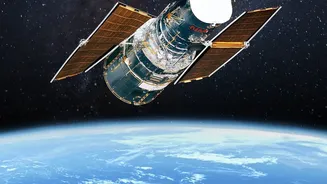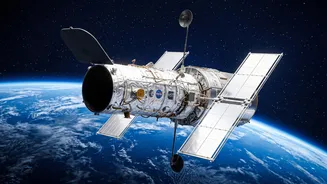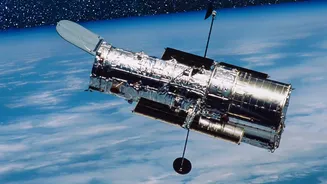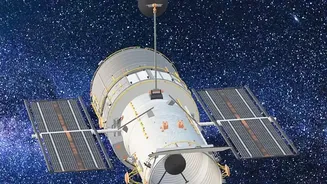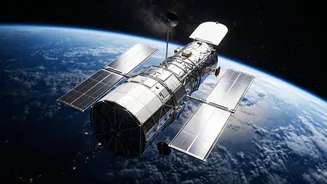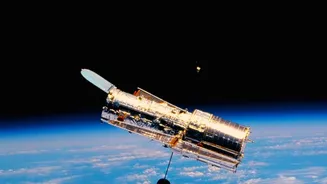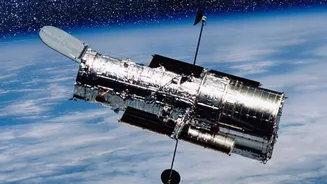




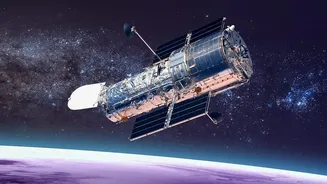

The Hubble Space Telescope is a scientific icon, having reshaped our view of the cosmos for over three decades. But its journey may not be over. NASA is now formally considering a new, unprecedented chapter: a commercial mission to save it.
Why Hubble Needs Help
Launched in
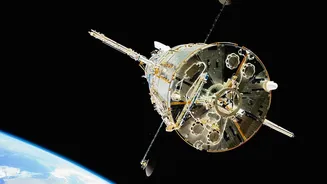
1990, the Hubble Space Telescope circles the Earth in a gradually decaying orbit. Atmospheric drag, though minimal at its altitude, is slowly pulling the observatory downward. Without intervention, it will eventually re-enter the atmosphere and be destroyed. NASA estimates this could happen as early as the mid-2030s. This is not a new problem; servicing missions by the Space Shuttle in the past boosted its orbit. But with the Shuttle long retired, Hubble has been without a ride for years. Beyond its altitude, the telescope's hardware, including its critical gyroscopes that help it point with precision, are also aging. While still producing world-class science, its operational lifespan is finite without another visit from a service crew.
A New Era of Spaceflight
In the past, only a government space agency like NASA had the capability to launch a complex mission to service a satellite like Hubble. The Space Shuttle program was designed for exactly these kinds of tasks. Today, the landscape is dramatically different. The rise of a robust commercial space industry, led by companies like SpaceX, has introduced new vehicles and capabilities. These private firms have demonstrated the ability to launch astronauts, dock with the International Space Station, and perform increasingly complex manoeuvres in orbit. This new reality has prompted NASA to think differently about old problems. Instead of developing a multi-billion dollar government program, the agency is exploring whether the private sector can offer a more nimble and cost-effective solution.
The Commercial Proposal on the Table
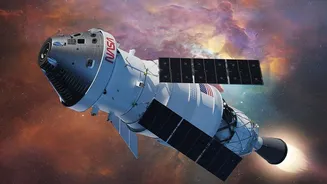
The conversation gained serious momentum following an unsolicited proposal from SpaceX and the Polaris Program, a private human spaceflight initiative led by billionaire Jared Isaacman. They suggested using a Dragon spacecraft to visit Hubble. The primary goal would be to perform a 'reboost', physically pushing the telescope into a higher, more stable orbit to extend its life by many years. A secondary, more ambitious goal could involve servicing or upgrading some of its components. In response to this and other potential interest, NASA issued a formal 'Request for Information'. This step opened the door for any and all US commercial entities to submit their own ideas and concepts for saving Hubble, turning a single proposal into a wider industry-wide discussion.
What's in It for a Private Company?
While NASA has stated it would not be funding such a mission directly, the incentives for a commercial company are significant. For one, the prestige associated with saving the world's most famous telescope is immense. It would be a monumental technical and public relations achievement, demonstrating capabilities far beyond routine satellite launches. The mission would also serve as a powerful proof-of-concept for a new business model: in_orbit servicing. The ability to repair, refuel, and reposition aging satellites could become a lucrative market, and a successful Hubble mission would be the ultimate advertisement. It's a high_risk, high_reward endeavour that could solidify a company's reputation as a leader in advanced space operations.
A Precedent for the Future
This discussion is about more than just one telescope. The decision NASA makes will set a precedent for the future management of its legacy assets in space. A successful commercial partnership would create a new template for public_private cooperation, potentially extending the lives of other valuable scientific platforms. It represents a strategic shift for NASA, moving from being the sole operator to becoming a customer and partner in a broader space ecosystem. If the model works, it could unlock new possibilities for exploration and scientific discovery, leveraging the innovation and speed of the private sector while pursuing the public good. The entire space industry is watching closely, as the future of Hubble may also be the future of how we work in space.