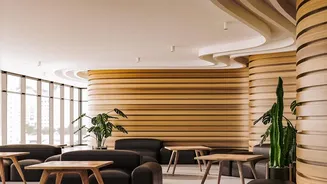




The New Demands On Our Homes
Not long ago, the home was primarily a place of rest and personal life. Today, it’s often much more. The rise of hybrid work means our living rooms, bedrooms, and even kitchen corners have been transformed into workstations. This shift places enormous
pressure on small living spaces, especially in urban rental apartments where every square foot is precious. A single room may need to function as an office by day, a relaxation zone by evening, and a social space on weekends. This multi-purpose reality requires more than just traditional, static furniture; it calls for an environment that can change as quickly as our needs do throughout the day. The challenge is to create clear boundaries between 'work' and 'life' when both happen in the same location, avoiding the burnout that comes from feeling like you never leave the office.
Enter: The Modular Advantage
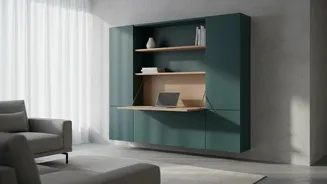
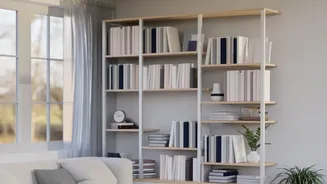
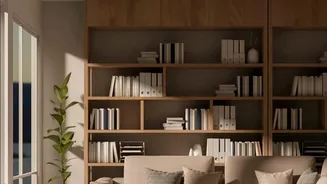
This is where modular furniture shines. Unlike conventional furniture that has a single, fixed purpose, modular pieces are designed as a system of individual components that can be arranged and reconfigured in countless ways. Think of them as building blocks for your home. A modular sofa can be a large L-shaped couch for movie night, then split into separate seating for guests. A shelving unit can grow or shrink, and a desk might fold away to become an unassuming console table. This inherent flexibility is the core benefit. It empowers you to tailor your environment to the task at hand, moving from a productive workspace to a comfortable living area without being constrained by rigid, bulky items. It’s a design philosophy rooted in adaptability, simplicity, and functionality.
Maximising Every Square Foot
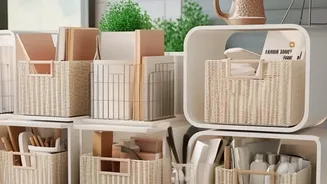
In a compact home, the ability to use space efficiently is paramount. Modular furniture is engineered for this very purpose. Many designs focus on verticality, allowing you to build upwards with stackable storage, freeing up valuable floor space. Other pieces are masters of disguise. An ottoman might open to reveal significant storage for blankets and books, while a bed frame could have built-in drawers or a hydraulic lift that reveals a cavernous space underneath. This approach allows you to customise your furniture to the exact dimensions of your room, avoiding awkward gaps and wasted corners. Because you can choose only the modules you need, you can start small and avoid overcrowding your home, adding pieces only as your requirements change.
From Office to Oasis in Minutes
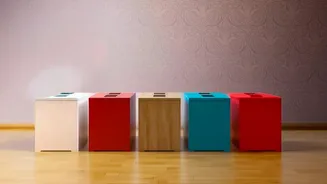
One of the biggest challenges of hybrid living is mentally clocking off. Modular furniture can create the physical transition needed to support that mental shift. A workspace built from modular components can be easily packed away. Desks can fold down, mobile pedestals can slide under a console, and screens can be hidden. Similarly, a living area can be quickly reconfigured. Movable pieces like seating cubes or nesting tables can transform a formal living room into a casual lounge. This ability to physically alter the space helps create a tangible boundary between work time and personal time. It allows your home to feel like a home again once the workday is over, fostering better work-life balance and reducing stress.
A Renter’s Best Friend
For renters, furniture decisions come with an extra layer of complexity. Will it fit in the next apartment? Is it worth the hassle of moving? Modular furniture addresses these concerns perfectly. By design, it’s easy to assemble and disassemble, often without needing a toolbox. The individual components are far easier to carry through narrow doorways and stairwells than a traditional three-seater sofa. This makes moving significantly less stressful. Furthermore, its adaptability means you're not buying furniture for just one specific room. A modular setup that fits your current living room can be reconfigured to suit a completely different layout in your next home, making it a sustainable and cost-effective long-term investment. It offers a sense of permanence and personalization without requiring any permanent changes to the property itself.