






The Power of Vinegar and Baking Soda
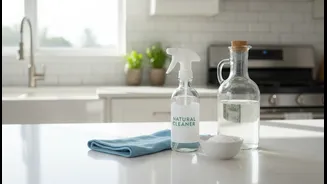
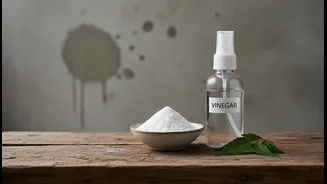
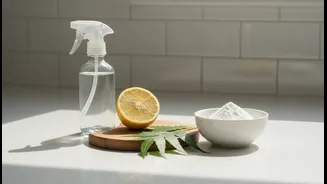
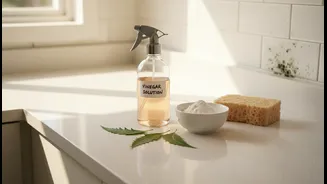
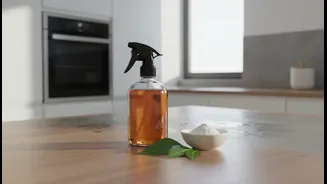
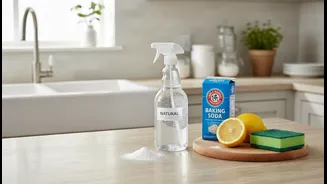
Before you buy specialised products, look in your kitchen. White vinegar and baking soda are a powerful, safe, and budget-friendly cleaning duo perfect for the monsoon. Vinegar's mild acidity is excellent at killing most common household mould species,
while baking soda is a gentle abrasive and a fantastic natural deodoriser that absorbs musty smells. This combination can tackle a majority of monsoon-related cleaning tasks effectively and without toxic fumes in a closed-up home.
Banish Mould and Mildew Naturally
Mould is a major concern during the monsoon, thriving in damp conditions on walls, in bathrooms, and cupboards. To fight it, create a simple spray of equal parts white vinegar and water. Apply it directly to mouldy areas, let it sit for about an hour to kill the fungus, and then wipe it clean. For extra power, you can add a few drops of antifungal tea tree essential oil to the mix. Be sure to wear gloves and ensure the area is as ventilated as possible while cleaning.
Eliminate Damp and Musty Odours
That signature damp, earthy smell of the monsoon doesn't have to take over your home. Baking soda is your best solution here. To freshen carpets and rugs, sprinkle baking soda generously, let it sit for at least 30 minutes to absorb odours, then vacuum it up thoroughly. For stuffy wardrobes and drawers, place a small, open bowl of baking soda inside to absorb both moisture and smells. You can also use activated charcoal or even coffee beans for the same purpose. Another trick is placing bowls of coarse salt mixed with a few drops of eucalyptus or tea tree oil in damp corners; the salt draws in moisture while the oils act as a natural antifungal.
Keep Floors Clean and Safe
Wet floors can be a breeding ground for bacteria and a safety hazard. During the monsoon, it's best to mop floors regularly to keep them dry and clean. Instead of chemical cleaners, use hot water with a cup of white vinegar added. This solution effectively removes grease and kills bacteria without leaving a chemical residue, which is especially important in homes with children and pets. For damp spots on the floor, sprinkling cornstarch, letting it absorb the moisture for 10-15 minutes, and then sweeping it away can help dry the area quickly.
Deter Pests the Natural Way
The monsoon often brings an increase in unwelcome guests like insects and other pests seeking shelter. You can deter them without resorting to chemical insecticides. Neem, a plant deeply rooted in Indian tradition, is a potent natural insect repellent. Boiling a handful of neem leaves in water creates a disinfectant liquid that can be used to mop floors. Placing dried neem leaves in cupboards can also protect clothes. Additionally, placing cotton balls soaked in peppermint oil or small bags of cloves in corners can help keep ants and other insects at bay.
Maintain Good Ventilation
One of the simplest yet most effective ways to combat monsoon dampness is to ensure proper ventilation. While you need to keep windows closed during a downpour, open them up whenever the rain stops to allow fresh air to circulate. Cross-ventilation helps reduce humidity and moisture buildup, preventing the growth of mould and stopping musty odours from setting in. Using exhaust fans in kitchens and bathrooms is also crucial to remove excess moisture and prevent condensation.