


A Groundbreaking Discovery
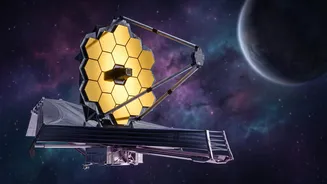
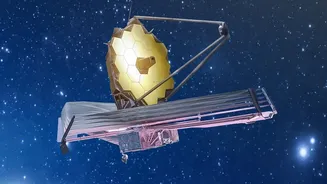
Scientists operating the James Webb Space Telescope have announced the detection of water vapor in the atmosphere of a distant exoplanet. The planet in question, a type known as a 'super-Earth', is larger than our own world but smaller than Neptune. This
finding represents a significant return on the considerable investment in the JWST, showcasing its unprecedented power to analyze the chemical makeup of alien worlds. While water has been found on gaseous giants before, detecting it around a potentially rocky world brings us one step closer to answering the age-old question: are we alone? This discovery is not just a scientific curiosity; it's a demonstration of technological prowess that pushes the boundaries of what we can explore.
What Exactly is a Super-Earth?
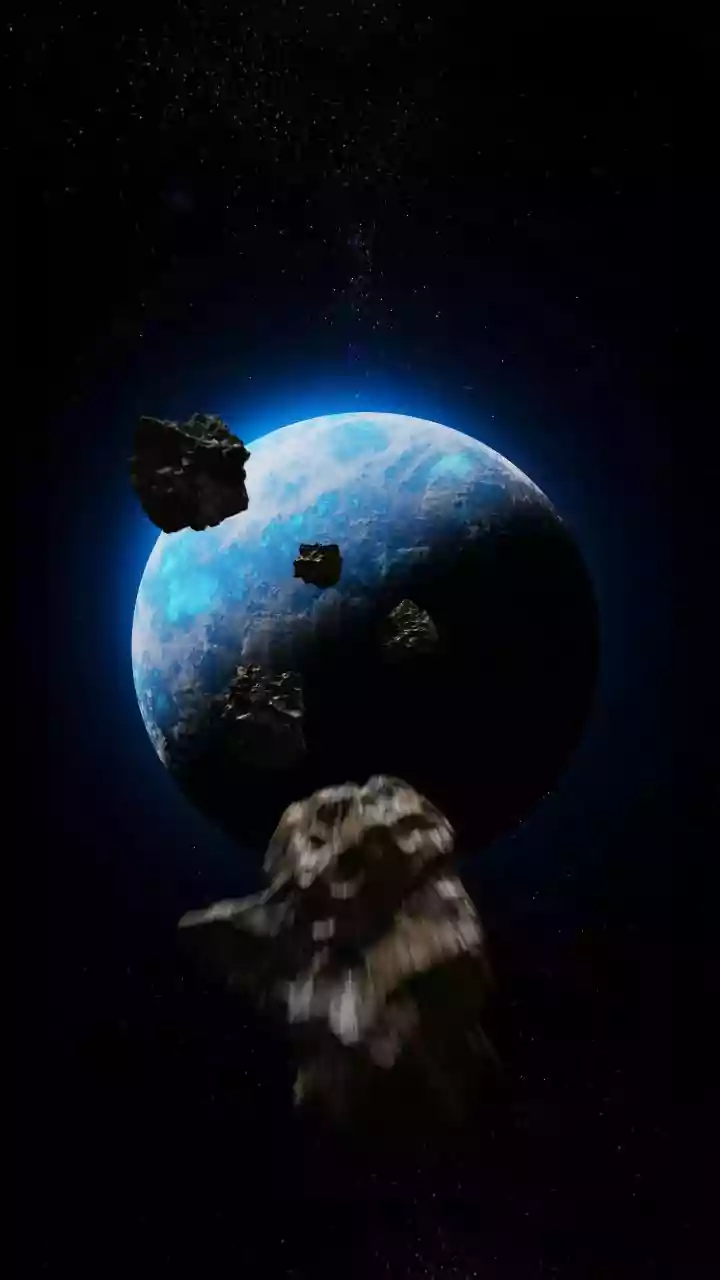
The term 'super-Earth' might conjure images of a planet just like ours, only bigger, but the reality is more complex and diverse. This classification refers to a planet's size and mass—typically up to 10 times the mass of Earth and with a radius larger than Earth's but smaller than Neptune's. Our solar system, curiously, doesn't have one, yet they are among the most common types of planets discovered in our galaxy. They can be rocky worlds like Earth, or they could be more like 'mini-Neptunes' with thick, gassy envelopes. Their composition varies wildly; some are scorching lava worlds orbiting perilously close to their stars, while others could be frozen ice planets. The discovery of water vapor on such a world is tantalizing because their size suggests they could have the gravity to hold onto a substantial atmosphere and potentially support liquid water under the right conditions.
How Webb Reads an Alien Atmosphere
Detecting chemical signatures from a planet light-years away sounds like science fiction, but the JWST does it using a clever method called transit spectroscopy. When an exoplanet passes in front of its host star from our perspective, a tiny fraction of the starlight filters through the planet's atmosphere. Different gases absorb specific wavelengths, or colors, of light. By analyzing the starlight that reaches its sensitive instruments, the telescope can identify the 'fingerprints' of molecules like water vapor, methane, and carbon dioxide. For this recent discovery, astronomers used Webb’s Near-Infrared Spectrograph (NIRSpec) to capture the incredibly faint signal. It's like determining the ingredients of a cake's frosting by looking at the light that shines through it from behind.
The Holy Grail of Astrobiology
Water is often called the 'holy grail' in the search for extraterrestrial life, and for good reason. Life as we know it depends on liquid water. Finding water vapor is the first crucial step. It confirms that a key ingredient for habitability exists beyond our solar system. However, its presence alone doesn't guarantee a habitable world. The planet in question, GJ 486 b, is likely too hot for liquid water to exist on its surface, with temperatures soaring to around 430 degrees Celsius. But the existence of an atmosphere, potentially sustained by volcanic activity spewing steam, is a landmark discovery in itself. It suggests that rocky worlds, even in harsh environments close to their stars, can maintain atmospheres, a vital component for any world's potential to host life.
A Note of Scientific Caution
As with any major discovery, scientists are exercising caution. There is a possibility that the detected water vapor isn't from the planet at all, but from its host star. Red dwarf stars, which are cooler than our Sun, can have water vapor concentrated in cooler regions known as starspots. Distinguishing between a planet's atmosphere and its star's signature is a complex task that requires further observation. Future studies using other instruments on the JWST, like the Mid-Infrared Instrument (MIRI), will be needed to confirm the origin of the water. These follow-up observations will examine the planet’s dayside to map heat distribution, which can provide definitive proof of a circulating atmosphere.