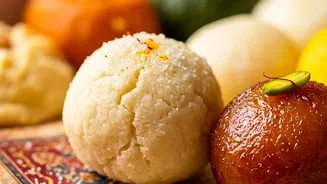


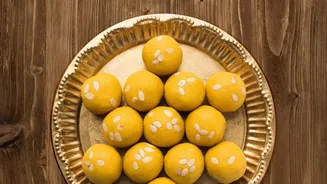

The aroma of besan roasting in ghee is the scent of celebration. But achieving that perfect, melt-in-your-mouth softness in homemade besan ladoos can be tricky. This guide demystifies the process, focusing on the key steps to avoid hard or raw results.
The Flour: Coarse vs. Fine Besan
The foundation of any great ladoo is the besan (gram flour) itself. You'll often find two varieties: a fine powder and a coarser, granular version sometimes sold as 'ladoo besan'. For a truly soft, slightly grainy texture that doesn't stick to the roof of your mouth, the coarser 'ladoo besan' is traditionally preferred. It gives the ladoos a lighter, more crumbly structure. If you only have fine besan, don't worry. You can achieve a similar texture by adding a couple of tablespoons of fine semolina (rava) to your besan before roasting. This little trick helps create that desirable 'danedar' or grainy feel. No matter which you use, ensure your besan is fresh, as old flour can taste bitter.
The Roasting: Patience is the Key Ingredient
This is the most critical stage and where most home cooks go wrong. Roasting besan, or 'bhunai', is a slow and steady process that cannot be rushed. Use a heavy-bottomed pan and always roast on a low to medium-low flame. Initially, the mixture of besan and ghee will be clumpy and thick. As you stir continuously, it will slowly loosen, become more liquid, and change colour from a pale yellow to a beautiful golden brown. Your primary guide, however, should be your nose. The raw, floury smell will be replaced by a rich, nutty aroma. This can take anywhere from 20 to 45 minutes, depending on the quantity. Don't be tempted to increase the heat to speed it up; this will burn the outside while leaving the inside raw.
The Ghee: More Than Just Fat
Ghee does more than just bind the ladoo; it provides flavour, aroma, and that signature melt-in-the-mouth quality. The ratio of ghee to besan is crucial. Too little, and your ladoos will be dry and crumbly. Too much, and the mixture will be too greasy to hold its shape. A good rule of thumb is to start with about half the weight of besan in ghee and add more as needed. For example, for 2 cups of besan, you might start with just under a cup of ghee. It's best to add ghee in stages. Start by melting some ghee, adding the besan, and then gradually adding more warm, melted ghee as you roast. The besan will first absorb the ghee and then, as it cooks, start to release it again—a key sign that the roasting is nearly complete.
The Sweetener: When and What to Add
The type of sugar and, more importantly, when you add it, dramatically affects the final texture. For the best results, use 'tagar' or 'boora', a type of crystallized sugar that provides a light, grainy texture. If you can't find it, finely powdered sugar is the next best option. The most important rule is to never add sugar to a hot besan mixture. Adding sugar while the besan is hot will cause it to melt, making the mixture runny and preventing the ladoos from setting properly. After roasting, transfer the besan mixture to a separate bowl to stop the cooking process and let it cool until it is just warm to the touch. This is the perfect temperature to mix in the sugar, cardamom powder, and any chopped nuts.
Shaping and Troubleshooting
Once the sugar is mixed in, you should be able to shape the ladoos easily while the mixture is still warm. If the mixture feels too dry and crumbly to bind, add a teaspoon or two of warm, melted ghee until it comes together. On the other hand, if the mixture is too loose and greasy, it could be due to excess ghee or adding sugar when it was too hot. The quickest fix is to refrigerate the mixture for 15 - 20 minutes. This will help the ghee solidify, making the mixture firm enough to shape. Take a small portion of the mixture and press it firmly between your palms, rolling it into a smooth , round ball . Let the ladoos cool completely to firm up before storing them in an airtight container .