





Working for a top AI company was once a definitive badge of honour in Silicon Valley. Now, it's something to be hidden. OpenAI and Anthropic are reportedly advising employees to conceal company branding due to rising security and safety concerns.
A Quiet Warning to an Anxious Industry
In a
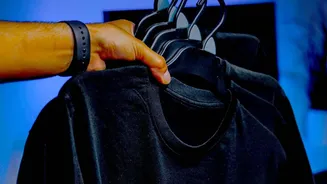
significant shift from the tech world’s typical promotion of company pride, AI leaders OpenAI and Anthropic are reportedly telling their employees to maintain a low profile in public. Staff have been instructed to avoid wearing company-branded clothing or merchandise and to hide their employee badges once outside the office. This move signals a new, more cautious era for an industry grappling with intense public scrutiny, corporate espionage, and physical threats. The directives are part of broader security training that also includes using privacy screens on public transport and erasing whiteboards after meetings. It’s a stark contrast to the celebratory culture at other tech giants, reflecting a unique and growing set of risks for those at the forefront of artificial intelligence development.
Espionage, Hostility, and Physical Threats
The security concerns are multi-faceted, ranging from corporate spying to outright physical hostility. According to reports, OpenAI's security training specifically warns employees about spies who may use money, friendship, or even romance to extract confidential information. One reported incident involved a stranger approaching an OpenAI employee at a playground and attempting to steer the conversation toward their work. Beyond corporate espionage, there is a tangible risk of harassment and violence. Protests have occurred outside OpenAI's San Francisco offices, and CEO Sam Altman’s home was reportedly targeted in two separate incidents in April 2026, one of which allegedly involved a Molotov cocktail. Anthropic has also reported individuals attempting to photograph its offices, adding to the climate of concern.
The High Cost of Security
These companies are not just issuing warnings; they are investing heavily in protection. Reflecting the perceived level of threat, Anthropic disclosed in a stock-market filing that it spent $2.7 million on personal security services for its CEO, Dario Amodei. This kind of expenditure highlights the serious nature of the risks faced by high-profile figures in the AI space. The guidance for employees to be discreet is a lower-cost, but equally important, part of a comprehensive security strategy. An investor in both companies noted that employees are frequently approached by people seeking inside information on the cutting edge of technology, forcing them to be guarded in their interactions.
A Culture of Caution
This new operational secrecy marks a profound cultural shift. The 'swag'—branded T-shirts, hoodies, and bags—that once served as a proud symbol of innovation now represents a potential vulnerability. The advice to hide one's affiliation is designed to protect not only valuable trade secrets but also the employees themselves, who have become unwilling public faces of a technology that inspires both awe and deep-seated fear. Public anxiety over AI's potential for job displacement, its role in disinformation, and the more speculative catastrophic risks, has created a tense environment. The directives from OpenAI and Anthropic are a direct response to this reality, turning employees from brand ambassadors into protected assets who must navigate their daily lives with a heightened sense of awareness.