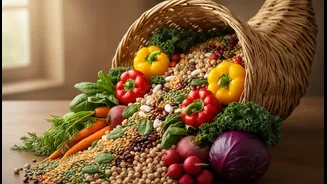









Rethinking Our Approach to Fibre
Most health-conscious individuals know that fibre is a cornerstone of a good diet. It’s celebrated for promoting regular digestion, supporting heart health, and helping to control blood sugar. The standard advice has long focused on hitting a target number
of grams per day. While total intake is certainly important, this single-minded focus overlooks a critical factor: diversity. The different types of fibre from various plant sources play distinct roles within our bodies, particularly when it comes to nourishing the trillions of microbes living in our gut. Simply eating a large amount of one or two types of fibre isn't enough to cultivate the rich internal ecosystem science now links to better overall health.
Welcome to Your Gut Microbiome
Think of your digestive tract as a bustling, vibrant city populated by trillions of microorganisms, including bacteria, fungi, and viruses. This community is known as the gut microbiome. A healthy and diverse microbiome is increasingly associated with numerous benefits, from stronger immune function and improved mood to reduced inflammation and better nutrient absorption. These microbes are not just passive residents; they are active participants in your health. To thrive, they need food, and their preferred fuel source is dietary fibre. But here's the catch: not all microbes like to eat the same thing. Different species of bacteria have different appetites, and they thrive on different types of fibre.
A Varied Diet for a Varied Gut
This is where fibre diversity becomes essential. Different plants contain different types of complex fibre structures. Some fibres, like inulin from onions and garlic, are excellent prebiotics that specifically feed beneficial bacteria like Bifidobacterium. Others, found in whole grains or legumes, nourish different microbial families entirely. When your diet is monotonous, you are essentially only feeding a select few species of gut bacteria. This can lead to a less diverse and less resilient microbiome. A diet rich in a wide variety of plants, however, provides a full buffet for your gut microbes. This encourages a greater diversity of species to flourish, each producing unique beneficial compounds, like short-chain fatty acids (SCFAs), which are known to strengthen the gut barrier and reduce inflammation.
The '30 Plant Points' Guideline
So, how much variety is enough? A landmark study from the American Gut Project provided a powerful and practical guideline. Researchers analyzed the gut microbiomes of over 10,000 people and found a significant difference between individuals. Those who consumed 30 or more different types of plant foods per week had a much more diverse gut microbiome compared to those who ate 10 or fewer. This finding held true regardless of whether the participants identified as vegan, vegetarian, or omnivore, highlighting that plant variety was a more critical factor than a specific dietary label. This has led to the popular '30 plant points' a week challenge, a simple target to encourage dietary diversity.
How to Reach Your 30 Points
Hitting 30 different plants might sound intimidating, but it's more achievable than you think. It’s not about eating 30 full portions of different vegetables. The definition of a 'plant point' is wonderfully broad and includes fruits, vegetables, whole grains, legumes (like dals and beans), nuts, seeds, herbs, and spices. A pinch of mixed herbs, a sprinkle of different seeds on your yogurt, or using both onion and garlic in a curry all add to your weekly total. Start small by aiming to add a few new plants each week. Try a different seasonal vegetable, swap your usual dal for a mixed lentil blend, snack on a handful of mixed nuts, or add fresh coriander and mint to your meals. Every small addition helps build a more robust and varied diet for you and your gut microbes.