







The Science of Sea Sparkle
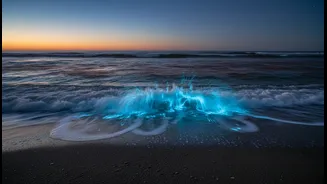
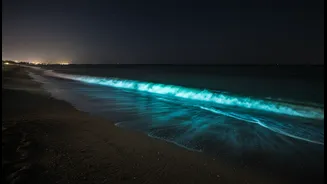
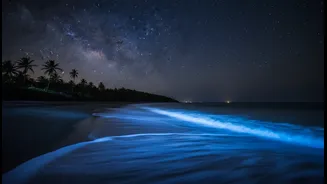
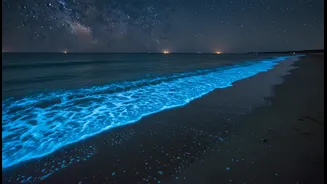
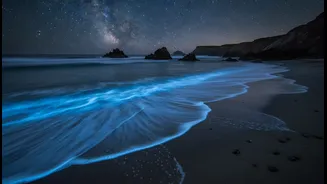
The ethereal glow, often called ‘sea sparkle’ or a ‘blue tide’, is a natural phenomenon known as bioluminescence. It is caused by tiny marine organisms, most commonly a type of plankton called dinoflagellates. When these microorganisms, such as Noctiluca
scintillans, are disturbed by the motion of waves or a hand trailing in the water, they emit a brilliant blue light through a chemical reaction. While this breathtaking display can seem rare, it has been witnessed along many parts of the Indian coastline, from Juhu Beach in Mumbai and Betalbatim Beach in Goa to the shores of Karnataka and the Andaman Islands. These events often occur during the monsoon and post-monsoon seasons when nutrient levels in the water are high, allowing the plankton to bloom.
From Awe to Ambition
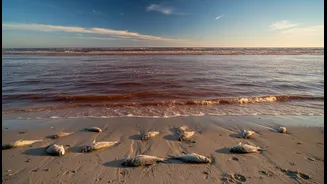
Witnessing a beach aglow with electric blue light is an unforgettable experience. For many young people, this moment of wonder is a powerful catalyst. It transforms the ocean from a simple holiday destination into a mysterious world begging to be understood. This direct, awe-inspiring encounter with nature can ignite a passion for science far more effectively than a textbook. Studies have shown that formative childhood experiences in nature are a significant factor in leading individuals to pursue science careers. The blue waves serve as a spectacular introduction to the complexities of marine ecosystems, prompting questions about the creatures within, the health of the oceans, and humanity's impact. While the sight is beautiful, scientists note that these blooms can also be linked to changing ocean conditions, sometimes indicating low oxygen levels, which can be harmful to marine life. This duality adds a layer of urgency, inspiring a desire not just to study the ocean, but to protect it.
The Path of a Marine Biologist in India
For those inspired to turn their curiosity into a profession, a career in marine biology in India offers a diverse range of opportunities. The journey typically begins with a Bachelor's degree in Zoology or a related science, followed by a Master's (MSc) and often a PhD in a specialised field of marine science. India is home to several premier institutions like the National Institute of Oceanography (NIO) in Goa, the Central Marine Fisheries Research Institute (CMFRI) in Kochi, and Annamalai University in Tamil Nadu, which offer advanced degrees and conduct cutting-edge research. A marine biologist’s work is varied; it can involve fieldwork on research vessels, lab work analysing samples, teaching at a university, or developing policies for conservation. They might study anything from microscopic plankton to the great whales, contributing to our understanding of marine ecosystems and how to manage them sustainably.
An Ocean of Opportunity
With a coastline stretching over 7,500 kilometres, India's 'Blue Economy' is a growing area of focus, creating a demand for trained marine scientists. Career paths are expanding beyond traditional research and academia. Marine biologists are increasingly finding roles in environmental consultancy, where they assess the impact of coastal projects. The booming aquaculture industry, which is the farming of fish and other seafood, is another major employer. Furthermore, there are emerging opportunities in marine biotechnology, which could lead to the new medicines from marine organisms, and in conservation, working with NGOs and government bodies to protect endangered species and habitats. While the early years of this career can be demanding, it offers immense intellectual fulfilment and the chance to make a tangible contribution to the health of our planet.