


Want stronger, more defined thighs? Look no further than the two most fundamental lower-body exercises: squats and lunges. They are the bedrock of leg strength, building power and stability that translates to everyday movements.
The Foundation of Strength
Squats and lunges are compound
exercises, meaning they work multiple muscle groups at once. They are exceptionally effective for strengthening the quadriceps (front of thighs), hamstrings (back of thighs), and glutes. Before jumping to complex variations, mastering the basic forms is crucial to build a solid base and prevent injury. Proper form ensures your muscles, not your joints, are doing the work. The goal is to perform each movement with control and stability. A good starting point for any routine is 2 to 4 sets of 8 to 15 repetitions, performed twice a week, allowing at least 48 hours of rest for muscle recovery.
Beginner Level: Master the Basics
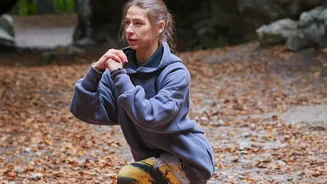
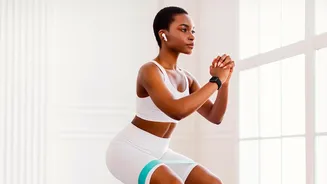
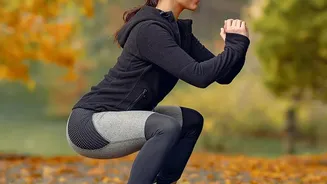
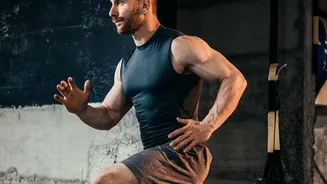
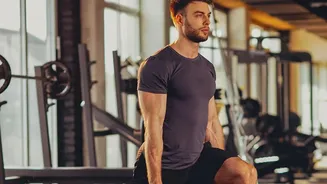
Bodyweight Squat: This is the starting point. Stand with your feet shoulder-width apart, toes pointing slightly out. Keeping your chest up and core engaged, push your hips back and bend your knees as if you're sitting in a chair. Lower yourself until your thighs are parallel to the floor, or as low as you can comfortably go while maintaining good form. Drive through your heels to return to the start. Avoid letting your knees cave inward. Forward Lunge: Stand with your feet hip-width apart. Step forward with one leg, lowering your hips until both knees are bent at approximately a 90-degree angle. Your front knee should be directly above your ankle, and your back knee should hover just above the floor. Keep your torso upright. Push off your front foot to return to the starting position, then repeat on the other side.
Intermediate Level: Add Challenge and Variety
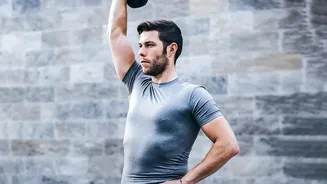
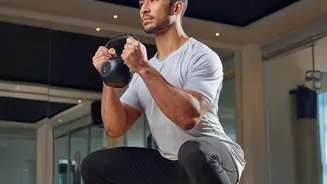
Goblet Squat: This variation adds weight to build more strength. Hold a dumbbell or kettlebell vertically against your chest with both hands. Perform a squat as described above, keeping the weight close to your body and your core tight. The added load increases the demand on your quads, glutes, and core stabilisers. Reverse Lunge: The reverse lunge is often considered more knee-friendly than the forward lunge. From a standing position, step one foot backward and lower your hips until your front thigh is parallel to the ground and your front knee is at a 90-degree angle. Your back knee should nearly touch the floor. Push through your front heel to return to the start. This movement further challenges your balance and control.
Advanced Level: Build Power and Stability
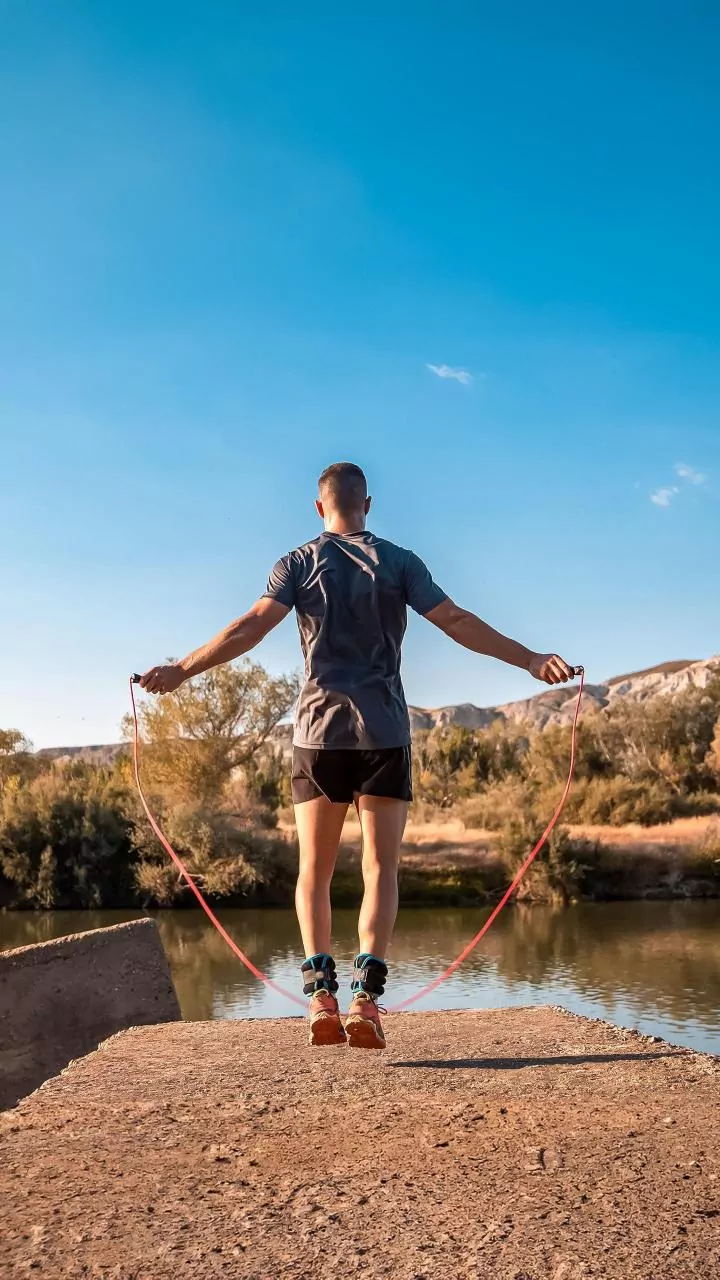
Jump Squat: For those looking to build explosive power, the jump squat is a fantastic plyometric exercise. Perform a bodyweight squat, but instead of rising slowly, explode upward into a jump. Land softly, with your knees bent, immediately lowering into your next squat. This continuous movement keeps your muscles under tension and elevates your heart rate. Bulgarian Split Squat: This is a challenging single-leg exercise that intensely targets the quads and glutes while improving balance. Place the top of your back foot on a bench or sturdy chair behind you. Your front foot should be far enough forward so that when you lower your hips, your front knee forms a 90-degree angle. Keeping your torso upright, lower down until your front thigh is parallel to the floor, then drive back up through your front heel. Because it’s a unilateral move, it’s excellent for addressing muscle imbalances.