







The Body's Forgotten Gland
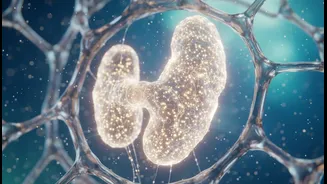
The thymus is a small organ nestled behind the breastbone, playing a starring role in our childhood. It’s the primary training ground for T-cells, the elite soldiers of our immune system that learn to fight off infections and diseases. For decades, the story
was simple: the thymus is crucial when we're young, but after puberty, it begins a process of shrinking and being replaced by fat, known as involution. This led to a long-held belief in medicine that for adults, the thymus was largely irrelevant—a retired veteran of the immune system.
A Plot Twist in the Story of Ageing
Recent groundbreaking research has thrown that old assumption into question. Two major studies published in the journal Nature in March 2026 used artificial intelligence to analyse thousands of routine CT scans. They found that the health of the adult thymus varies dramatically from person to person. More importantly, they discovered a startling link between a healthier, more active thymus in adulthood and remarkable health outcomes. Individuals with a healthier thymus were found to have a significantly lower risk of premature death from any cause, as well as a lower risk of cardiovascular disease and cancer.
A Barometer for Your Immune System
The new findings position the thymus not as a retired organ, but as a crucial barometer of our overall immune resilience as we age. The shrinking of the thymus, or thymic involution, has long been linked to a decline in the immune system's power, a process called immunosenescence. This decline in new, diverse T-cells is associated with increased susceptibility to infections, autoimmune diseases, and cancer in older adults. The recent studies powerfully reinforce this idea, showing that adults with healthier thymuses not only lived longer but also responded better to cancer immunotherapies. A robust thymus appears to maintain a stronger, more diverse army of T-cells, ready to tackle new threats.
Can We Turn Back the Clock?
This leads to the million-dollar question: can we slow down or even reverse the ageing of the thymus? This is now a major frontier in healthy-ageing research. Scientists are exploring various strategies, from lifestyle interventions to advanced therapies. The 2026 studies noted that factors like smoking and high body weight were associated with poorer thymic health, suggesting lifestyle changes could be protective. More experimental approaches are also underway. Some research has explored using growth hormones or other compounds to encourage the thymus to regrow. Other cutting-edge studies are looking into stem cell therapies and even using mRNA technology to create temporary 'factories' in the body that mimic the thymus's function, rejuvenating T-cell production in mice.