


From Trash to Treasure
In a world increasingly conscious of food waste, finding creative ways to use every part of an ingredient is more than a trend; it's a rewarding practice. Orange peels are a perfect example. Packed with essential oils and intense citrus flavour, they
are the star ingredient in classic marmalade. By saving them, you're not just reducing waste, you're capturing the very essence of the fruit in a preserve you can enjoy for months. This process honours the fruit and adds a valuable, homemade staple to your pantry.
Essential Prep: Taming the Bitterness
The key to a beautiful marmalade lies in the preparation of the peels. The main goal is to reduce the bitterness that comes from the white pith. Start by thoroughly washing your oranges. Using a vegetable peeler, remove the orange part of the rind, trying to leave as much of the white pith behind on the fruit as possible. Then, slice these peels into thin, julienne strips. To further reduce bitterness, a process called blanching is highly effective. Place the sliced peels in a saucepan, cover with water, bring to a boil, and let them cook for about 10 minutes before draining. Repeating this process two or three times will significantly mellow the flavour, resulting in a perfectly balanced marmalade.
The Sweet Simmer
With your peels blanched and softened, it's time for the magic to happen. For a standard batch, combine your prepared peels in a large, heavy-bottomed pot with an equal weight of granulated sugar. For every 500 grams of peel, you might use 500 grams of sugar and about a litre of water. You can also incorporate the juice and pulp from the oranges you peeled for extra body and flavour. A squeeze of fresh lemon juice is also a crucial addition, as its natural pectin and acidity will help the marmalade set properly and brighten the overall taste. Bring the mixture to a rolling boil over medium-high heat, then reduce it to a steady simmer. Stir occasionally to prevent sticking and allow it to cook until it visibly thickens.
Testing for the Perfect Set
Knowing when your marmalade is ready is a classic kitchen skill. The most reliable method is the cold plate test. Before you start cooking, place a few small plates in your freezer. When you think the marmalade is getting close, spoon a small amount onto one of the frozen plates and return it to the freezer for a minute or two. Afterwards, push the dollop of marmalade with your finger. If the surface wrinkles and holds its shape, it's ready. If it's still runny, continue simmering and test again in another 5-10 minutes. This simple test prevents you from undercooking or overcooking your preserve, ensuring a perfect gel-like consistency every time.
Jarring and Storing Your Creation
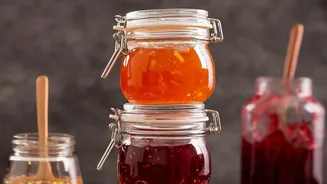
To ensure your marmalade lasts, you must store it in sterilised jars. You can easily sterilise glass jars by washing them in hot, soapy water, rinsing them well, and then placing them on a baking sheet in an oven set to around 140°C for at least 10 minutes until completely dry. Carefully ladle the hot marmalade into the hot, sterilised jars, leaving a small amount of headspace at the top. Seal the jars immediately with their lids. As the marmalade cools, you should hear a satisfying 'pop' as the vacuum seal forms. Once cooled, store the jars in a cool, dark place. Refrigerate after opening.