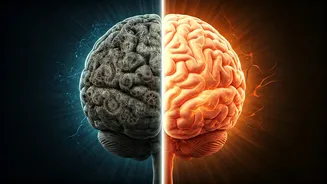








What is 'Brain Age'?
While your chronological age simply counts the years since you were born, 'brain age' is a biological concept. It refers to the physical and functional state of your brain compared to the average at a certain age. Scientists use tools like MRI scans to measure
features like brain volume, the thickness of gray matter, and the integrity of white matter, which facilitates communication between different brain regions. By comparing your brain's data to a large dataset of healthy individuals, researchers can estimate its biological age. A person might be 50 years old chronologically, but their brain could have the structural characteristics of a 60-year-old, indicating accelerated aging. Conversely, it could also appear younger. This difference is often called the 'brain age gap'.
The Great Disconnect: Why Brains Can Age Faster
The brain is highly sensitive to the effects of aging, sometimes more so than other organs. Its decline can be accelerated by a host of factors that don't affect the entire body uniformly. Chronic inflammation, for instance, has been strongly linked to faster brain aging and shrinkage, independent of chronological time. Other key accelerators include cardiovascular issues like high blood pressure, which can damage the delicate blood vessels supplying the brain with oxygen. Genetics certainly plays a role, but lifestyle factors are major contributors. Chronic stress, poor sleep, a diet high in processed foods, and a sedentary lifestyle can all speed up the brain's aging clock. Research has shown that these factors can contribute to a loss of brain volume and reduced connectivity, making the brain biologically 'older'.
What an 'Older' Brain Means for You
Having a brain that is biologically older than your chronological age isn't just a number on a scan; it has real-world consequences. An older brain age is associated with poorer cognitive performance, affecting memory, problem-solving skills, attention, and processing speed. This can impact daily functioning and overall quality of life. More seriously, a significant brain age gap is linked to a higher risk of neurodegenerative diseases. Studies have shown that accelerated brain aging is a predictor for cognitive impairment and can be seen in conditions like Alzheimer's disease, sometimes years before symptoms become obvious. This makes understanding and managing your brain's age a crucial aspect of long-term health.
Can You Turn Back Your Brain's Clock?
Here's the good news: brain age is not set in stone. Thanks to a process called neuroplasticity, your brain can adapt, form new connections, and even grow. While you can't stop time, research strongly suggests you can slow, and in some cases even partially reverse, brain aging. Regular physical activity is one of the most powerful tools. Aerobic exercise, like brisk walking or swimming, increases blood flow to the brain and can even increase the size of the hippocampus, the brain's memory center. A brain-healthy diet, such as the Mediterranean diet, rich in fruits, vegetables, and healthy fats, has been shown to slow brain atrophy. Prioritizing 7-9 hours of quality sleep allows the brain to clear out toxins. Finally, staying mentally and socially active by learning new skills or connecting with others helps build cognitive resilience and keeps your brain sharp.