






First, What is Solar Irradiance?
Think of solar irradiance as the amount of raw power the Sun delivers to a specific area. It’s the measure of solar energy hitting a surface, typically expressed in watts per square metre. While we often think of sunlight as constant, it’s not. The Sun is
a dynamic, variable star, and its energy output fluctuates due to sunspots, solar flares, and other complex magnetic activity. These changes, big and small, are what scientists are keen to measure. Total Solar Irradiance (TSI) is the measurement of all solar energy reaching Earth, and tracking it is essential for understanding our planet's energy budget. Aditya-L1 is designed to provide this crucial data with unprecedented clarity.
Why Measuring These Shifts Matters
Measuring shifts in solar irradiance isn't just an academic exercise; it has profound real-world implications. This data is a critical input for weather forecasting and climate change models, helping scientists distinguish between natural climate variability and human-induced changes. On a more immediate level, sudden bursts of energy from the Sun drive 'space weather'. These events can disrupt satellite operations, damage power grids on the ground, and interfere with communication and navigation systems. By understanding the energy shifts that precede these events, we can develop better forecasting and warning systems to protect our vital infrastructure. The data also helps optimise solar power generation and even informs agricultural practices.
A Prime Location for Sun-Gazing
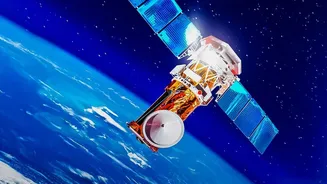
To measure solar irradiance accurately, you need an unobstructed view. This is where Aditya-L1's unique location comes in. The spacecraft is positioned in a halo orbit around the first Sun-Earth Lagrange point, or L1. This spot, about 1.5 million kilometres from Earth, is a point of gravitational equilibrium where the pull of the Sun and Earth balance out. From here, Aditya-L1 has a continuous, uninterrupted view of the Sun, free from the eclipses and atmospheric distortions that would affect an Earth-orbiting satellite. This stable vantage point is crucial for the continuous, long-term monitoring needed to detect subtle irradiance changes.
The Instruments for the Job
While the headline mentions photometers, Aditya-L1 uses a suite of seven sophisticated payloads to achieve its goals. For measuring solar radiation, a key instrument is the Solar Ultraviolet Imaging Telescope (SUIT). This telescope is specifically designed to measure solar irradiance in the near-ultraviolet (UV) wavelength range from 200-400 nanometers. It captures full-disk images of the Sun's photosphere and chromosphere, the layers of the solar atmosphere where much of the Sun's energy dynamics originate. Other instruments like the Solar Low Energy X-ray Spectrometer (SoLEXS) and the High Energy L1 Orbiting X-ray Spectrometer (HEL1OS) study energy releases in the form of X-ray flares, providing a more complete picture of the Sun's energy output across different parts of the spectrum.
How SUIT Measures Solar Energy
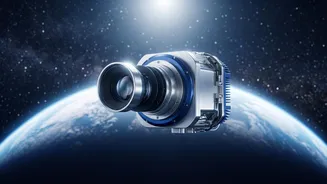
The SUIT instrument works like a highly advanced digital camera specifically tuned to see the Sun in ultraviolet light. It uses a system of 11 different filters to isolate specific UV wavelengths. Each filter allows light from a particular layer of the solar atmosphere to pass through to its detector, a 4096x4096 pixel CCD sensor. By capturing images in these different bands, scientists can measure the intensity of radiation coming from various heights in the Sun's lower atmosphere. This process allows them to create a detailed map of energy output across the entire solar disk and understand how energy is transferred between layers like the photosphere and chromosphere. This is the first time a spacecraft will provide spatially resolved solar radiation measurements in this crucial UV range, which heavily influences Earth's atmospheric chemistry.
The Promise of a Clearer Picture
By meticulously recording shifts in solar irradiance, Aditya-L1 promises to answer some of the biggest questions in solar physics. Scientists hope to better understand the mysterious process of coronal heating—why the Sun's outer atmosphere is millions of degrees hotter than its surface. The data gathered by SUIT and other instruments will provide crucial information on the origin of solar flares and Coronal Mass Ejections (CMEs), the primary drivers of space weather. Ultimately, this Indian mission provides a powerful new tool not just for India, but for the global scientific community, helping us to better understand our star and protect our technology-dependent world from its powerful outbursts.