




Planning and Logistics
To truly appreciate Hampi's architectural marvels, timing is everything. The best time to visit is during the winter months, from October to February, when the weather is cool and pleasant for exploring the vast open-air museum. The summer months (March
to June) can be intensely hot. The nearest transport hub is Hosapete (also called Hospet), about 13 km away, which is well-connected by train and bus to major cities like Bengaluru and Mumbai. From Hosapete, you can hire an auto-rickshaw or take a local bus to reach Hampi. Once there, the sprawling ruins are best explored by renting a scooter, a bicycle, or hiring an auto-rickshaw for the day, which can cost between ₹1,200 and ₹1,800.
Where to Stay for a Heritage Vibe
To remain immersed in the historical atmosphere, consider your accommodation carefully. For a luxury experience, properties like the Evolve Back Kamalapura Palace are designed to reflect Vijayanagara-era architecture, offering a stay that feels like stepping back in time. Several heritage-themed resorts, such as the Heritage Resort Hampi and Hampi's Boulders Resort, are set amidst the iconic rocky landscape and offer comfortable stays with easy access to the main sites. For those on a moderate budget, hotels like Clarks INN in Kamalapura offer reliable comfort close to the core zone of the ruins. Staying near the sites allows for early morning visits, letting you experience the monuments in the soft light before the crowds arrive.
Day 1: The Royal Centre and Sacred Core
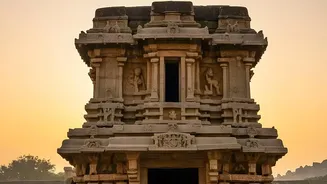
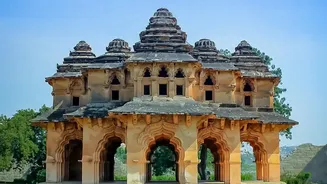
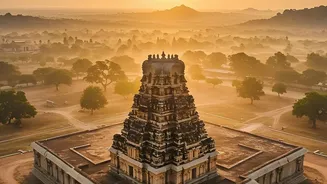
Dedicate your first day to the heart of the ancient city. Start at the Royal Enclosure, the erstwhile administrative seat of the empire. Here, you can wander through the remnants of palaces and public buildings. Key highlights include the elegant Lotus Mahal, the impressive Elephant Stables, and the Queen’s Bath. Don’t miss the Mahanavami Dibba, a grand stone platform from where the kings watched festivals and processions. Nearby is the Hazara Rama Temple, famous for its intricate wall carvings depicting the story of the Ramayana. In the afternoon, shift your focus to the Sacred Centre. Begin with the majestic Virupaksha Temple, one of India's oldest functioning temples, which has been a place of worship for centuries. As evening approaches, a short, rewarding hike up Hemakuta Hill offers panoramic views of the temple complex and a stunning sunset.
Day 2: The Vitthala Temple and Riverside Ruins
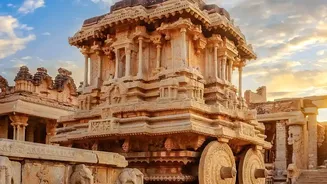
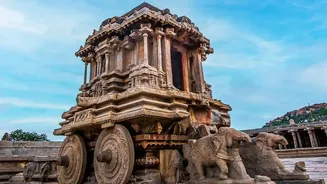
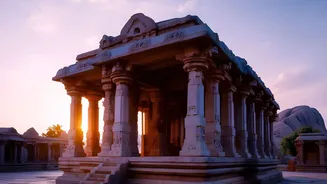
Your second day should be centred around the breathtaking Vijaya Vittala Temple, the pinnacle of Hampi's artistic achievement. It is home to the iconic Stone Chariot, a symbol of Karnataka tourism, and the famed musical pillars that resonate with different tones when tapped. Give yourself ample time here, as the complex is vast and detailed. Afterwards, explore the riverside ruins along the Tungabhadra River. A traditional coracle boat ride offers a unique perspective of the temples and boulder-strewn landscape, especially beautiful during sunset. Depending on your interest, you can also visit the monolithic Lakshmi Narasimha statue and the neighbouring Badavilinga Temple. For another spectacular sunset view, consider climbing Matanga Hill, which provides a 360-degree vista of the entire Hampi landscape.
Beyond the Monuments
While the ruins are the main draw, Hampi's soul extends beyond them. If you have extra time, cross the Tungabhadra River by ferry to explore the Anegundi village area, which is even older than Hampi itself. This side of the river, often called 'Hippie Island', offers a more laid-back vibe with paddy fields, quaint cafes, and guesthouses. You can rent a scooter here to visit Anjaneya Hill, believed to be the birthplace of Lord Hanuman, which involves a climb but rewards with incredible views. Exploring the Hampi Bazaar, the restored market street in front of the Virupaksha Temple, also gives a glimpse into the commercial life of the ancient capital.