





Why Your Carrier's Map Isn't Enough
When you book a flight, train, or bus ticket, the seat selection map you see is a simplified diagram. It shows you the basic layout—windows, aisles, and occupied seats—but often omits crucial details. These diagrams can be generic and may not represent
the specific version of the vehicle you'll be on. Airlines, for example, might have multiple configurations of the same aircraft type. The booking map won’t tell you if your window seat has a misaligned window, if the seat in front has limited recline, or if you're next to a noisy galley. Relying solely on these maps is a gamble, leaving your comfort to chance.
Your Toolkit for Accurate Seat Maps
For years, travellers relied on SeatGuru, but since it was discontinued, new and more detailed alternatives have emerged. For air travel, aeroLOPA is a favourite among frequent flyers. It provides incredibly detailed, to-scale architectural drawings of aircraft interiors, showing precise window alignment, bulkhead legroom, and cabin features. SeatMaps.com is another strong contender, offering a user-friendly, colour-coded interface similar to the old SeatGuru, complete with user reviews and photos. Other tools like ExpertFlyer offer real-time seat availability and alerts for when your desired seat opens up. Using these third-party sites is the key to getting a true picture of your seating options.
Decoding the Aircraft Seat Map
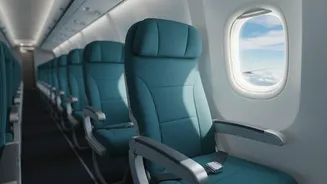
Once you have an accurate map from a site like aeroLOPA, you need to know what to look for. Pay attention to the location of galleys (kitchens) and lavatories, as seats near these areas are prone to noise, light, and foot traffic. Bulkhead rows offer extra legroom but may not have floor storage during takeoff and landing. Exit rows are prized for their leg space, but the seats may be narrower and colder. A key feature of detailed maps is window alignment; they can show you if a supposed window seat is actually next to a solid wall. These maps also illustrate which seats have limited recline because they are in front of an exit row or bulkhead. Making an informed choice means weighing these pros and cons based on your personal preference.
Applying the Logic to Train Travel
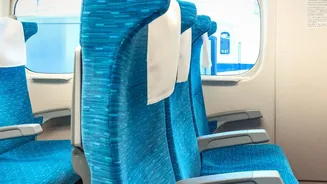
The same principles apply to train journeys, with a few unique considerations. One of the most important factors is the direction of travel; a forward-facing seat is crucial for those prone to motion sickness. Seat maps can sometimes indicate this with arrows. Also, consider the train's route. If you're on a scenic journey along a coast or through mountains, find out which side has the better view. Seats near the doors of the carriage experience constant traffic at every stop, along with drafts and noise. For those who need to work, a table seat is ideal, often found in a café car, which can offer more space than a standard seat. Proximity to luggage racks is another point to consider—close enough for convenience, but not so close that it becomes chaotic.
Mastering the Bus Seat Layout
Long-distance bus travel comfort is also highly dependent on seat selection. The middle of the bus, between the front and rear axles, generally offers the smoothest and most stable ride, making it the best choice for those susceptible to motion sickness. The rear seats tend to be the bumpiest and are often located near the engine and restroom, leading to more noise and potential odours. Front-row seats can offer extra legroom but may have less privacy. When choosing between a window and an aisle, consider your priorities. A window seat allows you to lean against the side to sleep and control the shade, while an aisle seat provides easier access to the restroom and the ability to stretch your legs.