


An Itinerary of Earth and Timber
To truly understand Rajasthan, one must look beyond the grand monuments and into the workshops of its artisans. This was a journey planned not around cities, but around crafts that have been practised for centuries. The goal was to find the living history
in the hands of the woodcarvers of the Mewar region and the potters of Molela, whose skills connect the past to the present. These villages are not just production centres; they are cultural hubs where every object tells a story of faith, community, and an enduring artistic spirit. The trip was a deliberate bypass of the main tourist emporia to witness the craftspeople in their own environment, where the air itself seems filled with creative energy.
The Whispering Wood of Bassi
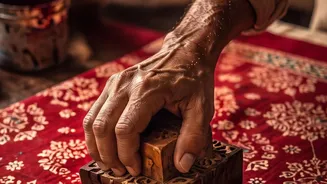
The first stop was the village of Bassi in the Chittorgarh district, a place synonymous with woodcraft, or 'Kashtkala', for nearly five centuries. The Suthar community, hereditary carpenters who trace their lineage to the divine architect Vishwakarma, are the keepers of this tradition. Their workshops are alive with the scent of Sheesham (Indian rosewood) and mango wood. Using simple chisels and mallets, these artisans bring intricate designs to life. They are famed for the 'kavad', a portable wooden shrine with multiple hinged panels that fold out to reveal pictorial stories from epics like the Ramayana and Mahabharata. Watching a carver release a floral pattern from a block of dense Sheesham feels less like construction and more like an act of revealing something that was always there.
A Language Carved in Timber
The woodwork of Rajasthan, particularly in centres like Jodhpur and Bassi, grew from the needs of royalty and wealthy merchants to adorn their grand havelis. This legacy is visible in the iconic 'jharokhas' (ornate projecting windows), latticed screens, and elaborately carved doors. The process is entirely handmade. An artisan selects a seasoned piece of wood, ensuring it won't warp in Rajasthan’s dry climate. Then, with immense focus, they carve low-relief figures, geometric patterns, and floral motifs. A single intricately carved panel can take many hours of work, a testament to a patience and precision that machines cannot replicate. This tradition transforms functional items like boxes, chairs, and mirror frames into pieces of art.
Molela and Its Earthly Deities
From the language of wood, the journey shifted to the language of clay in Molela, a village in the Rajsamand district. Molela is the exclusive home of a unique terracotta art form: hollow relief plaques depicting gods and folk deities. The entire craft is tied to the local geography. Artisans use a specific blend of clay sourced from the banks of the Banas River, which they mix with donkey dung. This special mixture prevents the clay from cracking during firing and is central to the craft's identity. According to legend, the tradition began when a potter was divinely instructed to create an icon, which cured his blindness, anchoring the craft in deep spiritual belief.
Shaping Faith from Sacred Clay
In Molela, the creation of a terracotta plaque is a ritual in itself. The process involves no moulds; every piece is shaped entirely by hand. An artisan flattens the prepared clay to create a base, then builds up the figures in hollow relief, sculpting the torso first, followed by the face and limbs. Details are added with small, shaped pieces of clay. The finished plaque is then dried in the sun for days before being fired in a community kiln called an 'awara'. These plaques, often featuring the deity Devnarayan, are purchased by tribal communities from Rajasthan and neighbouring states, who consider them sacred. To carry one of these plaques home is to carry a piece of Molela’s sacred earth and enduring faith.