





What Exactly Is Water Calisthenics?
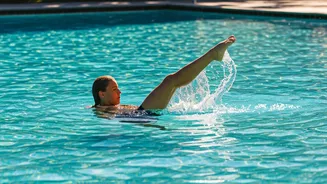
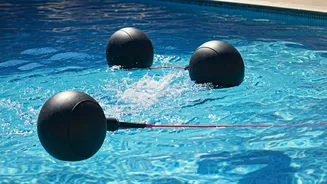
Forget leisurely laps. Water calisthenics, or aqua aerobics, is a form of resistance training that uses the water's natural properties to challenge your body. Instead of lifting dumbbells, you use your own bodyweight and the water itself to perform exercises
like squats, lunges, jumping jacks, and arm movements. The magic lies in two key principles: buoyancy and viscosity. Buoyancy supports your body, reducing impact on your joints, while the water’s viscosity (its thickness or resistance) forces your muscles to work harder in every direction. It’s a full-body workout that feels deceptively gentle while you’re doing it, but delivers real results.
The Undisputed Power of Heavy Lifting
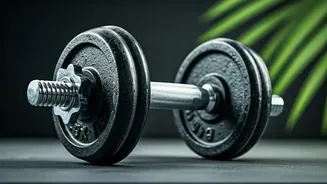
Before we crown water calisthenics the new king, let's give heavy weightlifting its due. For building maximal muscle strength and increasing bone density, nothing beats progressive overload with heavy weights. Lifting heavy triggers a specific physiological response: it creates micro-tears in muscle fibres, which then repair themselves and grow back stronger and larger (a process called hypertrophy). It also puts mechanical stress on your bones, signalling your body to lay down new bone tissue, which is crucial for staving off osteoporosis. If your goal is to look like a bodybuilder or deadlift twice your bodyweight, the weight rack is your undisputed territory. Its effectiveness for building raw power is proven and profound.
Where Water Shines: The Low-Impact Advantage
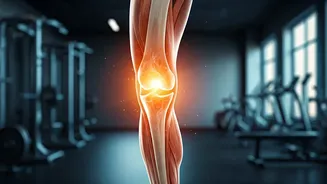
Here's where the headline starts to make sense. For anyone with joint pain, arthritis, or who is recovering from an injury, water calisthenics is a game-changer. The buoyancy of water can support up to 90% of your body weight, which means your knees, hips, and spine are protected from the harsh impact of land-based exercises. This allows people to move more freely and with a greater range of motion than they might be able to on land. For older adults or those new to fitness, this makes exercise more accessible and sustainable. In this context, water calisthenics doesn't just compete with heavy lifting—it opens up a world of fitness that might otherwise be too painful or intimidating.
Resistance, Reimagined
Weightlifting provides resistance in one direction—against gravity. When you do a bicep curl, you work your bicep on the way up, but the muscle gets a break on the way down. In the water, resistance is a 360-degree affair. As you push your arm down through the water, you’re working your triceps. As you pull it back up, you’re working your biceps. This constant, multi-directional resistance engages stabilizer muscles and works opposing muscle groups simultaneously, leading to a more balanced and functional strength. It may not build bulging biceps as quickly as heavy curls, but it builds integrated, practical strength throughout the body.
The Cardio-Strength Combo
A typical weightlifting session often separates strength from cardio. You lift, then you rest. For cardio, you might hop on the treadmill afterwards. Water calisthenics classes are often structured to keep your heart rate elevated for the entire duration. The constant movement against the water’s resistance provides a robust cardiovascular workout at the same time you’re building muscular endurance. This time-efficient, dual-benefit approach is a huge plus for those with busy schedules. You’re improving heart health and toning muscle in a single session, making it a highly effective workout.
So, Who Wins the Showdown?
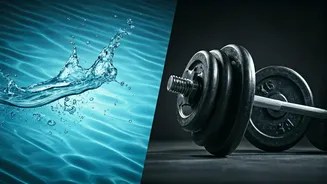
The truth is, there's no single winner. The 'best' workout depends entirely on you. If your primary goal is maximal muscle mass and bone density, heavy lifting remains the gold standard. But if you define 'outperforms' as providing a safe, effective, full-body workout with both cardio and strength benefits, minimal joint stress, and high accessibility, then water calisthenics is an incredible contender. It’s not about replacing the weight rack, but about recognising that the pool offers a powerful and unique alternative. Many elite athletes even use water workouts for active recovery and cross-training to reduce injury risk while maintaining fitness.