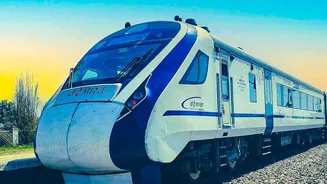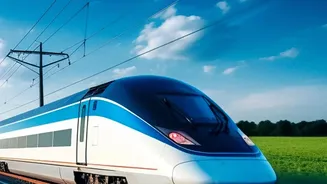

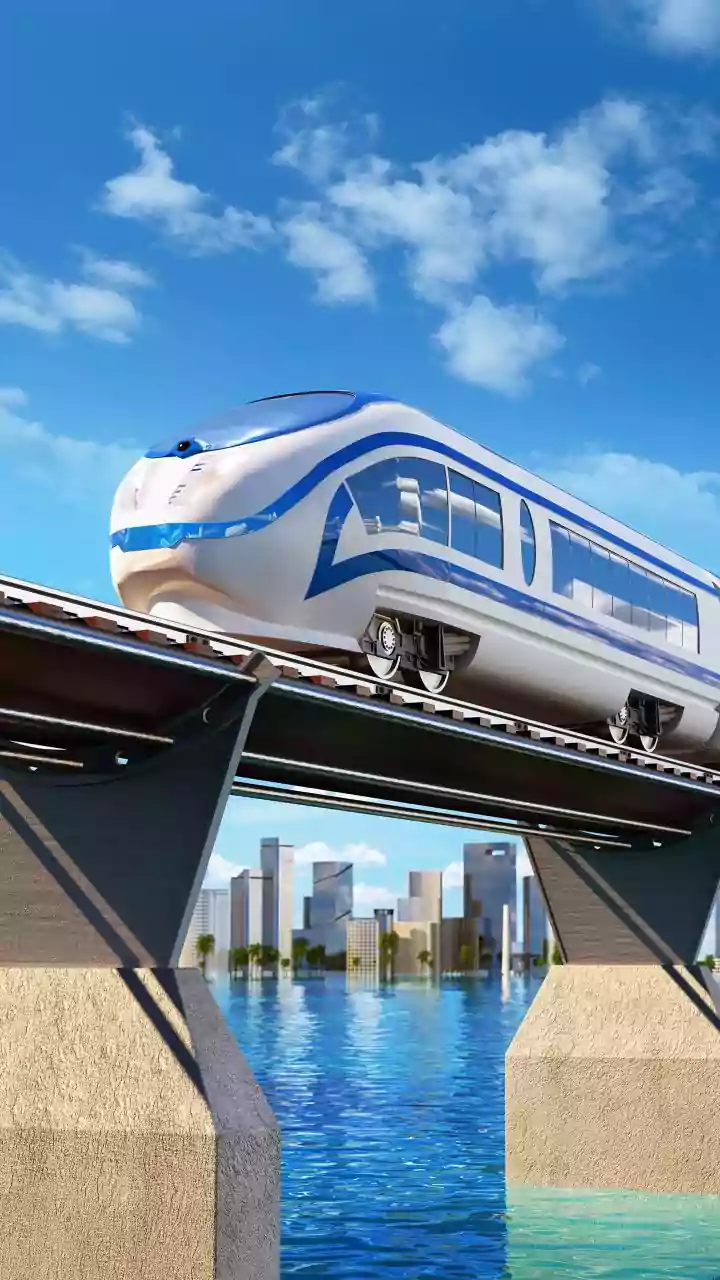
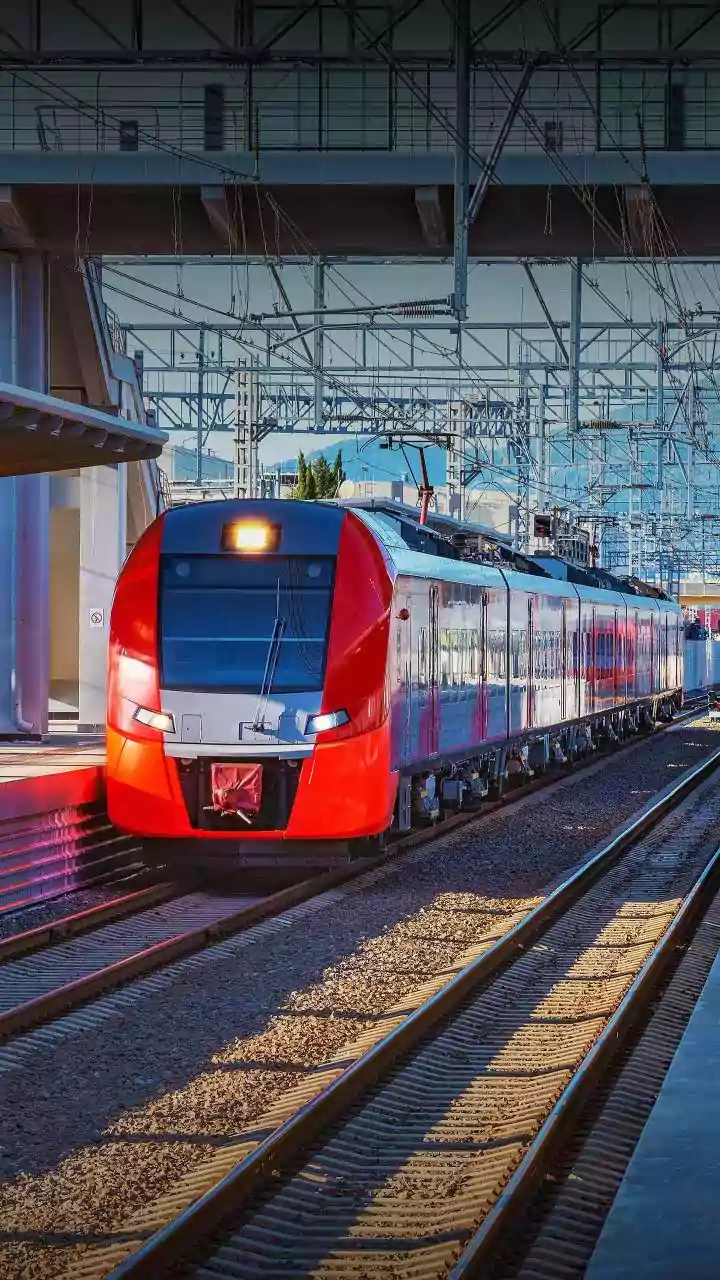

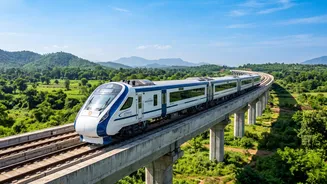
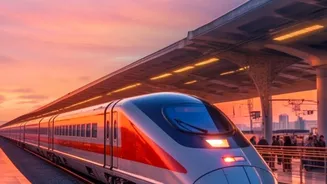
India's long-held dream of high-speed rail is rapidly becoming a reality. The nation's first bullet train is slated to begin service in 2027, with the inaugural stretch connecting the industrial hubs of Surat and Vapi in Gujarat.
The First Step in a Mobility Revolution
The initial operational
segment of India's bullet train project will be the section between Surat and Vapi. More specifically, recent progress has centered on the 50-kilometre stretch from Surat to Bilimora, a key part of the larger Surat-Vapi corridor. This section has been prioritised because of the rapid pace of construction and land acquisition in Gujarat, allowing it to serve as the testing ground for the entire project. In a major milestone, the overhead electrical equipment on the Surat-Bilimora section was successfully energised around November 20, 2026, a critical step before trial runs can commence. Railway Minister Ashwini Vaishnaw has indicated that trials on this initial section are expected to begin in May 2027, with the first passenger services targeted for the last quarter of 2027.
The Bigger Picture: Mumbai to Ahmedabad
This pioneering service is part of the ambitious 508-kilometre Mumbai-Ahmedabad High-Speed Rail (MAHSR) corridor. Managed by the National High Speed Rail Corporation Limited (NHSRCL), the project aims to connect the economic powerhouses of Mumbai and Ahmedabad, passing through 12 stations across Maharashtra, Gujarat, and Dadra & Nagar Haveli. While progress in Gujarat has been swift, the project has faced delays, particularly in Maharashtra, due to challenges with land acquisition and the COVID-19 pandemic. The full corridor, which features remarkable engineering feats like India's first undersea rail tunnel beneath Thane Creek, is expected to be completed in phases. Once fully operational, the bullet train will slash the journey time between Mumbai and Ahmedabad from around eight hours to just under two hours.
Technology and Speed on Track
The project is being developed using Japan's renowned Shinkansen technology, known globally for its safety and reliability. While the ultimate goal is to operate trains at a maximum speed of 320 km/h, the initial services will utilize domestically manufactured trainsets. The indigenous B28 train, built by a consortium including Integral Coach Factory (ICF) and BEML, is designed for speeds up to 280 km/h, with track trials anticipated by mid-2027. A more advanced B35 train designed for 350 km/h is planned for the future. The infrastructure itself is state-of-the-art, employing a sophisticated 2x25 kV overhead power system and ballastless slab tracks laid with immense precision to ensure a smooth and safe ride at high speeds.
A Catalyst for Economic Growth
The impact of the bullet train extends far beyond reduced travel times. The corridor is set to be a powerful economic engine for the entire region. By connecting key industrial centres like Surat, Vapi, Bharuch, and Vadodara with India's financial capital, the project will boost commerce and facilitate easier business travel. The construction phase itself has already spurred growth in the steel, cement, and construction sectors, creating thousands of direct and indirect jobs. In the long term, the high-speed link is expected to drive development, increase property values, and make the connected cities more attractive places to live and work. The Sabarmati station, for instance, is being developed as a multimodal transport hub, integrating the bullet train with metro, bus, and conventional rail services, showcasing a new vision for urban mobility in India.