


Feeling wobbly in yoga balance poses is normal, but it's also a chance to grow. Tree Pose, or Vrikshasana, is a perfect way to build stability and focus right in your living room, one breath at a time. Let's get rooted and explore it safely.
Why Balance Is More Than Physical
Practising
balance poses does more than just prevent you from tipping over. When you stand on one leg, you're not only strengthening the muscles in your feet, ankles, and legs, but also training your brain. This physical challenge demands mental focus. The concentration required to hold a pose like Vrikshasana helps calm the nervous system, reduce stress, and improve your overall sense of groundedness. It's a moving meditation that builds a powerful connection between mind and body, enhancing coordination and body awareness that translates into everyday life.
Finding Your Roots: The Classic Tree Pose
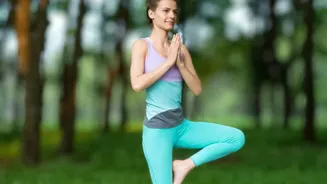
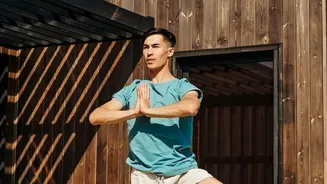
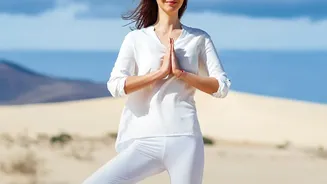
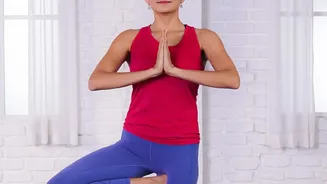
Vrikshasana, which means 'tree pose' in Sanskrit, is a foundational standing balance posture. To begin, stand tall with your feet together in Mountain Pose (Tadasana). Shift your weight onto your left foot, making it your steady base. Bend your right knee and place the sole of your right foot on your inner left leg. You can place it on the ankle, calf, or inner thigh. A crucial safety rule is to never place your foot directly on the knee joint, as this puts undue pressure on it. Once your foot is placed, find a non-moving spot in front of you to gaze at—this is your 'drishti', and it will help you stay steady. Bring your palms together at your heart. Hold for 20-30 seconds, breathing evenly, then gently release and repeat on the other side.
Variation 1: Use a Wall for Support
If you feel unsteady, a wall is your best friend. Stand with your side to a wall, about an arm's length away. As you move into Tree Pose, you can lightly touch the wall with your hand for support. This modification allows you to find proper alignment and build confidence without the fear of falling. Over time, you can begin to lighten the pressure on your hand, using just your fingertips, and eventually hovering your hand away from the wall as your balance improves. This is an excellent way for beginners to learn the mechanics of the pose safely.
Variation 2: Kickstand Your Foot
For those who find lifting the foot high a challenge, the kickstand variation offers a stable and effective alternative. Instead of placing your foot on your calf or thigh, simply place the heel of your bent leg against your standing ankle, with the toes resting on the floor like a kickstand. This provides an extra point of contact and support while still allowing you to practice the alignment of the hips and the lengthening of the spine. It's a perfect starting point that helps build the necessary strength and awareness in the standing leg.
Variation 3: Explore With Your Arms
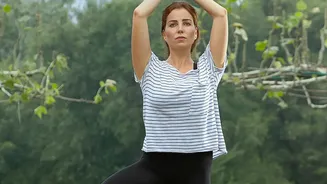
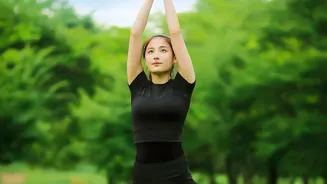
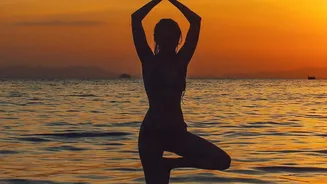
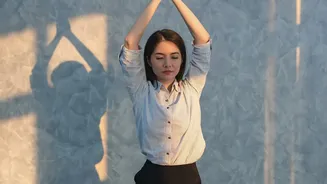
Once you feel stable in your legs, you can change the pose by moving your arms. While hands at the heart is the classic position, raising your arms overhead like branches reaching for the sun can deepen the stretch in your shoulders and back. You can also stretch your arms out to the sides for a different balance challenge. These arm variations not only change the pose aesthetically but also shift your center of gravity, requiring your core to engage differently to maintain stability.
Common Mistakes to Avoid
To get the most out of your practice and prevent injury, be mindful of a few common misalignments. The most critical is placing the foot directly on the knee of the standing leg, which can strain the joint. Another common error is leaning your torso to one side to compensate; try to keep your hips level and your spine long. Avoid locking the knee of your standing leg; a tiny micro-bend will keep the muscles engaged and protect the joint. Finally, don't forget to breathe! Holding your breath creates tension and makes balancing much harder. A steady breath leads to a steady body and mind.