


A New Cosmic Panorama
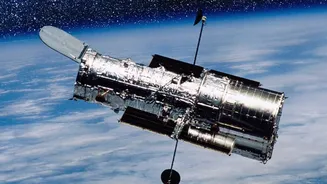
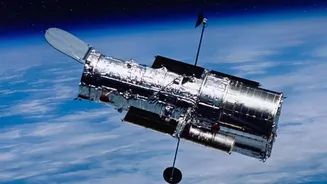
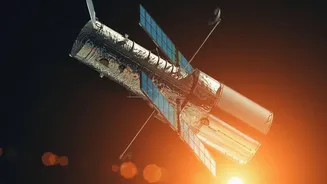
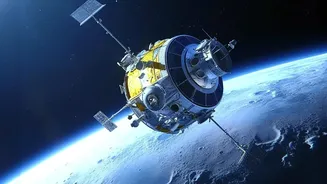
Scheduled to launch aboard a SpaceX Falcon Heavy rocket on August 30, 2026, the Nancy Grace Roman Space Telescope is NASA's next flagship mission in astrophysics. While it shares a mirror of the same 2.4-meter size as the Hubble Space Telescope, its power
lies not in magnification but in breadth. Its Wide Field Instrument will give it a field of view at least 100 times larger than Hubble's infrared camera. This means that for every snapshot Hubble takes, Roman can capture a vast panorama with the same incredible sharpness. This capability will allow it to map the sky between 100 and 1,000 times faster than its celebrated predecessor, creating unprecedentedly large and deep cosmic charts.
The Hunt for Dark Energy and Dark Matter
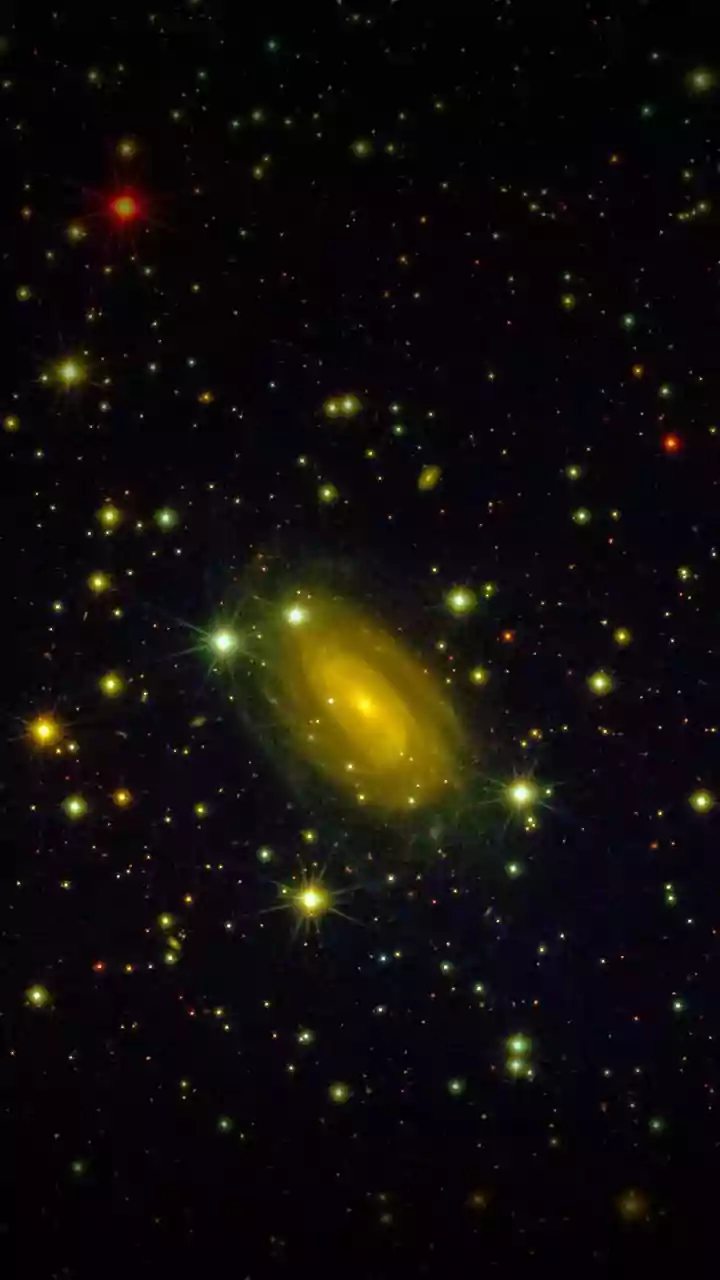
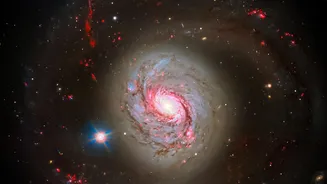
Roman’s primary mission is to confront two of the most profound puzzles in physics: dark energy and dark matter. Dark energy is the name given to the mysterious force causing the expansion of the universe to accelerate, while dark matter is the unseen substance that seems to provide the gravitational scaffolding for galaxies. Together, they make up about 95% of the universe, yet we know almost nothing about them. Roman will address this by conducting a massive survey of over a billion galaxies and thousands of distant supernovae. By mapping their distribution and measuring how their light has been bent by gravity over cosmic time, scientists hope to understand the evolution of the universe and, in doing so, reveal the true nature of these dark components.
A Galactic Planet Census
Beyond cosmology, Roman is set to revolutionize the search for exoplanets. While missions like Kepler and TESS found thousands of planets by watching for the dimming of starlight as a planet passes in front of its star, Roman will primarily use a different technique called gravitational microlensing. This method detects planets by observing how their gravity bends the light of a more distant star, a flicker that can reveal worlds far from their host stars, free-floating rogue planets, and even worlds as small as Mars. Scientists anticipate that Roman could discover thousands of new planets, providing a more complete census of the worlds in our galaxy and helping us understand how common systems like our own truly are.
A Powerful Partner to Webb
The Roman telescope is not a replacement for the James Webb Space Telescope (JWST) but rather a powerful partner. Think of Roman as a wide-angle lens and Webb as a telephoto lens. Roman is designed for massive surveys, quickly identifying targets of interest across huge patches of the sky. Webb is designed for deep, focused observations of specific targets. Roman will be able to find thousands of fascinating objects—be it strange exoplanets, distant galaxies, or powerful black hole events—and create a rich catalog of targets for Webb and other telescopes to then investigate in greater detail. Roman will find the cosmic needles in the haystack; Webb will then study them under a microscope.