








What is the 'Tourism as a Jobs Engine' Strategy?
The government is strategically shifting its view of tourism from a seasonal activity to a year-round economic driver capable of creating employment on a massive scale. Recent policy discussions and budget allocations signal a clear intent to use tourism to generate
jobs, boost local economies, and support the broader vision of a developed India by 2047. Union Minister for Tourism and Culture, Gajendra Singh Shekhawat, recently stated the goal is to increase tourism's contribution to the national economy from six to ten percent by 2047. This approach recognizes tourism as one of the largest employment generators after agriculture, with a unique ability to create opportunities in rural and remote areas. The strategy involves a multi-pronged approach, including strengthening infrastructure, promoting skill development, and fostering entrepreneurship.
Beyond Monuments: The Rise of Local Experiences
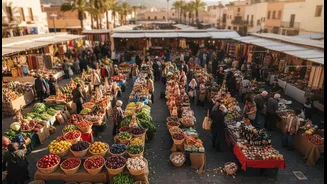
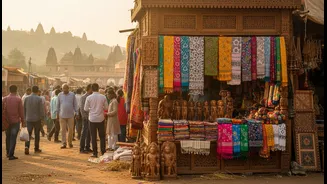
A core component of this new push is the emphasis on authentic, local experiences. The idea is to move beyond just monumental tourism and develop a more diverse and immersive portfolio of attractions. This includes promoting eco-tourism, spiritual circuits, wellness retreats, and rural homestays. The government is supporting these initiatives through schemes like 'Swadesh Darshan 2.0', which focuses on sustainable and responsible tourism development. By providing MUDRA loans for homestays and developing niche circuits like mountain trekking trails and Buddhist pilgrimage routes, the plan aims to empower local communities to become direct beneficiaries of tourism growth. This diversification creates new jobs for guides, artisans, content creators, and small business owners, ensuring the economic benefits are more widely distributed.
The Hospitality Sector: A Key Employer
The hospitality industry is central to this jobs-centric model. The sector is currently experiencing a significant hiring boom, with a projected net employment growth of around 5.1% for the first half of the 2026-27 fiscal year. This growth is not just in major metros but is expanding to Tier-2 and Tier-3 cities, as well as pilgrimage towns, driven by a surge in domestic tourism. According to a report by the Confederation of Indian Industry (CII) and EY, the tourism and hospitality sector has the potential to create 6.1 million new jobs by 2034. To meet this demand, a significant focus is being placed on skill development. The Union Budget has allocated funds for intensive training programs and the establishment of a National Institute of Hospitality to create a pipeline of world-class talent.
Building the Foundation: Infrastructure and Skilling
For this vision to materialize, robust infrastructure and a skilled workforce are essential. The government is focusing on improving connectivity to tourist destinations, from high-speed rail to last-mile transport, to make emerging destinations more accessible. The 2026 budget also introduced forward-thinking digital initiatives, such as a National Destination Digital Knowledge Grid to digitally document all places of cultural and historical significance. However, a significant skills gap remains a challenge. While millions of young people are interested in hospitality careers, only a small fraction have received formal training. Initiatives to upskill 10,000 tourist guides and provide formal training through hospitality institutes are the first steps toward bridging this gap and ensuring the workforce is ready for future demands.
The Road Ahead: Challenges and Opportunities
While the potential is immense, turning tourism into a reliable jobs engine requires overcoming several hurdles. Industry experts point to the need for sustained policy focus, increased budget allocation, and better inter-ministerial coordination to ensure plans are implemented effectively. Simplifying regulations and improving the ease of doing business are also critical to attract private investment, particularly for small and mid-sized operators. Furthermore, as tourism expands into new areas, ensuring that development is sustainable is paramount. The goal is to create growth that preserves local culture and the environment, rather than commodifying them. If executed with care, this strategy could transform India's tourism boom into a resilient, inclusive, and year-round engine of economic opportunity for millions.