








For over two decades, the International Space Station (ISS) has been humanity’s lone outpost in orbit. But with its retirement planned for around 2030, a new era is dawning—one driven by private companies building the labs of the future.
The End of an Era
The International
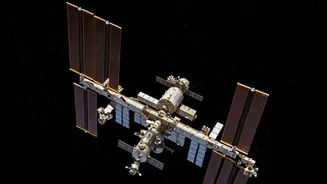
Space Station stands as one of humanity's greatest collaborative engineering achievements. Since continuous crewed operations began in 2000, it has hosted over 250 astronauts and thousands of scientific experiments. However, the station is aging. Its primary structure is limited by the stresses of orbital thermal cycling and the constant docking and undocking of spacecraft. Faced with rising maintenance costs and a planned end-of-life around 2030, NASA is preparing to transition from being an owner and operator in low-Earth orbit (LEO) to becoming a customer. This strategic pivot is designed to ensure there is no gap in America's ability to conduct research in microgravity, a lesson learned after the Space Shuttle program ended without a direct replacement.
NASA's Commercial Pivot
To prevent a research gap and foster a new space economy, NASA initiated the Commercial LEO Destinations (CLD) program. The goal is to help fund the development of privately owned and operated space stations. Under this model, NASA will act as an anchor tenant, buying services and lab space for its astronauts and experiments, while these commercial stations serve a wide range of other customers, including foreign space agencies, private companies, and even tourists. In 2021, NASA awarded initial funding to several teams to accelerate their designs. This approach frees NASA to focus its resources on deeper space exploration, like the Artemis missions to the Moon and Mars, while ensuring a vibrant human presence remains in Earth's orbit.
The New Contenders in Orbit
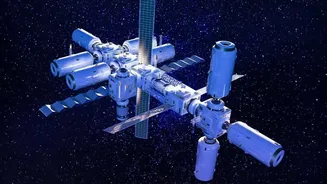
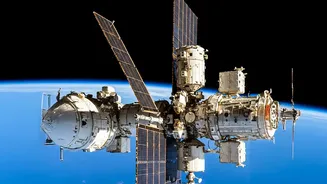
Several key players have emerged to build the successors to the ISS. Axiom Space is taking a unique approach by first attaching its commercial modules to the ISS starting in the late 2020s. These modules will eventually detach to form a free-flying independent station, Axiom Station, which will provide state-of-the-art facilities for research and manufacturing. Another major venture is Starlab, a joint effort between US-based Voyager Space and European aerospace giant Airbus. Starlab is being designed as a continuously crewed science and industrial park in space, with a planned launch before the ISS is decommissioned. A third contender, Orbital Reef, is led by Blue Origin and Sierra Space, who envision their station as a 'mixed-use business park' in space. It is designed to be a modular platform supporting diverse customers, from researchers to industrial clients.
A New Frontier for Science and Industry
These new commercial stations are designed to dramatically expand the scope of in-space research. The unique microgravity environment allows for breakthroughs that are impossible on Earth, where gravity causes effects like sedimentation and buoyancy. Future research will build on the ISS's legacy in fields like biotechnology, materials science, and human health. For example, scientists will investigate 3D bioprinting of tissues and organs, develop new pharmaceuticals, and manufacture purer semiconductor materials and fiber optics. Axiom Space is already partnering on research into regenerative medicine and disease modeling. Orbital Reef plans to support microgravity manufacturing, while Starlab will host hundreds of experiments annually. This commercial model promises to lower costs and increase access, potentially accelerating innovation across numerous industries.