





Day 1: Arrival and the 'Taj of the Deccan'
Arrive in Chhatrapati Sambhajinagar, your base for this historical expedition. After settling in, begin your journey back in time with a visit to Bibi Ka Maqbara. Often called the 'Taj of the Deccan', this stunning mausoleum was built by Mughal emperor
Aurangzeb's son in memory of his mother. While smaller than its famous counterpart in Agra, its intricate marble screens, elegant minarets, and peaceful gardens offer a serene introduction to the region's Mughal past. In the evening, explore local markets or visit Panchakki, a fascinating 17th-century water mill that showcases medieval Indian engineering. It's a relaxed start before the grand explorations ahead.
Day 2: The Painted Caves of Ajanta
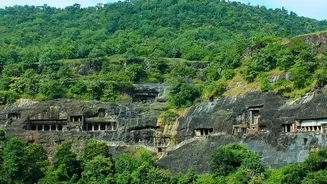
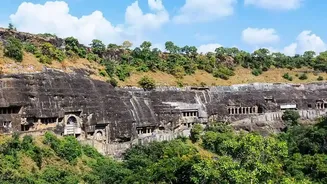
Prepare for a full-day excursion to the Ajanta Caves, a UNESCO World Heritage site located about 100 km from the city. It's best to start early to make the most of your visit. These 30 rock-cut Buddhist caves, carved into a horseshoe-shaped cliff, were lost to the world for centuries until a British officer rediscovered them in 1819. Inside, you'll find some of the finest surviving examples of ancient Indian painting. These murals vividly depict the Jataka tales, stories of the Buddha's previous lives, in breathtaking detail and colour. Hiring a licensed guide is highly recommended to understand the narratives and symbolism hidden in the art. Remember, the caves are closed on Mondays.
Day 3: The Monolithic Marvel of Ellora
Today, you will visit the Ellora Caves, another UNESCO World Heritage site just 30 km from Chhatrapati Sambhajinagar. Unlike Ajanta's singular focus on Buddhism, Ellora's 34 caves represent a remarkable confluence of three faiths: Buddhism, Hinduism, and Jainism. The undisputed masterpiece is Cave 16, the Kailasa Temple. It's the world's largest monolithic structure, a temple complex dedicated to Lord Shiva, carved downwards from a single piece of basalt rock over generations. The sheer scale and ambition are awe-inspiring. Spend the day exploring the different caves, each with its unique character, from serene Buddhist monasteries to elaborate Hindu and Jain temples. Ellora remains closed on Tuesdays.
Day 4: The Invincible Daulatabad Fort
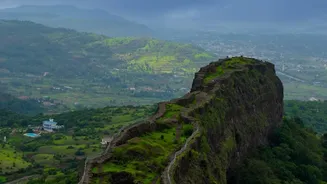
Shift your focus from carvings to citadels with a trip to Daulatabad Fort, located conveniently on the route between Chhatrapati Sambhajinagar and Ellora. Originally known as Devagiri, this 12th-century fortress is perched on a 200-metre-high conical hill and was considered one of the most powerful forts of its time. Its reputation for being unconquerable stems from its ingenious defensive systems, including a crocodile-infested moat, multiple fortified walls, and a confounding dark, spiralling passage known as the 'Andhari' designed to trap and confuse invaders. The climb to the top takes about 1.5 to 2 hours but rewards you with panoramic views and a deep appreciation for medieval military architecture. Nearby, you can also visit the Grishneshwar Temple, one of the 12 sacred Jyotirlingas in India.
Day 5: City Caves and Departure
On your final day, explore a lesser-known but equally fascinating site: the Aurangabad Caves. Located just outside the city, these 12 rock-cut Buddhist shrines were carved between the 6th and 8th centuries. They offer a more intimate experience than their famous neighbours and feature remarkable sculptures, including a panel depicting the 'Temptations by Mara'. Afterwards, you can indulge in some last-minute shopping for local handicrafts like Himroo shawls or Paithani sarees before heading to the airport or railway station for your departure. This completes a compact but comprehensive tour through the heart of Maharashtra's heritage.