





Saturn Reaches for the Spotlight
Throughout August, the magnificent ringed planet Saturn is a standout feature in the night sky. It rises in the east during the evening and remains visible all night, appearing as a steady, golden-hued point of light that doesn't twinkle like a star.
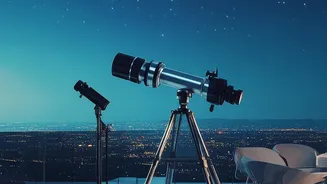
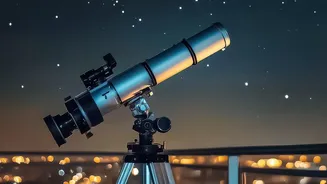
This month provides an excellent opportunity for viewing as the planet gets brighter on its way to opposition—its closest point to Earth—in early October. For an easy find, look for it on the nights of August 30th and 31st, when the waning gibbous Moon will pass close by, creating a beautiful celestial pairing. While you'll need a telescope to see its famous rings, Saturn’s bright glow is a captivating sight for the naked eye.
A Subtle Meteor Shower: The Kappa Cygnids
If you still want to catch some shooting stars, look for the Kappa Cygnid meteor shower. This minor shower is active from August 3rd to 28th, with its peak expected around August 17th or 18th. It's not a blockbuster like the Perseids, producing only about three meteors per hour under ideal conditions. However, the shower is known for its occasional bright, slow-moving fireballs, which can be a spectacular sight. With the Moon being a waxing crescent, its light won't significantly interfere with viewing, especially after it sets early in the evening. The radiant point is in the constellation Cygnus, but these meteors can appear anywhere in the sky.
A Parade of Planets in the Pre-Dawn Sky
The early mornings of late August continue to host a parade of planets. While a grand six-planet alignment was a highlight mid-month, several of these worlds remain visible. Mars, with its distinct reddish glow, and yellowish Saturn are both high in the sky and easy to spot with the naked eye before dawn. Very bright Jupiter also makes an appearance, rising low in the eastern sky shortly before sunrise. To catch this planetary trio, you'll need to set an alarm and find a location with a clear view of the eastern horizon. For Indian observers, the prime viewing window is roughly between 4:15 AM and 5:30 AM IST.
Discover the Summer Triangle
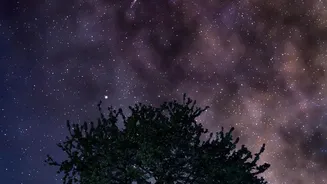
August is the perfect time to familiarize yourself with one of the most prominent star patterns of the season: the Summer Triangle. This is not a constellation but an asterism formed by three brilliant stars from three different constellations. You can find bright Vega almost directly overhead, with Deneb to the east and Altair to the southeast. These stars are so bright they are visible even from locations with some light pollution. The Summer Triangle is a great starting point for navigating the summer sky and spotting the faint, hazy band of the Milky Way, which stretches through it on very dark, clear nights away from city lights.