






Scout the Perfect Location
The first step is to identify the best spot for your drying zone. This doesn't need to be a whole room; a well-chosen corner will suffice. Look for a space with good ventilation. A utility area, a covered balcony protected from rain, or even a guest bathroom
can work well. The key is to select a low-traffic area where a drying rack won't be in the way. Consider proximity to a window that can be opened on less rainy days to let fresh air in and moisture out. If you have an exhaust fan in a bathroom or kitchen, that area becomes a prime candidate for your drying operations.
Choose Your Drying Arsenal
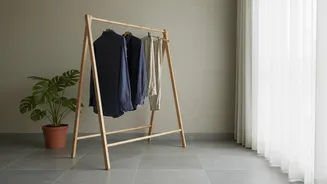
Your primary weapon in the fight against dampness is a good drying rack. The market is filled with options to suit every Indian home, from sprawling bungalows to compact apartments. Foldable winged stands are versatile and offer ample space, with adjustable wings for longer items. For smaller homes, vertical tower racks are a game-changer, maximising drying space without a large footprint. Wall-mounted retractable racks are another excellent space-saving solution, folding away neatly when not in use. For ultimate space efficiency, ceiling-mounted pulley racks can be hoisted up, keeping your floor space completely free. Invest in a sturdy steel rack to prevent rust in the humid conditions.
Master the Art of Airflow
Moisture doesn't just disappear; it needs to be moved away from the fabric. This is where airflow becomes your best friend. Simply hanging clothes is not enough; you need to get the air moving. Position a pedestal or table fan to blow air across the clothes on your rack. This constantly replaces the damp air surrounding the fabric with drier air, dramatically speeding up evaporation. Even a ceiling fan can be effective. When hanging clothes, ensure there is enough space between each item. Overcrowding traps moisture and is a primary cause of that dreaded musty smell.
Unleash the Power of a Dehumidifier
For those living in extremely humid cities, a dehumidifier is a worthy investment. This appliance actively pulls moisture from the air, creating a less humid environment that is perfect for drying clothes. Many models come with a dedicated 'laundry mode' designed for this very purpose. For the best results, place the dehumidifier in a small, enclosed room with the drying rack and shut the door. This concentrates its effect, helping clothes dry much faster and preventing the build-up of mould and dampness in your home. While it uses electricity, it's often more efficient than running an air conditioner in dry mode for the same purpose.
Adopt Smart Laundry Habits
The battle for dry clothes begins in the washing machine. Use the highest spin cycle your fabrics can tolerate to remove as much excess water as possible before hanging them. The less water they hold, the quicker they will dry. When washing, avoid overloading the machine to ensure a thorough rinse and spin. A clever trick is to add a small amount of white vinegar to the final rinse cycle; it helps to kill odour-causing bacteria that can thrive in damp clothes. When you take clothes out, give each item a good shake to open up the fibres before hanging.