





A Glimpse of the Future on the Moon
While Mars is the long-term goal, the proving ground for this new approach is the Moon. NASA's upcoming Cooperative Autonomous Distributed Robotic Exploration (CADRE) mission, slated to launch in the second half of 2026, is the perfect example of this strategic
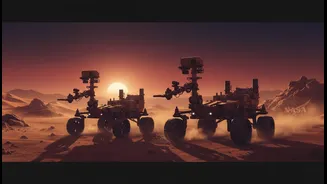
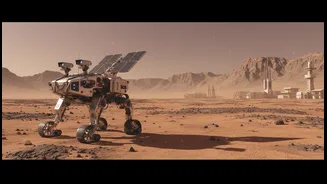
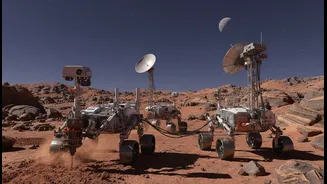
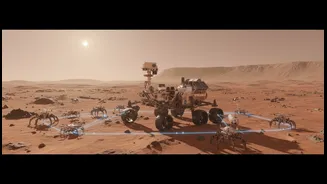
shift. The mission will deploy three shoebox-sized rovers that will work together as an autonomous team. For one lunar day—about 14 Earth days—these rovers will coordinate among themselves to map the lunar surface in 3D using ground-penetrating radar. They will elect their own 'leader', assign tasks, and make decisions on the fly, receiving only high-level instructions from mission control on Earth. This is a fundamental change from past missions, which required human operators to plan every move.
Why Autonomy Is Non-Negotiable for Mars
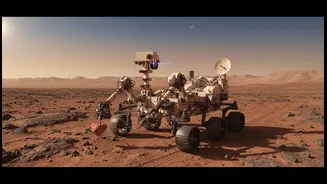
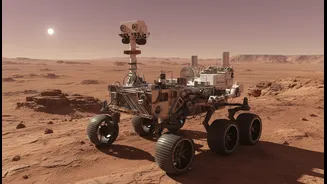
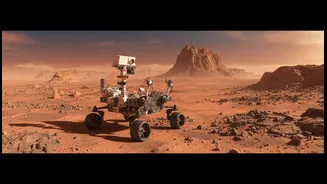
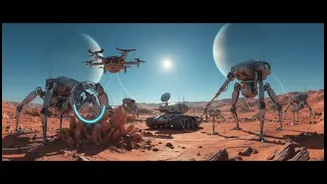
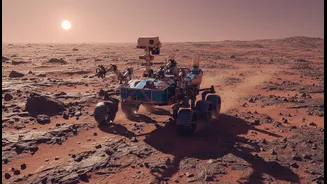
The need for this level of intelligence becomes critical when exploring Mars. The communication delay between Earth and Mars can be as long as 20 minutes each way, making real-time remote control impossible. Every command sent to a rover like Perseverance involves painstaking work from engineers who map out safe waypoints using orbital imagery. This process is slow and limits how much ground a rover can cover. Autonomous systems change the entire equation. Robots that can assess their environment, identify scientific targets, and navigate complex terrain on their own can explore faster and more efficiently. This not only accelerates the pace of discovery but also allows rovers to venture into more challenging and scientifically interesting regions that might be deemed too risky for human-controlled missions. In late 2025, NASA successfully demonstrated this when the Perseverance rover used generative AI to plan and execute drives on its own for the first time.
Beyond Driving: What These Robot Teams Will Do
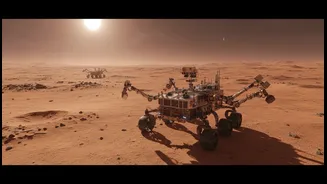
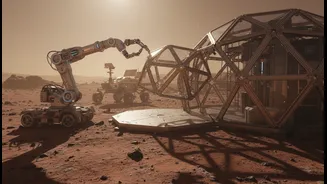
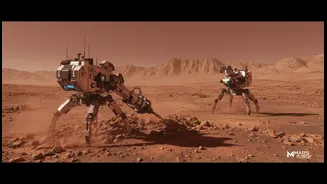
The vision extends far beyond just driving. Future robotic teams on Mars will be tasked with a wide array of complex jobs that are essential for preparing for human arrival. One of the most critical is In-Situ Resource Utilization (ISRU), which involves finding and processing local materials. This could mean robots capable of digging for water ice, extracting oxygen from the Martian soil, or even manufacturing building materials and fuel. By generating critical resources on-site, these robotic vanguards would dramatically reduce the amount of mass that needs to be launched from Earth, making long-duration human missions more feasible and affordable. Coordinated swarms of robots could also build habitats, deploy power systems, and perform maintenance, freeing up human astronauts to focus on high-level scientific research once they arrive.
Paving the Way for Human Explorers
Ultimately, every robotic mission is a step toward putting human boots on the Red Planet. The work of rovers like Perseverance, which has been searching for signs of ancient life and collecting rock samples for a future return to Earth, lays the scientific groundwork. The Ingenuity helicopter proved that powered flight is possible in the thin Martian atmosphere, opening up new possibilities for aerial scouting. Now, the development of autonomous robotic teams represents the next logical leap. These systems will not only gather invaluable scientific data but also serve as the advance crew, scouting landing sites, identifying hazards, and setting up the critical infrastructure needed to support a human outpost. NASA's investment in initiatives like STRIDE, which partners with private companies to develop next-generation mobility systems, shows a clear commitment to this robotic-led future. This strategy of letting intelligent robots do the dangerous and preparatory work is the safest and most effective path to establishing a sustainable human presence on Mars.