





The Official Freeze
The formal trade relationship between the two nuclear-armed neighbours has been in a deep freeze since 2019. Following the Pulwama terror attack, India revoked Pakistan's Most Favoured Nation (MFN) status and imposed a prohibitive 200% customs duty on imports.
In response, Pakistan suspended all bilateral trade. Tensions have escalated since, with further restrictions imposed by both sides following subsequent attacks and diplomatic standoffs, effectively shutting down official channels like the Wagah-Attari border for most goods. This has created a situation where political stances dictate official policy, but market demand refuses to disappear.
The Dubai Detour
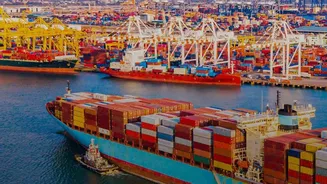
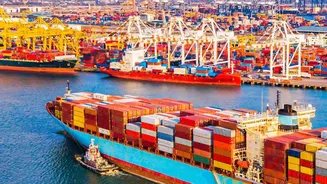
Economic necessity, however, is the mother of invention. A robust and well-established 'grey-zone' trade route has flourished, primarily through third-country hubs like Dubai. Indian exporters ship their products to the UAE, a global logistics and financial centre. In Dubai's free zones, intermediaries repackage the goods, alter the documentation to obscure their Indian origin, and then re-export them to Pakistan. This allows Pakistani importers to access needed supplies while officially importing from the UAE, not India. While Dubai is the primary channel, other hubs like Singapore and Colombo also play a role in this intricate supply chain. This indirect trade is estimated to be worth billions of dollars annually, far exceeding the minimal direct trade that was officially recorded before the complete suspension.
What's on the Move?
The goods making this indirect journey are not luxury items but essential inputs for Pakistan's industries and consumers. Pharmaceuticals and their raw materials (Active Pharmaceutical Ingredients or APIs) form a huge chunk of these imports. Pakistan's pharma industry has historically relied on cost-effective and high-quality Indian supplies. Other critical items include organic chemicals, textiles, machinery parts, tyres, and agricultural products. Recent data from July-September 2026 showed a significant 69% year-on-year jump in Pakistan's recorded imports from India, primarily driven by these essential categories, underscoring the deep-seated dependency.
The Economic Cost of Politics
While this workaround keeps supply chains moving, it comes at a significant cost, borne almost entirely by Pakistan. According to the Pak-India Business Council, the suspension of direct trade has resulted in an estimated economic loss of $40 billion for Pakistan since 2019. Pakistani businesses are forced to source goods from more distant markets or pay a premium to middlemen in Dubai, which inflates transportation and freight costs. For the pharmaceutical sector alone, resuming direct imports from India could save an estimated $2 billion to $3 billion annually. This convoluted process highlights a fundamental truth: while political decisions can close borders, they cannot easily erase decades of economic integration and market demand.
An Uneasy Interdependence
The persistence of this indirect trade paints a picture of uneasy interdependence. For Indian suppliers, it means they retain a crucial market, even if it requires navigating a more complex and less transparent system. For Pakistan, it's a pragmatic, if costly, solution to meet the demands of its industries and population. Business leaders in Pakistan have repeatedly called for the restoration of commercial ties, arguing that economic cooperation could provide a foundation for dialogue on more contentious political issues. However, with the Indian government maintaining that a normal relationship is contingent on an end to cross-border terrorism, a formal thaw in trade relations does not appear imminent.