


A Planet of Seasons
Just like Earth, Saturn experiences seasons, but on a much grander scale. With an orbit that takes over 29 Earth years to complete, each of Saturn's seasons lasts for more than seven years. This long cycle, combined with the planet's axial tilt, leads
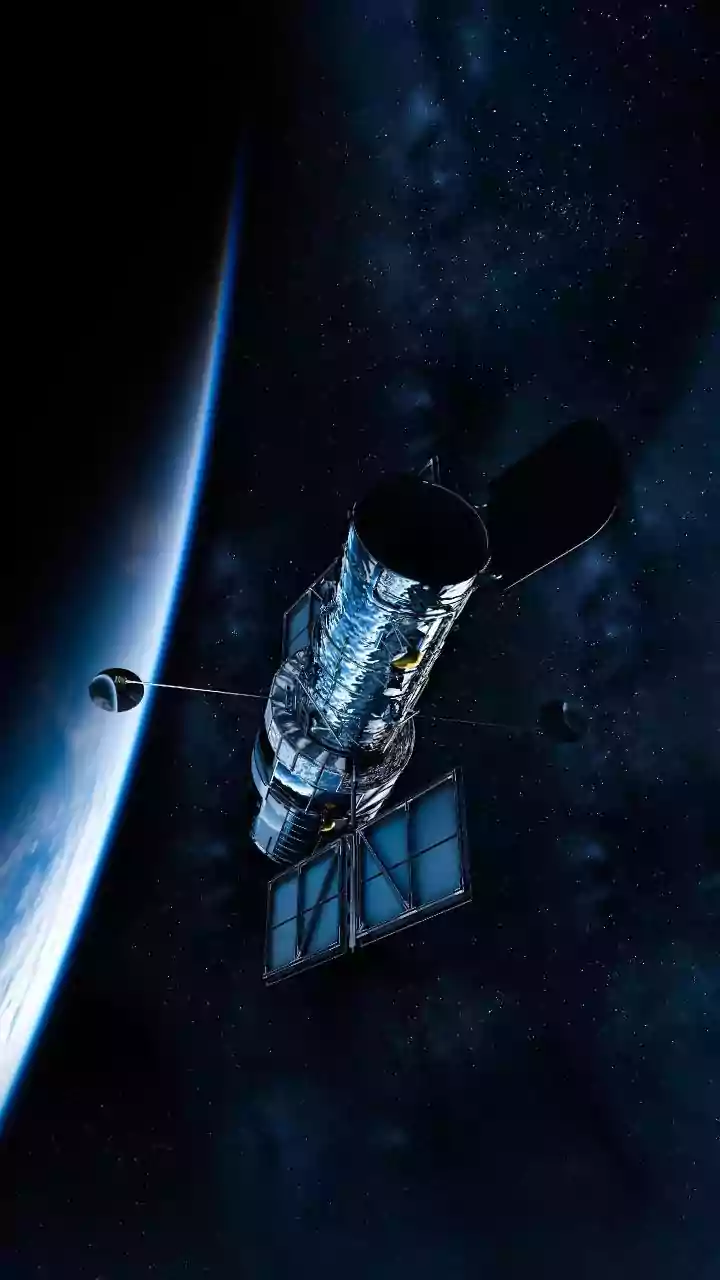
to profound shifts in the amount of sunlight each hemisphere receives. Recent observations from the Hubble Space Telescope, particularly from its Outer Planet Atmospheres Legacy (OPAL) program, are providing an unprecedented look at how these long seasons unfold. As the planet approached its 2025 equinox, joint observations from Hubble and the James Webb Space Telescope captured the transition from northern summer. This long-term monitoring allows scientists to track changes in Saturn's atmospheric bands, which shift in color and intensity from year to year.
The Shadow's Cooling Effect
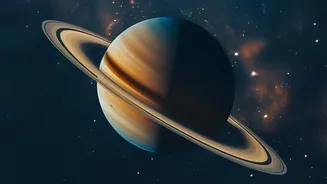
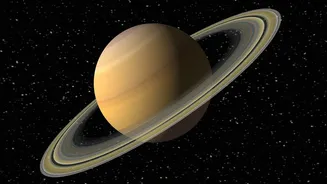
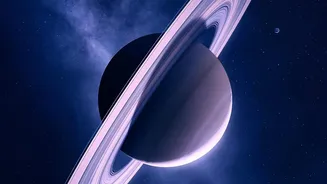
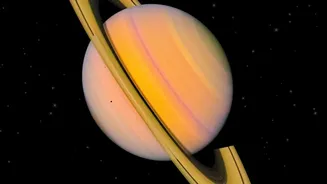
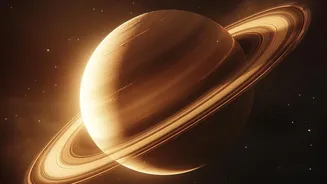
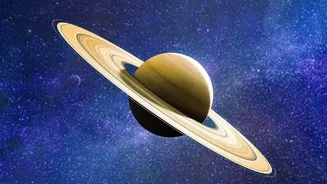
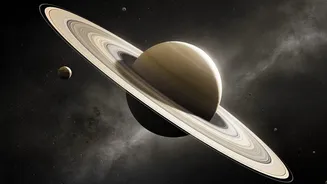
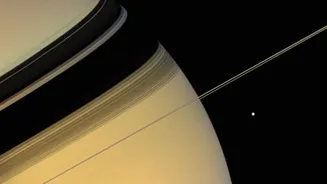
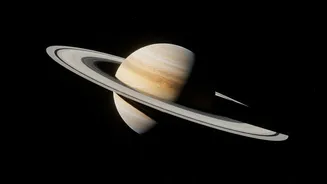
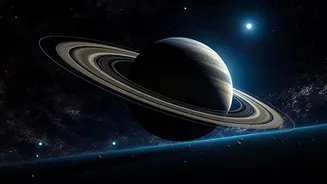
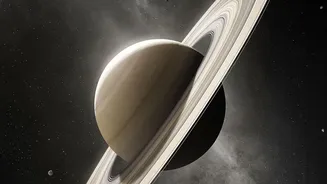
One of the most fascinating aspects of Saturn's climate is the powerful role played by its rings. These expansive structures of ice and rock are not merely decorative; they cast immense shadows over the planet. During a hemisphere's winter, the rings can block a significant amount of sunlight, depriving that part of the atmosphere of solar energy. This shadowing effect causes cooling in the atmosphere. For instance, images taken during the northern hemisphere's summer showed a slight reddish haze, possibly due to heating from increased sunlight, while the southern pole, emerging from winter, retained a bluish hue indicative of colder conditions. As the planet's tilt changes relative to the sun, so does the location and size of the ring shadow, effectively creating a massive, moving climate driver that has no parallel on Earth.
More Than Just Shadows
Beyond casting shadows, Saturn's rings directly interact with its atmosphere in another surprising way. Data gathered from Hubble and other missions like the Voyager and Cassini spacecraft has revealed that the rings are constantly raining down a shower of icy particles onto the planet. This phenomenon, dubbed "ring rain," has a significant effect, particularly on the upper atmosphere. Scientists found an unexpected excess of ultraviolet radiation, which points to heating caused by these falling particles as they collide with atmospheric gases. This influx of material, which includes not just water ice but also compounds like methane and ammonia, alters the chemical composition and temperature of Saturn's ionosphere. This discovery showed that the rings are not a static system but are actively and continuously influencing the planet's atmospheric chemistry.
The Mystery of the Spokes
Another seasonal phenomenon that Hubble is tracking are the mysterious "spokes" that appear on the rings. These are transient, ghostly features that rotate along with the rings, often appearing as dark, radial blotches. The appearance of these spokes is believed to be seasonal, with activity peaking around the time of Saturn's equinox, when the rings are edge-on to the sun. While their exact cause remains a topic of research, the leading theory is that they are connected to Saturn's powerful magnetic field. It's thought that electrostatic forces may levitate dust and ice particles above the main ring plane, creating these temporary features that can be larger than the diameter of Earth. Long-term monitoring by Hubble has confirmed that their frequency and contrast vary with the seasons, adding another layer to our understanding of the dynamic interplay between the planet and its rings.
Why These Observations Matter
Studying the seasonal shifts on Saturn does more than just satisfy our curiosity about a distant world. It provides a natural laboratory for understanding planetary atmospheres under extreme conditions. By observing how Saturn's weather patterns, atmospheric composition, and temperature change in response to sunlight, shadows, and particle rain, scientists can refine their models of planetary climates. This knowledge is crucial not only for understanding the evolution of our own solar system but also for identifying conditions on planets orbiting other stars. The unexpected interaction between Saturn's rings and its atmosphere offers a potential new tool for predicting whether distant exoplanets might also possess complex ring systems.