



What is the Hanle Dark Sky Reserve?
The Hanle Dark Sky Reserve (HDSR) is a designated area within the Changthang Wildlife Sanctuary aimed at preserving the natural darkness of the night sky. Officially certified in December 2022, it became the first such reserve in India and South Asia.
The reserve covers a region with a radius of approximately 22 kilometres around the village of Hanle. This initiative is the result of a collaborative Memorandum of Understanding (MoU) between the Union Territory of Ladakh administration, the Ladakh Autonomous Hill Development Council (LAHDC), Leh, and the Indian Institute of Astrophysics (IIA). The core mission is to control man-made light pollution, creating a pristine environment for astronomical research and fostering a unique form of sustainable tourism known as astro-tourism.
A Sanctuary for the Stars
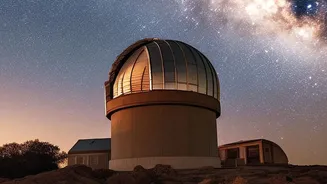
Hanle's location makes it an almost perfect natural laboratory for observing the cosmos. Situated at a breathtaking altitude of 4,500 meters (about 14,800 feet), the thin, dry air and minimal cloud cover provide exceptionally clear views of celestial objects. The site is so pristine that it has earned a Bortle 1 classification, the darkest possible rating on a scale that measures night sky brightness. These superior conditions are why the Indian Institute of Astrophysics established the Indian Astronomical Observatory (IAO) here, one of the world's highest-located sites for optical, infrared, and gamma-ray telescopes. Protecting this unique environment from artificial light is not just about pretty views; it is crucial for the continued success of India's astronomical research.
The Creeping Threat of Light Pollution
Light pollution is the brightening of the night sky caused by artificial light sources like streetlights, commercial signs, and even headlights. This 'skyglow' can obscure stars and galaxies, making astronomical observation difficult or impossible. For sensitive instruments like the telescopes at Hanle, even the high beams from a passing vehicle can disrupt long-exposure observations and potentially damage delicate electronics. The establishment of the reserve is a proactive measure to prevent the gradual encroachment of light that has rendered skies in many parts of the world unusable for serious astronomy. The goal is to ensure Hanle's dark skies, a valuable natural resource, are preserved for future generations of scientists and sky-watchers.
How the Protection Plan Works
The reserve's light management plan is a community-focused effort. In partnership with the IIA, residents of the six hamlets within the reserve have been provided with equipment to minimise light spill. This includes special warm-toned light bulbs, outdoor lampshades that direct light downwards, and thick blackout curtains for every house to prevent light from escaping. Furthermore, there are strict regulations on outdoor lighting and a prohibition on the use of high-beam headlights from vehicles within the reserve's boundaries. Road delineators are being installed to improve safety without adding to light pollution. This blend of regulation and community cooperation is key to the reserve's success.
Astro-Tourism and Local Livelihoods
Beyond its scientific importance, the Hanle Dark Sky Reserve is a pioneering project in sustainable development. The initiative actively promotes astro-tourism, inviting visitors to experience the wonder of a truly dark sky. To facilitate this, the IIA has trained more than 20 local villagers, many of them women, as 'astronomy ambassadors' or 'astropreneurs'. These guides are equipped with telescopes and trained to lead stargazing sessions, pointing out constellations, planets, and even the Andromeda Galaxy, which is visible to the naked eye from Hanle. This model creates new livelihood opportunities, encouraging homestays and generating local income, ensuring that the community directly benefits from the preservation of their unique environment.