


The New Lunar Gold: Water Ice
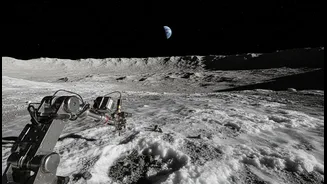
For decades, scientists theorized that water ice could exist in the coldest, darkest corners of the Moon. In recent years, data from missions like India's Chandrayaan-1 and NASA's Lunar Reconnaissance Orbiter have confirmed it. This isn't just a scientific
curiosity; it's the key to humanity's future in space. This ice, hidden in permanently shadowed regions (PSRs) at the lunar poles, could be harvested for drinking water and breathable air. More importantly, it can be split into hydrogen and oxygen—the primary components of rocket fuel. Having a ready source of fuel on the Moon would dramatically lower the cost and complexity of missions to Mars and beyond, turning our celestial neighbour into a vital interplanetary refuelling station. These PSRs are also scientific treasures, potentially preserving billions of years of solar system history and molecules that could offer clues about the origin of life on Earth.
An Unintended Consequence: Exhaust Contamination
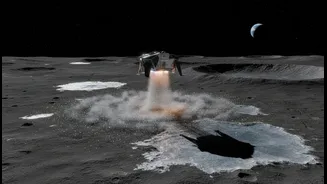
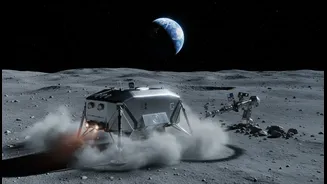
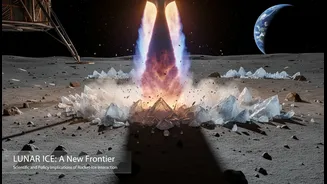
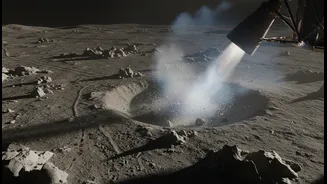
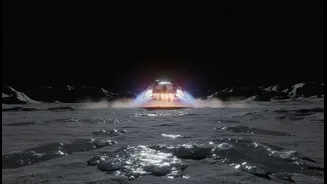
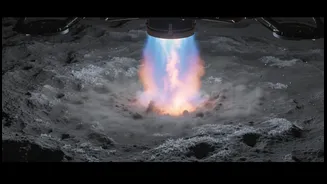
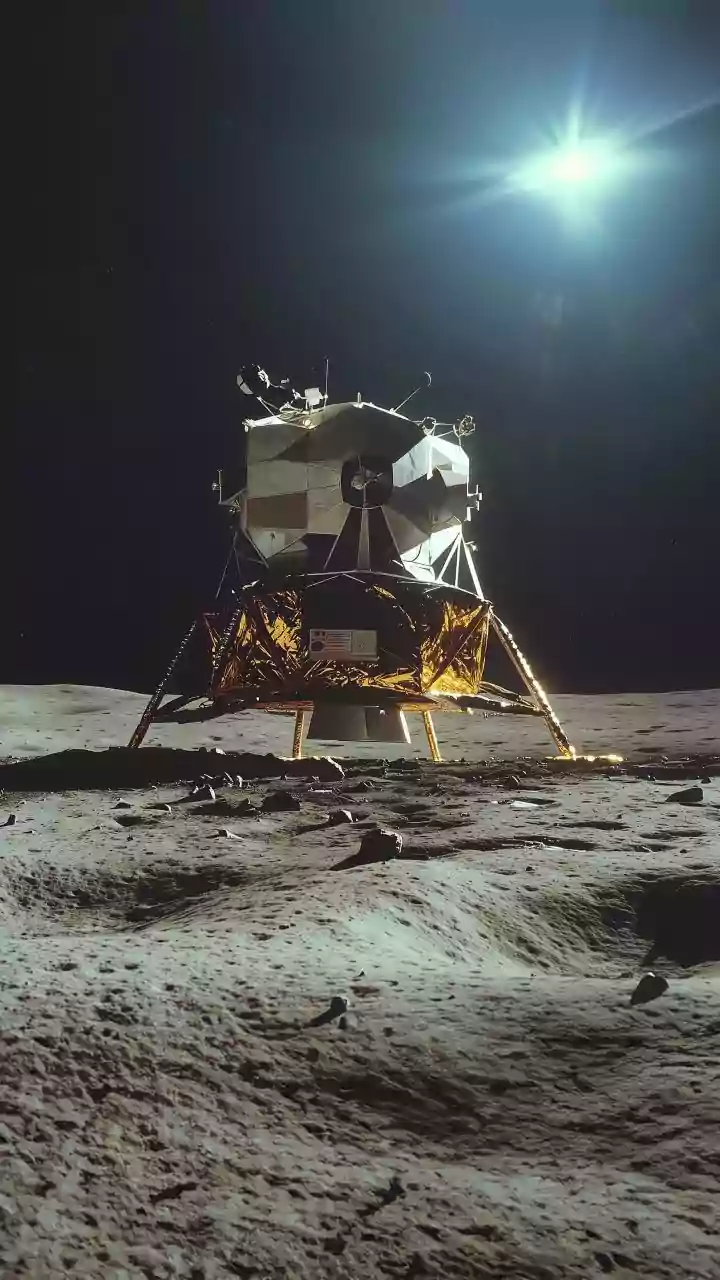
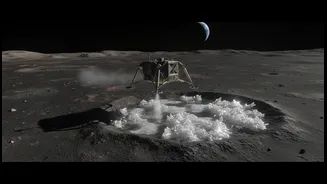
There's a critical flaw in the plan, however. Most landers, large and small, use chemical propulsion to slow their descent. Their rocket exhaust plumes are primarily composed of gases, including a significant amount of water (H2O) and other organic molecules like methane. On Earth, this exhaust dissipates harmlessly into the thick atmosphere. But the Moon has virtually no atmosphere. As a lander touches down, its exhaust plume expands rapidly, blasting across the surface and sending molecules on ballistic trajectories across the entire lunar globe. Computer simulations show that these gases don't just disappear; they can spread from the south pole to the north pole in a matter of days and persist for months. Eventually, a significant portion of this artificial water vapour and methane finds its way to the coldest places available: the same permanently shadowed regions that hold the ancient, pristine ice.
For Mission Planners: A New Engineering Puzzle
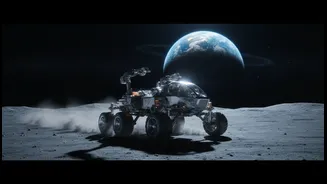
This presents a massive headache for the engineers designing lunar missions. Their primary goal is to get close to the ice, but doing so now risks corrupting the science before it even begins. NASA has explicitly stated that a goal for Artemis landings is to be close enough to a PSR for astronauts to explore without disturbing it during the landing itself. The contamination isn't just local; a single landing can have global consequences. This forces mission planners to rethink everything from landing trajectories to hardware. Do they need to develop new, 'cleaner' landing technologies? Should there be designated 'no-fly zones' around scientifically critical PSRs? Could landers use a final, less powerful braking phase, or even land further away and rove to the target? Every option adds cost, weight, and complexity to already challenging missions. It also complicates the interpretation of data gathered by future missions. When a rover finds water, scientists will have to ask: is this the ancient ice we came for, or is it just the frozen exhaust from the lander that brought us here?
For Policy Students: Redrawing the Map of Space Law
The problem quickly escalates from a technical one to a political and legal one. The Outer Space Treaty of 1967, the foundation of space law, is silent on this specific kind of contamination. With multiple nations and private companies—from the US and China to India and the UAE—planning lunar missions, the risk of a 'tragedy of the commons' is very real. If the first few missions contaminate the most promising ice deposits, it could ruin the opportunity for everyone that follows. This raises urgent questions for policy students and international bodies. Should there be an international framework for managing lunar landings, similar to air traffic control on Earth? Who gets to decide which regions are protected for science and which are open for resource extraction? Organizations like the European Space Agency are already working to define and mitigate these interference concerns, proposing that contamination should be treated as a multilateral issue. These discussions are not theoretical; they are about setting the foundational rules for resource utilisation on another world.
For Space Readers: A More Complex Lunar Story
For the casual space enthusiast, this adds a fascinating new layer of drama to our return to the Moon. The narrative is no longer a simple story of exploration. Instead, it's a complex balancing act between scientific preservation and resource utilization. The cancellation of NASA's ice-hunting VIPER rover due to cost and schedule issues highlights how difficult and expensive these missions are, even before adding the challenge of contamination. This problem forces us to be smarter and more deliberate. It pushes us to develop better technology and, perhaps more importantly, better international cooperation. Watching how space agencies and private companies navigate this challenge will be a key part of the story. It's a test of whether humanity can learn from its history on Earth and become responsible stewards of a new environment, ensuring that in our quest for resources, we don't inadvertently destroy the very thing we came to find.