




The Contenders: A Tale of Two Sweets
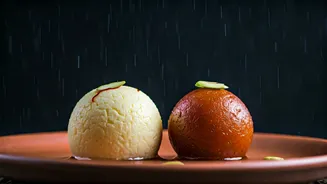
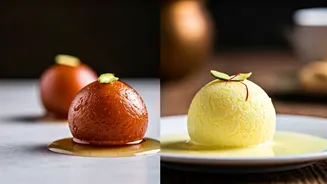
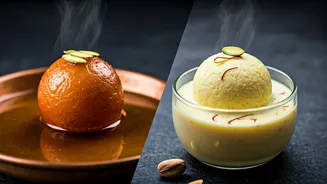
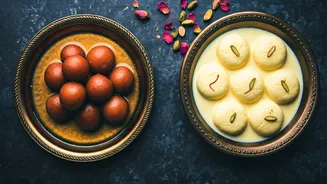
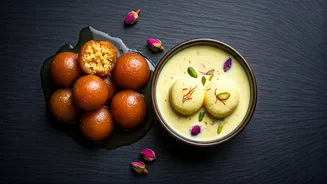
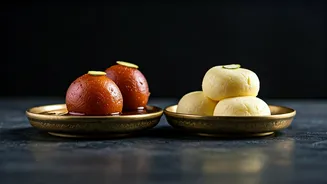
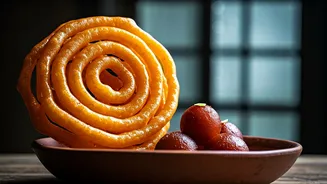
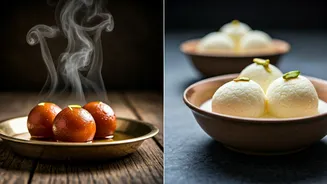
In one corner, we have the undisputed champion of comfort, Gulab Jamun. These deep-fried, berry-sized balls made from milk solids (khoya) or milk powder are soaked in a fragrant, rose-flavoured sugar syrup. [1, 4] They are dense, decadent, and often served
warm. In the other corner stands the elegant Rasmalai. Hailing from the Bengal region, this dessert features soft, spongy discs of Indian cottage cheese (chhena) that are soaked not in syrup, but in a thickened, sweetened milk, often flavoured with saffron and cardamom and served chilled. [3, 8, 13] Both are legends, but only one can be the ultimate monsoon treat.
The Case for Gulab Jamun: A Warm Embrace on a Rainy Day
When the temperature drops and the rain lashes against the window, the heart yearns for warmth. This is Gulab Jamun's moment to shine. Served hot, it's the culinary equivalent of a warm hug. The deep-fried exterior gives way to a soft, melt-in-your-mouth interior that has absorbed every drop of the sweet, often cardamom-infused, syrup. [4, 7] Its history, believed to be rooted in medieval Persia and perfected in the Mughal kitchens, adds a layer of timeless comfort. [9, 10, 14] The science of monsoon cravings might even back this up; as the lack of sunlight can dip our serotonin levels, our bodies crave the comfort of carbohydrates, and the crunchy-on-the-outside, soft-on-the-inside texture provides a satisfying contrast to the damp weather. [25]
The Case for Rasmalai: A Cool, Creamy Counterpoint
The counterargument is just as compelling. Monsoon in India isn't always cool; it can be incredibly humid. In this sticky, muggy weather, a chilled dessert can be a revelation. Enter Rasmalai. Served cold, it’s refreshing and light. [5, 20] The name itself, translating to "juice" (ras) and "cream" (malai), promises a succulent and creamy experience. [3, 19] Unlike the singular punch of sugary syrup, Rasmalai offers a more complex, delicate flavour profile with saffron and pistachios dancing in the thickened milk. [13] It's a more recent invention, with its origins fiercely debated between Kolkata and modern-day Bangladesh, evolving from the classic Rasgulla. [17, 18] It provides calcium and protein from its milk and chhena base, making it a comparatively lighter option to end a meal. [5]
The Monsoon Match-Up: Temperature and Texture
The core of the debate comes down to what you seek during the rains. Gulab Jamun’s appeal is primal: hot, sweet, and incredibly rich. It’s an indulgence perfectly suited for a cosy evening indoors, perhaps paired with vanilla ice cream for a delightful contrast. [1] Its dense, solid texture is a satisfying bite against the drumming rain. Rasmalai, on the other hand, is about sophistication. Its spongy, porous chhena discs absorb the flavourful milk, creating a burst of cool, creamy flavour that feels clean and uplifting. [3, 5] It doesn't weigh you down. The choice becomes one of temperament: Do you fight the gloom with rich, warm comfort, or do you rise above it with something cool and ethereal?
The Final Verdict
To declare a single winner would be to misunderstand the assignment. The 'monsoon crown' is not a fixed title but a rotating one, bestowed based on mood, moment, and the meal that came before it. The real champion is choice. The crown belongs to the warm, syrupy Gulab Jamun on a day when you need comforting indulgence after getting caught in a downpour. It also belongs to the chilled, fragrant Rasmalai after a heavy monsoon lunch, when you crave something light and refreshing to cut through the humidity. The glory isn’t in the winning, but in the delicious dilemma of having to choose between two perfect options. The true winner is anyone who gets to enjoy these iconic sweets while listening to the rhythm of the falling rain.