




What Are the Orionids?
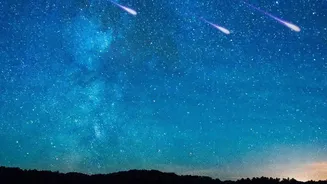
The Orionid meteor shower is an annual event that occurs when our planet travels through the stream of debris left behind by the famous Halley's Comet. These tiny particles, often no bigger than grains of sand, burn up as they enter Earth's atmosphere
at incredibly high speeds—around 66 kilometres per second. This creates the fleeting, bright streaks of light we call meteors or 'shooting stars'. The Orionids are known for their speed and brightness, and they can sometimes leave glowing trails, called trains, that linger for a few seconds after the meteor has vanished. Though Halley's Comet itself only visits our inner solar system every 76 years, we get to experience its legacy twice annually: with the Eta Aquarids in May and the Orionids in October.
When Is the Best Time to Watch in 2026?
The Orionid meteor shower is active from early October to early November, but the best time to watch is during its peak. For 2026, the peak is predicted for the night of October 21-22. The most crucial factor for viewing this year is the Moon. A bright, waxing gibbous Moon will be present for much of the night, which can wash out fainter meteors. However, there is a window of opportunity. The Moon is expected to set around 3 a.m. local time. Therefore, the ideal time for Indian stargazers will be in the pre-dawn hours of October 22, between moonset and the first light of dawn. Patience will be key during this dark, moonless window.
Where to Look in the Sky
The shower is named 'Orionids' because the meteors appear to radiate from a point within the constellation of Orion, the Hunter. To find it, look for Orion's famous belt—three bright stars in a short, straight line—rising in the eastern sky after 10 p.m. The radiant point is located just north of Orion's bright reddish star, Betelgeuse. However, a common mistake is to stare directly at the radiant. For the best experience, you should look about 45 degrees away from it. Meteors will appear longer and more spectacular from this perspective as they streak across the sky. They can appear in any part of the sky, so a wide, open view is most important.
Finding the Perfect Viewing Spot in India
The single most important factor for a good meteor-watching experience is a dark sky, far away from city lights. Light pollution in major Indian cities can make it nearly impossible to see all but the brightest meteors. To truly enjoy the show, plan a trip to a location at least 50 kilometres away from a major urban centre. Ideal spots include the outskirts of towns, rural villages, hills, or lakeside areas with wide, unobstructed horizons. Locations near Pune like Velhe and Panshet are popular for their dark skies. In general, national parks, wildlife sanctuaries, or any remote area with minimal artificial light will offer the best views. October generally offers clearer skies across most of India as the monsoon season ends, improving your chances.
Essential Tips for a Great Experience
You don't need any special equipment like a telescope or binoculars to watch a meteor shower; your eyes are the best tool. First, get comfortable. Bring a blanket, mat, or a reclining chair to lie back on. Second, give your eyes at least 20-30 minutes to fully adapt to the darkness. This means avoiding looking at your phone screen, as its bright light will ruin your night vision. Dress warmly, as even in October, the pre-dawn hours can get chilly. Finally, be patient. Meteor showers are not a constant downpour; they come in spurts. You might wait several minutes before seeing a meteor, so relax and enjoy the night sky.
What to Expect This Year
Under ideal, perfectly dark-sky conditions, the Orionids can produce up to 20 meteors per hour at their peak. However, given the moonlight interference during the early part of the night in 2026, a more realistic rate to expect is between 5 and 15 meteors per hour during the dark window before dawn. In some exceptional years, the Orionids have been known to produce outbursts of 50-75 meteors per hour, but this is not predicted for 2026. The key this year is to wait until the Moon has set. The hours between roughly 3 a.m. and 5:30 a.m. will provide the dark sky necessary to spot these fast and often brilliant pieces of Halley's Comet.