




The Universe’s Coolest Experiment
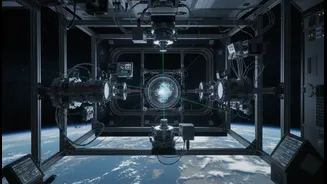
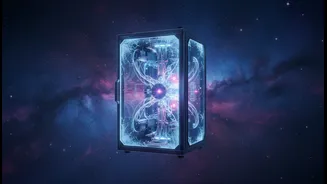
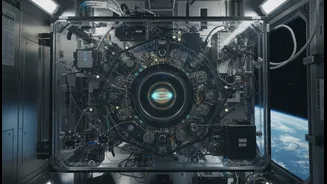
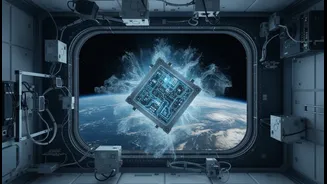
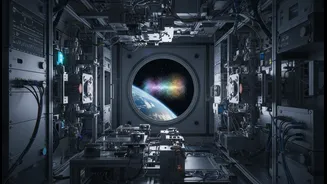
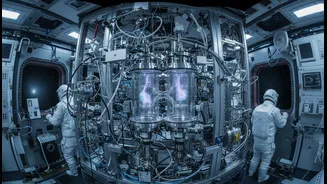
Aboard the International Space Station (ISS), an extraordinary facility is back online with powerful new capabilities. NASA's Cold Atom Laboratory (CAL), roughly the size of a mini-fridge, is not just another piece of hardware; it is a frontier for fundamental
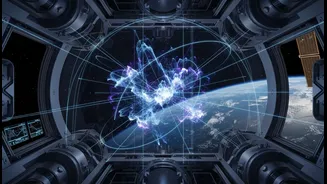
physics. Its mission is to cool atoms to temperatures just a fraction of a degree above absolute zero, or -273.15°C, creating conditions far colder than deep space. At these extreme temperatures, atoms slow to a crawl and begin to exhibit bizarre quantum behaviours. They can act like waves instead of particles and overlap to form a strange fifth state of matter known as a Bose-Einstein condensate (BEC). This fascinating state was first predicted in the 1920s by Indian physicist Satyendra Nath Bose and Albert Einstein. The recent upgrade, the fourth since CAL's installation in 2018, gives scientists unprecedented control over these ultracold atom clouds.
Why Microgravity is the Secret Ingredient
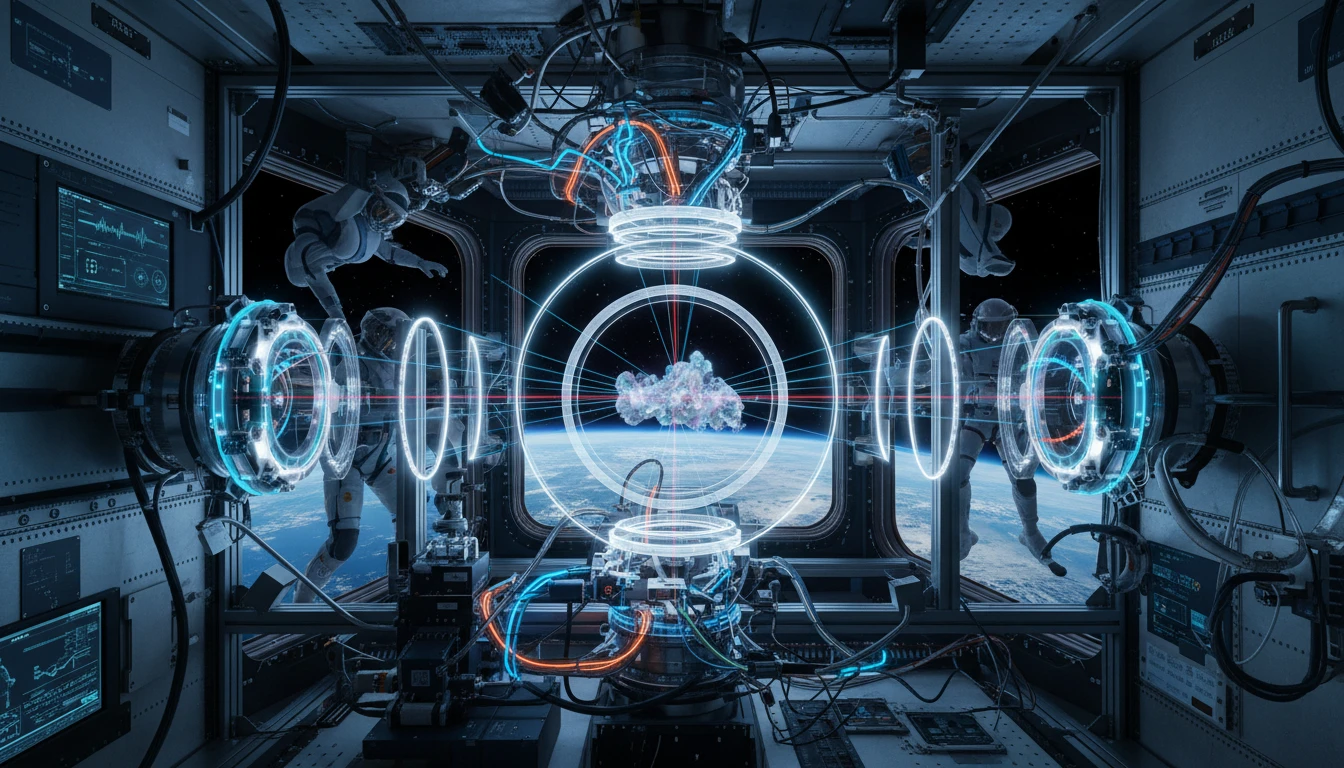
Performing these experiments on Earth is incredibly challenging. Gravity constantly pulls on the delicate atom clouds, causing them to fall and dissipate within milliseconds. This severely limits how long scientists can observe their quantum properties. The microgravity environment of the ISS changes everything. Without the persistent tug of gravity, these atom clouds can be observed for much longer periods—sometimes for over a second. This extended observation time is a game-changer, allowing researchers to watch the subtle, slow-motion evolution of quantum phenomena. Furthermore, the weak gravity allows scientists to use weaker magnetic traps to hold the atoms. This lets the atom cloud expand and cool even further, reaching temperatures and creating matter waves that are physically larger than anything achievable on the ground.
A Redesigned Trap for Quantum Control
The latest upgrade, installed by astronauts in May 2026, introduced several key improvements. The most significant is a completely redesigned magnetic trap. This 'invisible bowl' doesn't just hold the atoms in place; it allows scientists to actively manipulate the shape of the quantum gas clouds. They can now squeeze them into different configurations to investigate entirely new properties. The facility's science module, the heart of the operation, was also enhanced with new metal sources for creating the initial gas of rubidium or potassium atoms. These improvements provide a denser, more consistent source of atoms for the experiments, expanding the range of what can be studied.
From Fundamental Physics to Future Tech
While studying the fundamental rules of the universe is a primary goal, the research conducted on CAL has profound practical implications. This new era of research, sometimes called 'Quantum 2.0', involves the direct manipulation of large quantum states and could lead to revolutionary technologies. The experiments could pave the way for ultra-precise quantum sensors. Imagine navigation systems for astronauts on the Moon that don't rely on GPS, or sensors that can map Earth's underground water reserves and gravitational fields with stunning accuracy. The principles being tested could also advance quantum computing and lead to more precise timekeeping technologies, forming the basis for next-generation satellite networks and secure communications. This research is seen as foundational for the next wave of technological innovation, much like the first quantum revolution gave us lasers and MRIs.