





A Surprisingly Fluffy Surface
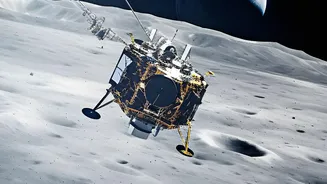
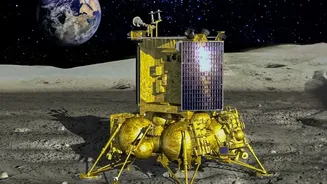
Scientists analyzing data from the Vikram lander have discovered that the top few centimetres of lunar soil, or regolith, at the Shiv Shakti landing point are unexpectedly porous and layered. An analysis published in November 2026 based on the lander's
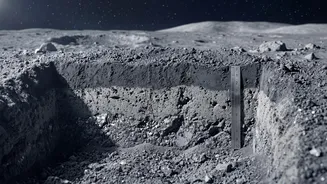
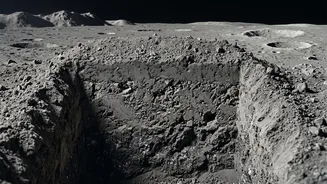
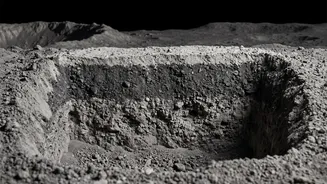
instruments shows that what appears to be a uniform blanket of dust is actually a complex, three-layer structure just within the top 10 centimetres. The very top layer, extending down about 3 cm, is highly porous, with an estimated porosity of 80 percent. This gives it a fluffy, almost ethereal quality, with a very low density. This structure was not previously observed or even expected at such a fine scale, providing a new and much more detailed picture of the lunar surface.
The Tools Behind the Discovery
This detailed understanding comes from the Chandra’s Surface Thermophysical Experiment (ChaSTE), one of the key scientific payloads on the Vikram lander. ChaSTE was designed to drill a probe up to 10 cm into the lunar surface and measure its thermal properties, like temperature and conductivity. The initial findings, which showed a dramatic temperature drop from the surface to just a few centimetres below, were the first clue about the soil's insulating properties. The new analysis goes deeper, revealing that as the depth increases, the soil becomes denser and less porous. The lander's 'hop' manoeuvre, where it fired its engines and lifted off to land a short distance away, also provided crucial data by exposing the underlying layers for analysis.
What the Soil Is Made Of
While ChaSTE revealed the soil's structure, other instruments like the Alpha Particle X-ray Spectrometer (APXS) on the Pragyan rover analyzed its chemical composition. The regolith at Shiv Shakti Point is made of shattered rock, mineral fragments, and glassy particles created by billions of years of micrometeorite impacts. The soil is rich in iron and magnesium but has lower levels of aluminium compared to typical lunar highlands. Intriguingly, scientists at the Physical Research Laboratory in Ahmedabad found that the chemical makeup of the soil closely resembles a lunar meteorite named ALHA 81005, which was discovered in Antarctica in 1982. This doesn't mean the meteorite came from Shiv Shakti, but it suggests both represent a similar, and rare, type of lunar crust.
Why This Porous Layer Matters
Discovering this layered, porous structure has significant implications for future lunar exploration. The highly insulating nature of the topsoil, which acts like a thermal blanket, is crucial for understanding how resources like water ice might be stored and preserved just beneath the surface. For engineers planning to build habitats or infrastructure, this data is invaluable. The soil's low density on top but increasing cohesion and strength with depth will directly influence the design of foundations, landing pads, and excavation equipment. Any structure built on the Moon will need to account for this 'fluffy' top layer to ensure stability. Understanding these properties is a critical first step for using local materials—a practice known as in-situ resource utilization—to build a sustainable human presence on the Moon.