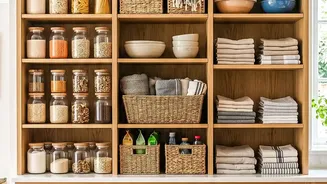


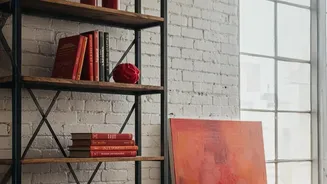

Open kitchen shelves look stunning in magazines but can quickly become a source of stress. The key isn't just storage; it's about creating a balanced display. Here’s how to achieve that clean, curated look without the visual noise.
Start with a Clean Slate
Before you can organise,
you must first edit. The most common mistake is trying to display everything. Instead, empty your shelves completely. This gives you a fresh perspective and allows you to be intentional about what goes back. Sort your items into three piles: things you love and use often, things you need but aren't necessarily display-worthy, and things you can get rid of. Only items from the first group should earn a spot on your open shelves. Be ruthless. This single step is the foundation of a curated, clutter-free look.
Establish a Cohesive Colour Palette
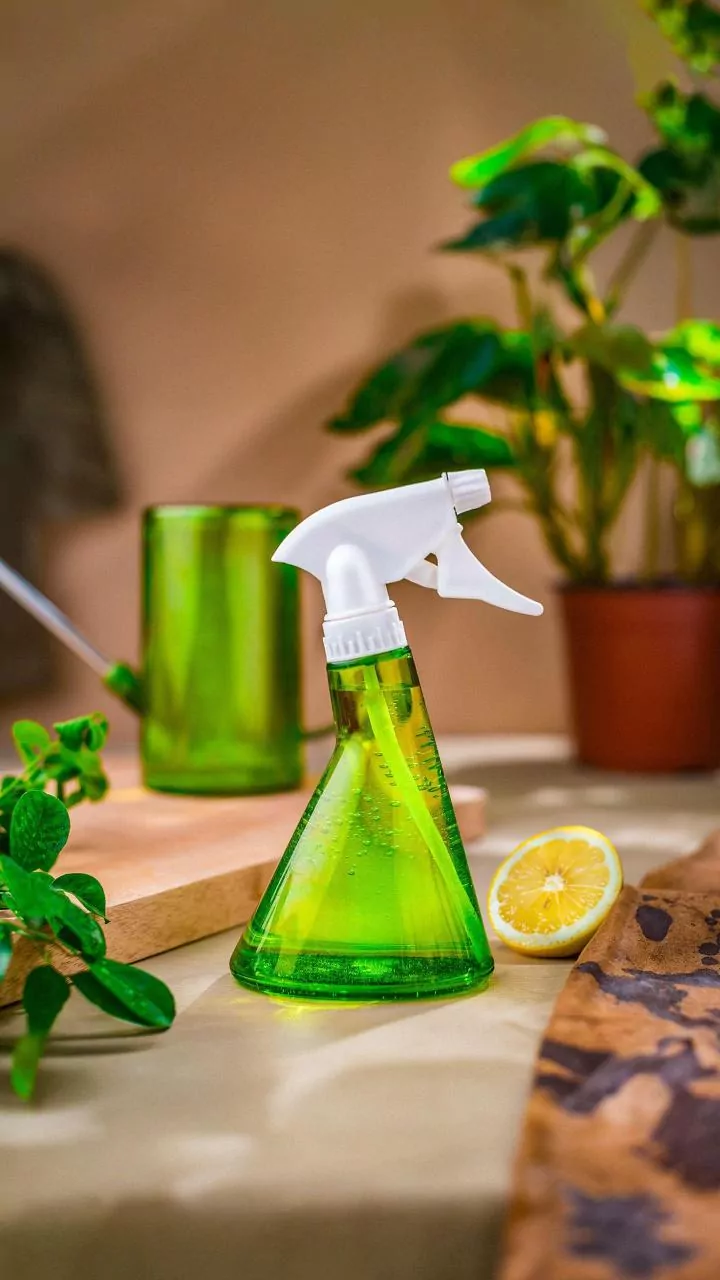
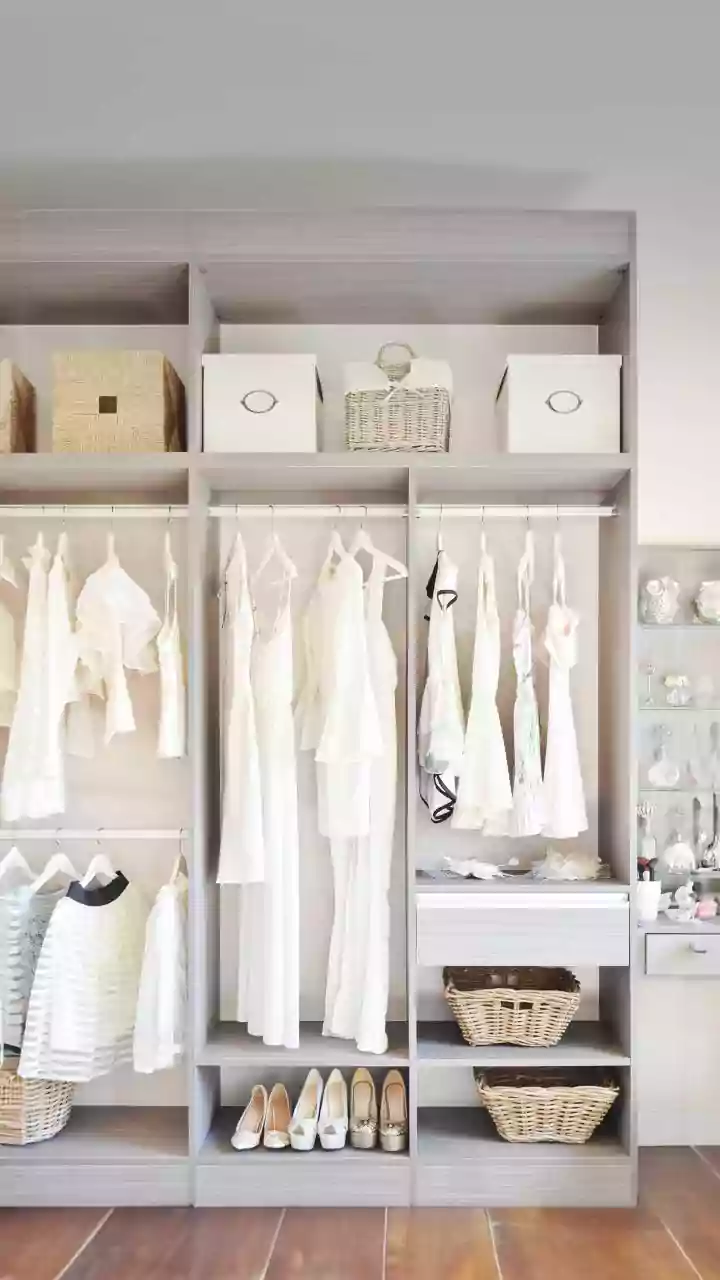
A tight colour palette is the secret to making a collection of disparate items feel harmonious rather than chaotic. You don't have to buy all new things, but you should aim for a consistent theme. A neutral foundation of whites, woods, and metallics often works best, allowing you to layer in pops of colour. Whether it’s all-white dishes that always look tidy or a recurring accent colour like green from plants or blue from ceramics, sticking to a scheme of three to four colours helps unify the display. This makes everything feel intentional, even if the items are from different sets.
Prioritise Function and Accessibility
Open shelves must work for your daily life. Place the items you use most frequently—like everyday plates, bowls, and glasses—on the lowest, most accessible shelves. This isn't just practical; it encourages you to keep these items organised through regular use, which helps prevent dust buildup. Reserve the higher, harder-to-reach shelves for more decorative or less-used items, like serving platters, a favourite vase, or beautiful cookbooks. Think of your shelves as functional zones, with prime real estate going to your daily essentials.
Group Like Items and Vary Heights
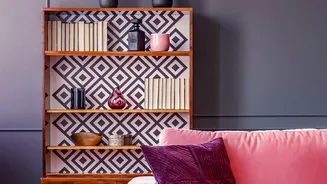
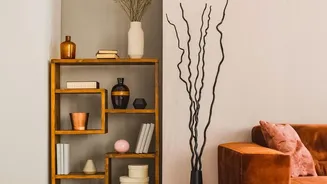
To avoid a flat, one-dimensional look, create visual interest by grouping similar items and playing with height. Stack plates and bowls to create low, solid shapes. Use cookbooks stacked horizontally to create a platform for a smaller decorative object. Place a tall pitcher next to a shorter stack of mugs. This contrast in scale and shape creates a pleasing rhythm. A classic designer trick is to group small items in odd numbers, like threes or fives, which is naturally more appealing to the eye than even-numbered groups.
Blend Practicality with Personality
The best-styled shelves are a mix of form and function. Don’t be afraid to mix your everyday dishware with personal touches that tell a story. This could be a small piece of art leaned against the back of the shelf, a beautiful wooden cutting board, a plant, or a thrifted ceramic pitcher. These decorative items break up the monotony of purely functional objects and make the space feel uniquely yours. The goal is a display that feels lived-in and authentic, not like a sterile showroom.
Use Baskets and Canisters for 'Ugly' Items
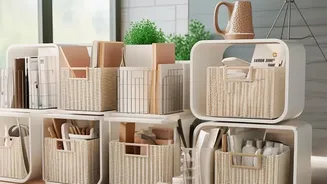
Not everything in your kitchen is beautiful, and that's okay. For the less attractive necessities—like loose tea bags, coffee pods, or mismatched spice packets—use stylish containers to hide the clutter. Matching canisters for dry goods like flour, sugar, and pasta create a uniform look while keeping essentials handy. Woven or metal baskets are perfect for corralling smaller, awkwardly shaped items that would otherwise create visual noise. This allows you to keep practical items within reach without sacrificing your curated aesthetic.
Embrace Negative Space
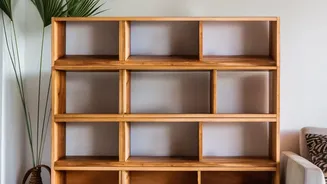
Perhaps the most overlooked principle is the importance of empty space. Resist the urge to fill every single inch of your shelves. Leaving 'breathing room' around objects allows the eye to rest and makes the items you choose to display feel more significant. A partially filled shelf often looks more refined and intentional than one that is packed to the brim. After arranging your items, step back and look at the overall balance. If a shelf feels too heavy or crowded, don't be afraid to remove an item or two. Less is almost always more.