





The Foundation: Why Core and Ankles Matter
Vrikshasana, or Tree Pose, looks simple but challenges your body's ability to maintain its center of gravity on one leg. Your stability starts from the ground up. The standing foot and ankle are constantly making micro-adjustments to keep you upright.
Strengthening the muscles around the ankle is crucial for this. Simultaneously, your core acts as your body's central anchor. A properly engaged core—which includes deep abdominal muscles, the back, and the pelvic floor—prevents your torso from swaying and keeps your hips level, creating a solid trunk for your 'tree'. Without this dual focus, the pose can feel unstable and frustrating.
Activating Your Core: Beyond Squeezing Abs
Effective core engagement is more than just tightening your stomach. For Tree Pose, think of 'zipping up' from your pelvis to your navel. This action engages the deep transverse abdominis muscle, which wraps around your midsection like a corset, providing profound stability. To practice this, stand tall and exhale fully, drawing your belly button in toward your spine without holding your breath. Maintain this gentle contraction as you move into the pose. Another vital cue is to keep your hips squared to the front. It's common for the hip of the bent leg to lift or for the standing hip to jut out, but actively engaging your core and glutes helps maintain level hips and a stable pelvis.
Building Resilient Ankles
Strong, stable ankles are non-negotiable for balancing poses. You can build this strength both on and off the yoga mat. A key practice is to focus on your standing foot. Instead of letting the arch collapse, actively press down through all four corners of your foot: the mounds below the big and pinky toes, and the inner and outer edges of your heel. This distributes your weight evenly. Avoid locking the knee of your standing leg; a 'micro-bend' keeps the leg muscles active and ready to make tiny adjustments. Simple exercises like standing on one leg for 30 seconds at a time or practicing calf raises can significantly improve the muscular endurance and stability of your ankles.
Putting It All Together in Tree Pose
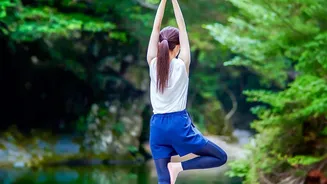
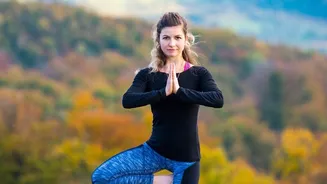
Begin in Mountain Pose (Tadasana), feeling grounded. Find a non-moving focal point in front of you (your 'drishti') to help maintain balance. Shift your weight onto one foot, engaging the leg from the foot all the way to the hip. Bend the other knee and place the sole of your foot on your inner ankle, calf, or inner thigh. A crucial safety rule is to never place your foot directly on the knee joint, as this puts pressure on the ligaments. As you place your foot, press it firmly into your leg, and press your leg back into your foot to create a stable, active connection. Bring your hands to your chest or raise them overhead. Hold for 20-30 seconds, breathing steadily.
Tips for Tree Pose Variations
Once you feel steady, you can explore variations. For beginners, using a wall or chair for light support is a great way to build confidence. You can also start with the toes of the lifted foot on the floor and the heel on the standing ankle, like a kickstand. To challenge your balance, try closing your eyes for a few moments, which forces you to rely on your body's internal sense of stability (proprioception). Another variation is 'Windy Tree', where you slowly sway your arms overhead, forcing your core to work harder to keep your trunk stable. Placing your standing foot on a folded blanket or a yoga block also increases the challenge on your ankle stabilizers.