





The Legacy of Halley's Comet
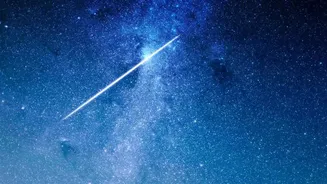
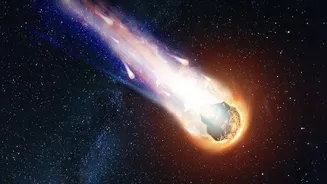
The Orionid meteor shower, active each year from early October to early November, is a special event with a famous parent. The shooting stars you see are actually tiny fragments shed by Halley's Comet, one of the most well-known comets in history. As
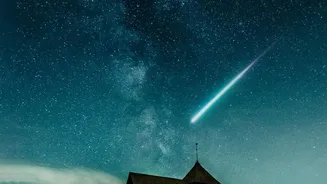
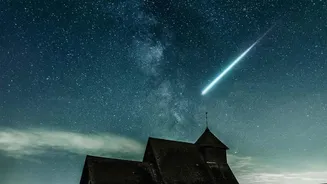
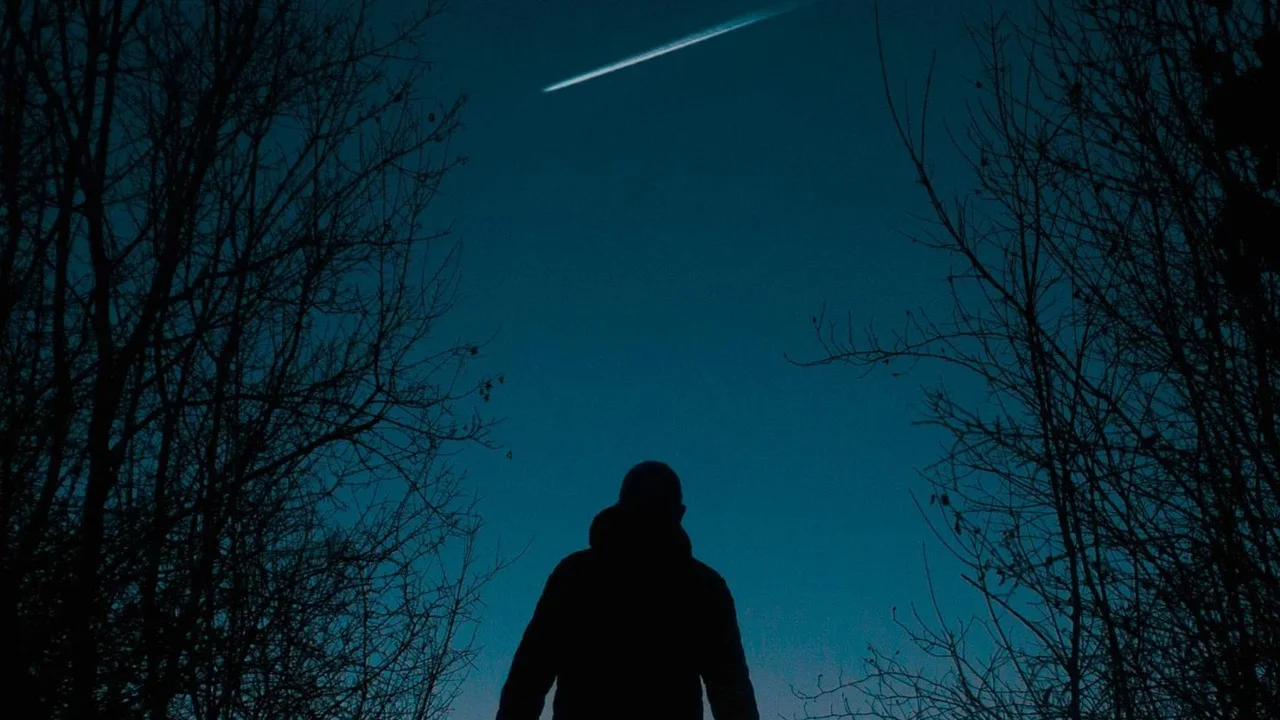
Earth passes through this stream of cosmic debris, the particles burn up in our atmosphere, creating the brilliant streaks of light we call meteors. The Orionids are known for being particularly fast and bright, sometimes leaving persistent, glowing trails that can hang in the sky for several seconds.
Understanding the Radiant
Every meteor shower has a “radiant,” which is the point in the sky from which the meteors appear to originate. For the Orionids, this point is in the constellation Orion the Hunter, which is how the shower gets its name. While meteors can appear anywhere in the night sky, their paths will trace back to this area near Orion's bright star Betelgeuse. A key secret to seeing more meteors is to watch when this radiant point is high in the sky. When the radiant is low on the horizon, many meteors are cut off by the curve of the Earth. A higher radiant means a full-sky view.
The Pre-Dawn Advantage
This brings us to why pre-dawn is prime time. The constellation Orion doesn't rise in the east until late in the evening, around midnight. It then climbs higher throughout the night, reaching its highest point in the sky in the hours just before dawn. This is when your location on Earth is turning to face the direction of our planet's orbit, essentially moving head-on into the meteor stream. Think of it like driving through rain; you see more drops hitting your front windscreen than the back. This combination of a high radiant and our planet's orientation means the meteor count steadily increases after midnight, peaking just before sunrise.
Navigating the Moonlight in 2026
For the 2026 peak on the night of October 21-22, there is another factor to consider: the Moon. The peak coincides with a bright, waxing gibbous Moon, which will illuminate the sky for the first half of the night. This makes pre-dawn viewing even more critical. In many locations, the Moon will set around 3 a.m., leaving the sky much darker. This creates a perfect window of opportunity between moonset and the start of morning twilight to see the most meteors against the darkest possible backdrop. You can expect to see around 15 to 20 meteors per hour under these ideal, dark-sky conditions.
How to Prepare for the Show
You don't need any special equipment like a telescope or binoculars to enjoy a meteor shower. The most important thing is to find a location away from city and street lights. Once you've found a dark spot, give your eyes about 20-30 minutes to fully adapt to the darkness; avoid looking at your phone during this time. Since you'll be out in the cool, pre-dawn hours, dress warmly in layers. Bring a blanket or a reclining chair to lie back comfortably and look straight up. Be patient—the show will last until dawn, giving you plenty of time to catch the fleeting beauty of Halley's Comet's legacy.