
Peering into an 'Empty' Sky
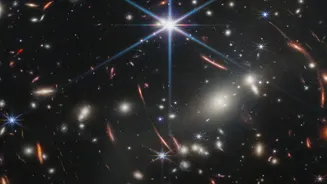
The first step in cosmic archaeology is to find a target. But scientists aren't looking for something bright; they're looking for 'nothing' at all. The process starts by pointing a powerful observatory, like the Hubble Space Telescope or its successor,
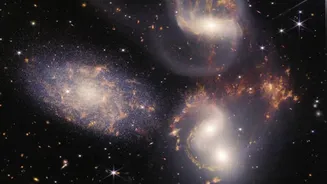
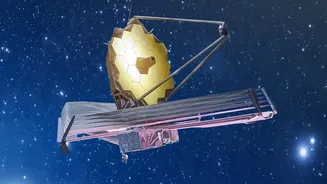
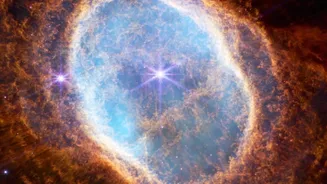
the James Webb Space Telescope (JWST), at a seemingly barren patch of sky. By staring at this spot for hours or even days on end, the telescope collects photons that have traveled for billions of years, revealing incredibly faint and distant objects. This long-exposure image is known as a "deep field." The first one, the Hubble Deep Field captured in 1995, famously revealed around 3,000 galaxies in a patch of sky no bigger than a tennis ball seen from 100 metres away, revolutionizing astronomy.
Light as a Time Machine
The data from a deep field is essentially a core sample of the universe's history. This is possible because of a fundamental principle: light travels at a finite speed. When we look at the Sun, we see it as it was eight minutes ago. When we look at a galaxy a billion light-years away, we see it as it was a billion years ago. The galaxies in the deepest images from JWST are so far away that their light began its journey to us over 13 billion years in the past, just a few hundred million years after the Big Bang. This 'lookback time' allows astronomers to see snapshots of galaxies at different stages of their life, providing the raw 'fossil' evidence needed for reconstruction.
The Power of Redshift
But how do scientists know how old a galaxy in a deep field image actually is? The key tool is 'redshift'. As the universe expands, it stretches the fabric of space itself. Light traveling through this expanding space is also stretched, shifting its wavelength toward the red end of the spectrum. The farther away a galaxy is, the more its light has been stretched and the 'redder' it appears. By measuring a galaxy's redshift, astronomers can precisely calculate its distance and, therefore, its age. The most distant galaxies are redshifted so much that their visible and ultraviolet light is stretched all the way into the infrared spectrum, which is why the infrared-sensitive JWST is so crucial for studying the earliest cosmic epochs.
Assembling the Evolutionary Timeline
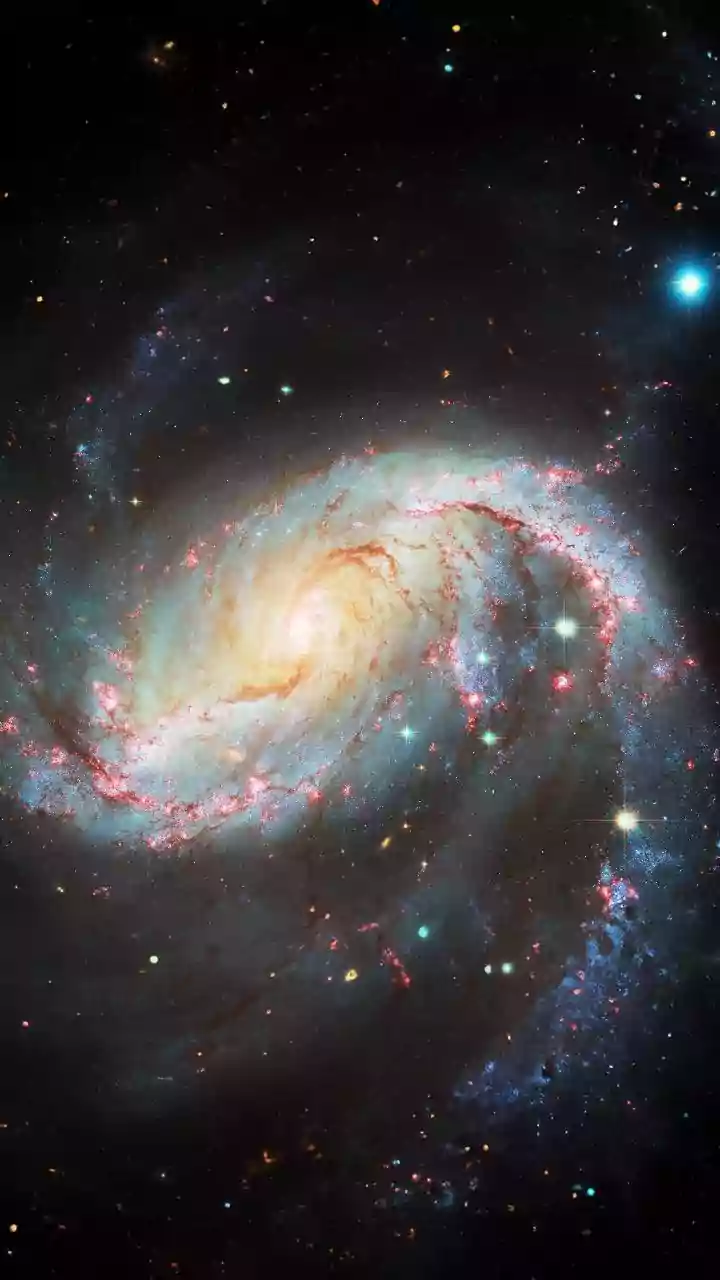
With deep field images providing thousands of galaxies and redshift measurements providing their ages, scientists can begin the reconstruction. They sort the galaxies into different cosmic eras, much like a paleontologist sorts fossils by geological layer. By comparing the galaxies from different epochs, they can piece together an evolutionary sequence. For instance, recent studies using JWST data have shown that very early galaxies were often chaotic, clumpy, and messy, not the well-ordered spiral or elliptical shapes common today. They were sites of 'bursty,' rapid star formation. Scientists can track how these smaller, more turbulent systems merged and gradually settled down over billions of years to form the mature galaxies, like our own Milky Way, that populate the modern universe.
Challenging the Models
This process isn't just about confirming what we think we know; it's also about discovering the unexpected. Deep field data from JWST has already provided surprises. Astronomers have found galaxies in the early universe that are far more massive and structurally complex than theories predicted were possible so soon after the Big Bang. Some of these ancient galaxies host supermassive black holes that are astonishingly large for their time, challenging models of how these cosmic giants form and grow. Each new deep field observation provides a richer, more detailed dataset, allowing scientists to refine their models and, in some cases, rewrite our understanding of how the first light emerged from the cosmic dark ages.