




The Sun’s Violent Temper
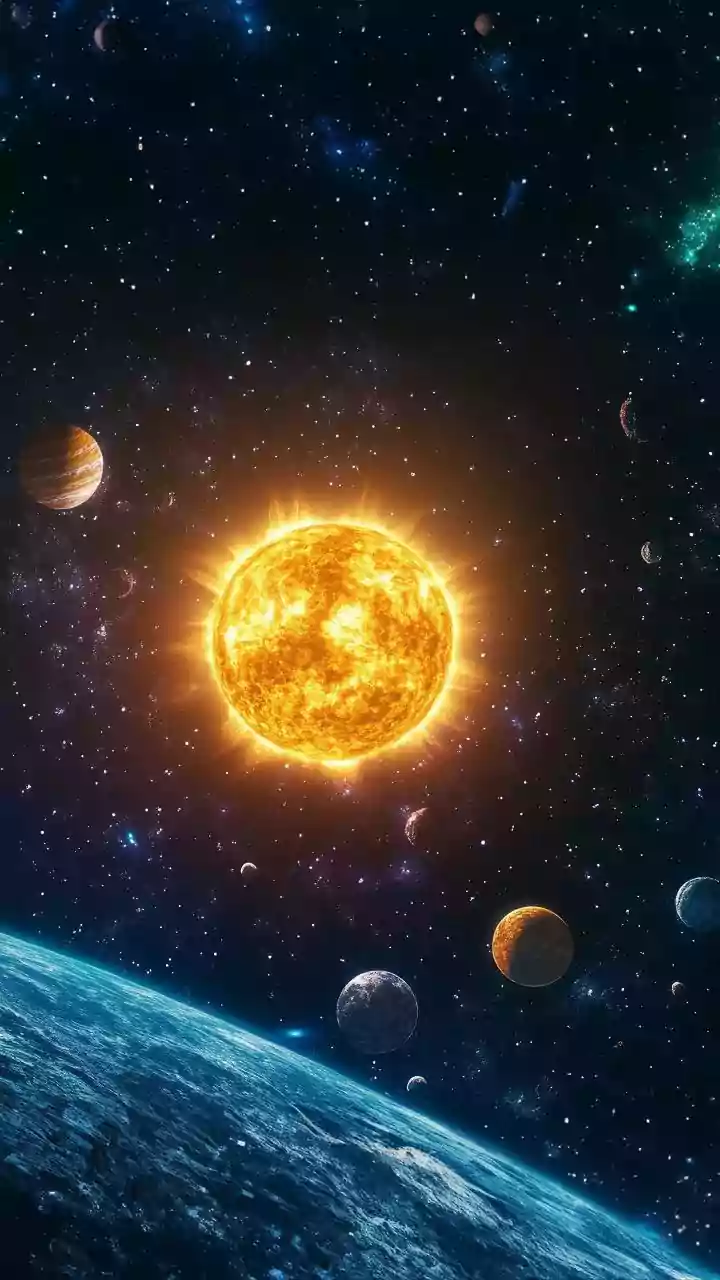
The Sun is not the uniformly calm star it might appear to be. It is a dynamic and sometimes violent body that periodically releases enormous bursts of energy, plasma, and magnetic fields into space. These events, known as solar flares and Coronal Mass
Ejections (CMEs), are cosmic tempests. A single CME can hurl billions of tonnes of charged particles into the solar system at speeds of thousands of kilometres per second. While many of these are directed away from Earth, the ones that head our way can have profound consequences for our technologically dependent society. These phenomena are collectively known as space weather, and they pose a significant risk to both orbital and ground-based infrastructure.
A Multi-Billion Dollar Risk in Orbit
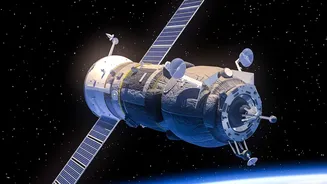
When a CME collides with Earth's magnetic field, it can trigger a geomagnetic storm. For satellites, this is a multi-pronged assault. High-energy particles can damage sensitive electronics, causing single-event upsets (bit-flips in memory) or even permanent burnout of components. The influx of energy can cause spacecraft surfaces to charge to thousands of volts, leading to electrostatic discharges that damage systems. Furthermore, these storms heat and expand Earth's upper atmosphere. This increases the atmospheric drag on satellites in low-Earth orbit, causing them to lose altitude faster and shortening their operational lifespan. The economic stakes are immense, with experts warning that a severe solar storm could cause hundreds of millions, if not billions, of dollars in damages and disrupt communications, navigation, and power grids.
India's Watchful Eye in the Sky
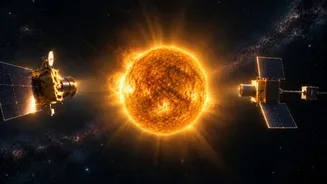
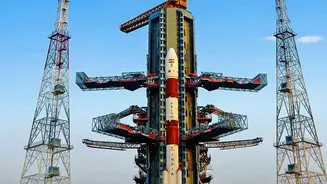
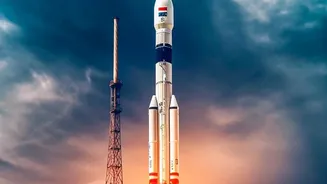
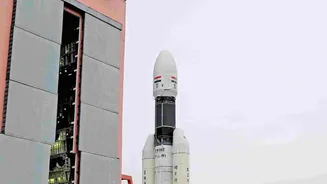
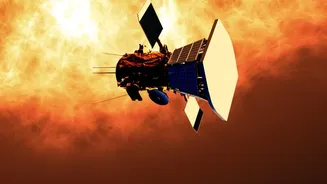
This is where India's Aditya-L1 mission becomes critically important. Launched by ISRO, it is the nation's first dedicated space-based solar observatory. Its primary objective is to study the Sun's atmosphere—the chromosphere and the corona—and the dynamics of solar eruptions. By observing the initiation of CMEs and flares, Aditya-L1 provides crucial data to understand and, ultimately, predict these powerful events. Think of it as an advanced weather buoy for space storms. This data helps protect not only India's growing fleet of satellites but also contributes to a global understanding of space weather risks.
The Unique Advantage of Point L1
The 'L1' in the mission's name refers to Lagrange Point 1, a unique spot in space about 1.5 million kilometres from Earth. At this point, the gravitational pulls of the Sun and Earth balance out, allowing a spacecraft to 'hover' in a stable position relative to both bodies. This vantage point gives Aditya-L1 a continuous, uninterrupted view of the Sun, without any eclipses or occultations by the Earth or Moon. This 24/7 observation is impossible from Earth orbit and is the key to providing an early warning. A CME travelling towards Earth will reach Aditya-L1 first, giving scientists and satellite operators crucial lead time—from minutes to hours—to take protective measures, such as powering down sensitive components.
From Prediction to Protection
Aditya-L1 is equipped with seven sophisticated payloads designed to observe the Sun across different wavelengths. The Visible Emission Line Coronagraph (VELC) can image the solar corona closer to the Sun's disk than many previous missions, allowing it to capture the very birth of a CME. The Solar Ultraviolet Imaging Telescope (SUIT) provides full-disk images of the Sun's photosphere and chromosphere in near-ultraviolet wavelengths, which is crucial for understanding the processes that lead to eruptions. Recent scientific findings from the mission have already provided new insights into pre-flare activity and the structure of CMEs, demonstrating its immense value. By combining data from these instruments, scientists can build more accurate models of space weather and improve our ability to forecast potentially hazardous events, moving from mere observation to active protection.