





The Two Faces of Jackfruit
Jackfruit is a culinary chameleon with two distinct personalities depending on its ripeness. When young and green (often called raw jackfruit or 'kathal'), its texture is firm and stringy, with a neutral flavour that absorbs spices beautifully, making
it an excellent meat substitute. As the fruit ripens, its starches convert to sugars. The flesh becomes soft, sweet, and intensely aromatic, with a flavour often compared to a mix of banana, mango, and pineapple. The fruit's exterior will also change, from a hard, green shell to a softer, yellowish one that emits a strong, sweet scent. Understanding this duality is key to unlocking its potential in your cooking.
Navigating the Market
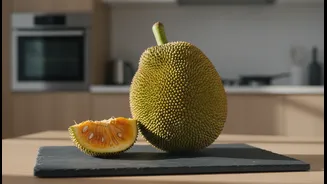
Choosing the right jackfruit depends entirely on your recipe. For savoury dishes like curries or biryani, look for a young, green, and firm fruit. It should feel heavy for its size and have a uniformly green, spiky skin. For enjoying as a sweet fruit, select a ripe one. A ripe jackfruit will have a yellowish-green to brownish-yellow skin, the spikes will be more spread out, and it will yield to gentle pressure. The most telling sign of a ripe jackfruit is its powerful, sweet, and fruity aroma; if it doesn't have a smell, it's likely not ripe yet.
Tackling the Giant: A Prep Guide
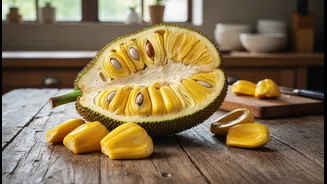
Cutting a whole jackfruit can be messy due to its sticky white sap, or latex. The number one rule is to be prepared. Lay down newspaper on your work surface for easy cleanup. The secret weapon against the sap is oil—any cooking oil will do. Liberally coat your knife, your hands, and even the cutting board. Cut the jackfruit into large rounds or lengthwise into quarters. The inedible central core can then be cut away. From there, you can pull out the individual yellow fruit pods nestled within the fibrous white rags. For ripe fruit, the pods are ready to eat once you remove the seed inside. For unripe fruit, you'll be chopping the fibrous structure and pods for cooking.
The Savoury Star: Cooking with Unripe Jackfruit
Unripe jackfruit's meaty texture has made it a global sensation as a plant-based substitute for pulled pork. In Indian cuisine, however, it has been a star for centuries. 'Kathal ki sabzi' is a classic North Indian dry curry where the jackfruit is boiled until tender and then pan-fried with a blend of aromatic spices, onions, and tomatoes. Another showstopper is Kathal Biryani, where marinated, boiled jackfruit pieces are layered with fragrant basmati rice, mimicking the texture and flavour absorption of mutton biryani. The key is to boil the jackfruit first with salt and turmeric to soften it and allow it to absorb the flavours of your marinade or curry base.
The Sweet Sensation: Enjoying Ripe Jackfruit
Once you've separated the sweet, yellow pods of a ripe jackfruit, the simplest way to enjoy them is fresh. The flavour is a unique tropical explosion. But the culinary uses don't stop there. In South India, the ripe pulp is used to make a variety of sweets. You can blend the pods into a smooth paste and use it to create a flavourful 'Kesari Bath', a sweet semolina pudding enriched with ghee, nuts, and the fragrant jackfruit paste. The pulp can also be incorporated into batters for steamed cakes or even savoury-sweet fritters and pakoras. These traditional recipes showcase the fruit's natural sweetness and distinctive flavour.
Don't Throw Away the Seeds!
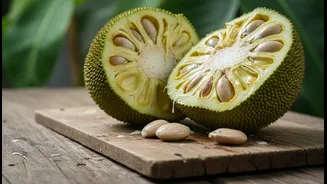
A true zero-waste hero, nearly every part of the jackfruit is useful. The seeds, which you remove from the pods, are edible and highly nutritious. They should never be eaten raw, but once cooked, they have a creamy, firm texture similar to a chestnut or a boiled potato. The easiest way to prepare them is to boil them in salted water for 20-30 minutes until they are tender enough to be pierced with a fork. After boiling, the tough outer white skin can be peeled off, though the thin brown layer underneath is edible. These boiled seeds can be eaten as a simple snack, pan-roasted with spices, or added to curries and kurmas for extra texture and substance.