






As winter approaches, the familiar grey haze of smog returns to many Indian cities. While you can't control the air outside, your home can be a sanctuary. This guide explains the essential steps to protect your indoor air quality.
Understanding the Invisible Threat
Winter smog is more than
just a hazy view; it's a dangerous cocktail of pollutants. The most harmful are fine particulate matter known as PM2.5—particles so tiny they can evade the body's natural defences, penetrating deep into the lungs and even entering the bloodstream. These particles, along with others like PM10, nitrogen oxides, and VOCs (volatile organic compounds), become trapped near the ground by cold winter air, leading to soaring Air Quality Index (AQI) levels. When this polluted outdoor air inevitably seeps indoors, it can cause or worsen respiratory issues, headaches, and other health problems, making indoor air protection crucial.
Step 1: Seal Your Home's Defences
The most effective first step is to stop polluted air from getting inside. Pollutants are sneaky, entering through tiny gaps around window frames, under doors, and through exhaust fan openings. A simple way to check for leaks is to feel for cold drafts. Use weather-stripping tape for window frames and door seals for the gaps at the bottom of doors. Even a rolled-up towel placed at the base of a door can make a significant difference. Sealing these entry points is the most cost-effective way to reduce indoor pollution, forming a crucial barrier against the smog outside.
Step 2: Invest in an Air Purifier
During severe smog, an air purifier is your most powerful tool. Look for a model equipped with a High-Efficiency Particulate Air (HEPA) filter, which is specifically designed to capture tiny PM2.5 particles. Many models also include an activated carbon filter to remove odours and harmful gases. It is crucial to choose a purifier with a Clean Air Delivery Rate (CADR) that matches your room size. For maximum effectiveness, place the unit in the room where you spend the most time, such as your bedroom, and keep it running continuously with doors and windows closed when the outdoor AQI is high. Remember that filters need regular cleaning or replacement, as a clogged filter is ineffective.
Step 3: Ventilate, But Do It Smartly
While sealing your home is important, you still need to let out stale indoor air. The key is timing. Air quality often improves slightly in the early afternoon, typically between 1 PM and 3 PM, when the sun is at its strongest and can help dissipate some of the ground-level smog. If you monitor your local AQI and see a dip, open windows for 10–15 minutes to allow for air exchange. On days with 'Severe' or 'Hazardous' AQI levels, it is best to keep everything shut and rely on your air purifier.
Step 4: Reduce Indoor Pollution Sources
The air inside your home can also be polluted by daily activities. High–heat cooking, especially frying, can release particles and fumes. Always use an exhaust fan or chimney when you cook. Avoid burning incense, diyas, or candles, as they directly release smoke and particulate matter into your air. Opt for wet mopping or dusting with a damp cloth instead of dry sweeping, which can kick dust and pollutants back into the air. Choosing low–VOC (volatile organic compound) cleaning products and paints can also limit chemical pollutants indoors.
A Note on Indoor Plants and Humidity
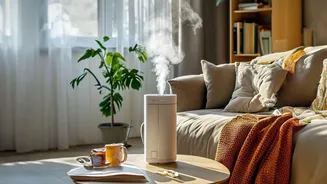
While many believe indoor plants are a solution for air pollution, their ability to remove PM2.5 is very limited compared to an air purifier. Studies show that while plants like the Spider Plant, Peace Lily, and Boston Fern can remove certain gaseous pollutants and have a minor effect on particles, you would need a very large number of them to make a significant difference in a smoggy environment. They are great for adding a sense of well–being, but they are not a substitute for filtration. Additionally, maintain indoor humidity between 30–50%. Dry winter air can irritate airways, but overly humid air can encourage mould growth. A simple bowl of water can help add moisture if the air is too dry.